Earthshine Nature Programs Newsletter 2022

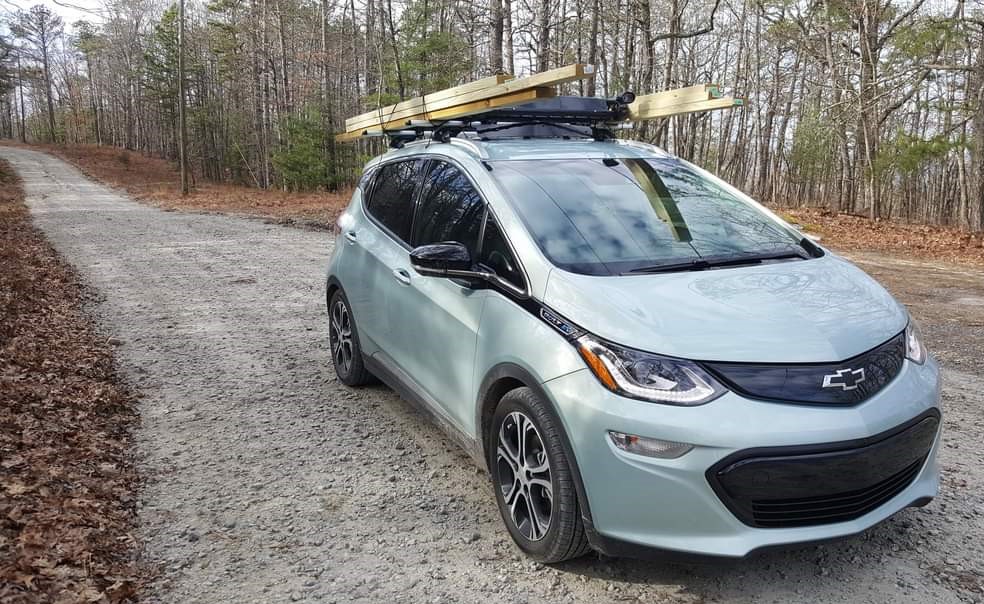
A wild Eastern box turtle crossing a forest road with the ENP Outreach vehicle, the Mighty Bolt EV, in the background. 

Yes, we helped the turtle across the road 🙂

We have made the best of things, engineered a new way to get things done, and had a really great year –

and we could not have done it without you!

THANK YOU ALL!!!

Wildlife Rescue & Rehabilitation

The big animal story of 2022 is what happened to Tripod the Eastern box turtle.  Tripod is our mascot and she is the turtle pictured on our company logo.  She has been with us since the spring of 2007 when we found her badly injured on the side of the road in the Rosman community after she had been hit by a vehicle while attempting to escape several bulldozers that were in the process of modifying her natural habitat into habitat for humans.  Along with a destroyed home she also had a destroyed left rear leg and badly damaged front feet – so I quickly transported her to our amazing wildlife veterinarian Dr. Chris Coleman, who removed her badly damaged leg, tended to her damaged feet, and sent her home to recover.  Sadly, due to her severe injuries, the fact that her habitat had been destroyed, and that science shows that moving a wild reptile far from its home is often detrimental to its health – we made the call to let Tripod live out the rest of her days in our outdoor turtle habitat.  Tripod has now lived with us for almost 16 years traveling from our original location at Earthshine Lodge to our new location at the Trails/ENP Science and Nature center.  She has done very well and has been exceptionally healthy – until this spring when the unthinkable happened.  Shortly after Tripod and our other box turtle ambassadors emerged from their long winter naps in their outdoor habitat, I noticed that Tripod looked…odd.  I gently picked her up and discovered something very wrong with her three remaining feet – something had chewed on them during her overwintering torpor and they were badly damaged and infected.  Paulina rushed her to one of our veterinarians – the wonderful Dr. Kaylee Lorch – who carefully performed a procedure to repair her damaged feet.  The surgery worked and Tripod is doing very well…however, since she no longer has any toes (and only three stumps), she is now severely mobility challenged.  Although she is physically challenged, she continues to eat well and is thriving despite her limitations.  Due to her physical challenges, she will live indoors in our classroom where she will meet our students on a one-on-one basis and never have to worry about being harassed by other wild critters.

Tripod in her habitat

We also assisted another Eastern box turtle in regaining its full mobility.  This juvenile wild turtle was brought to us in the summer with an unusual injury.  One of the scutes (plates) on its plastron (bottom shell) had been damaged in the past, possibly as the result of an accidental injury from a lawn mower or weed trimmer.  The injury had healed – but not in the correct location so now the shell plate was just hanging on below the turtle by a short piece of living tissue.  Although it was fully healed – it was in the wrong place and therefore always in the way of the little turtle’s left front foot so in effect – it would trip over a piece of its own body when it would try to walk.  It was a really bizarre injury but the little turtle was otherwise in great shape, bright-eyed, healthy, and eating very well.  Again, our amazing volunteer Paulina dropped it off with Dr. Lorch for a bit of a shell adjustment – and after a successful procedure (see the photo above) the little turtle we named Tiny was all healed up and released back into his home habitat. 


Tiny shortly before his release

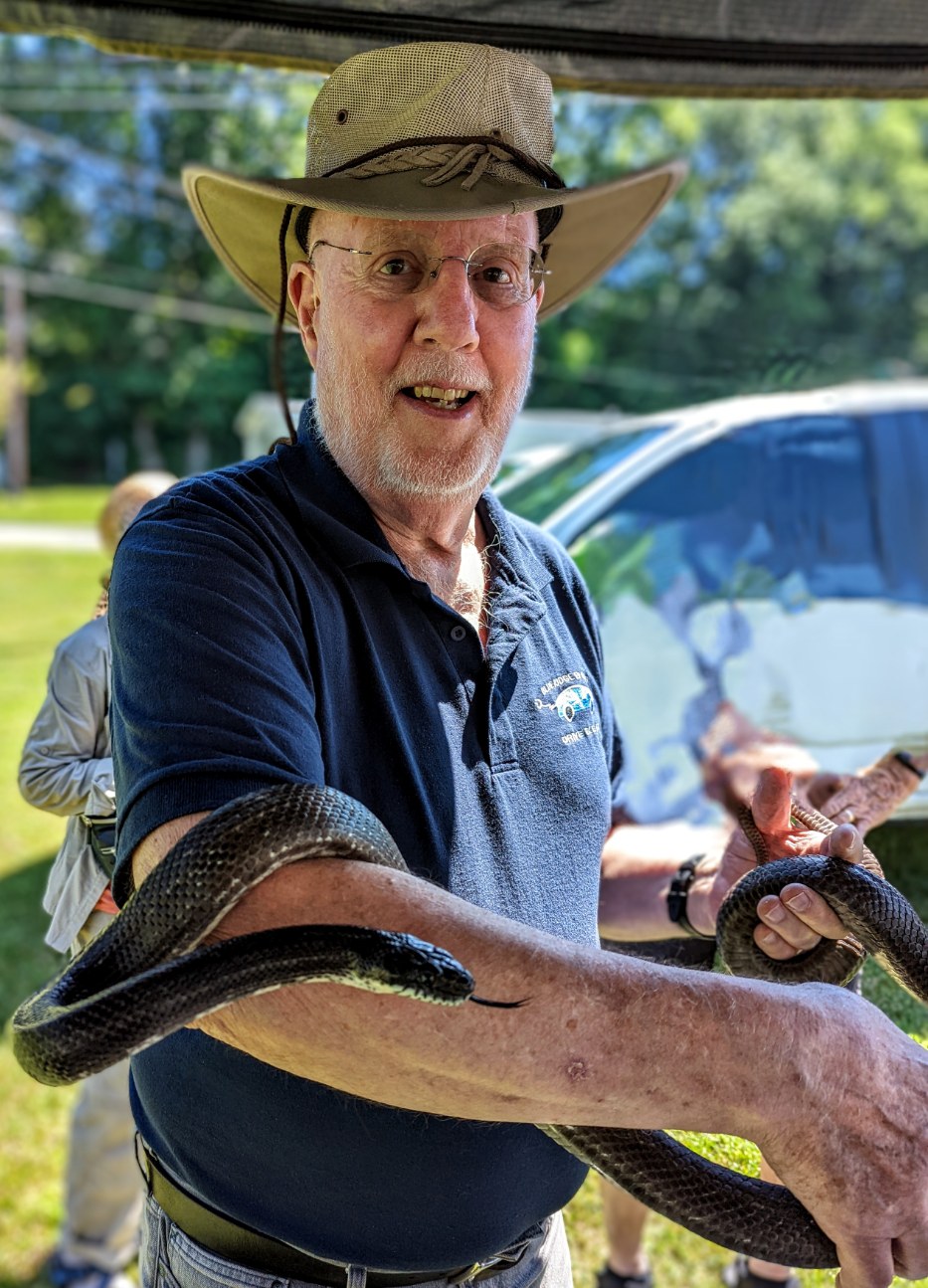
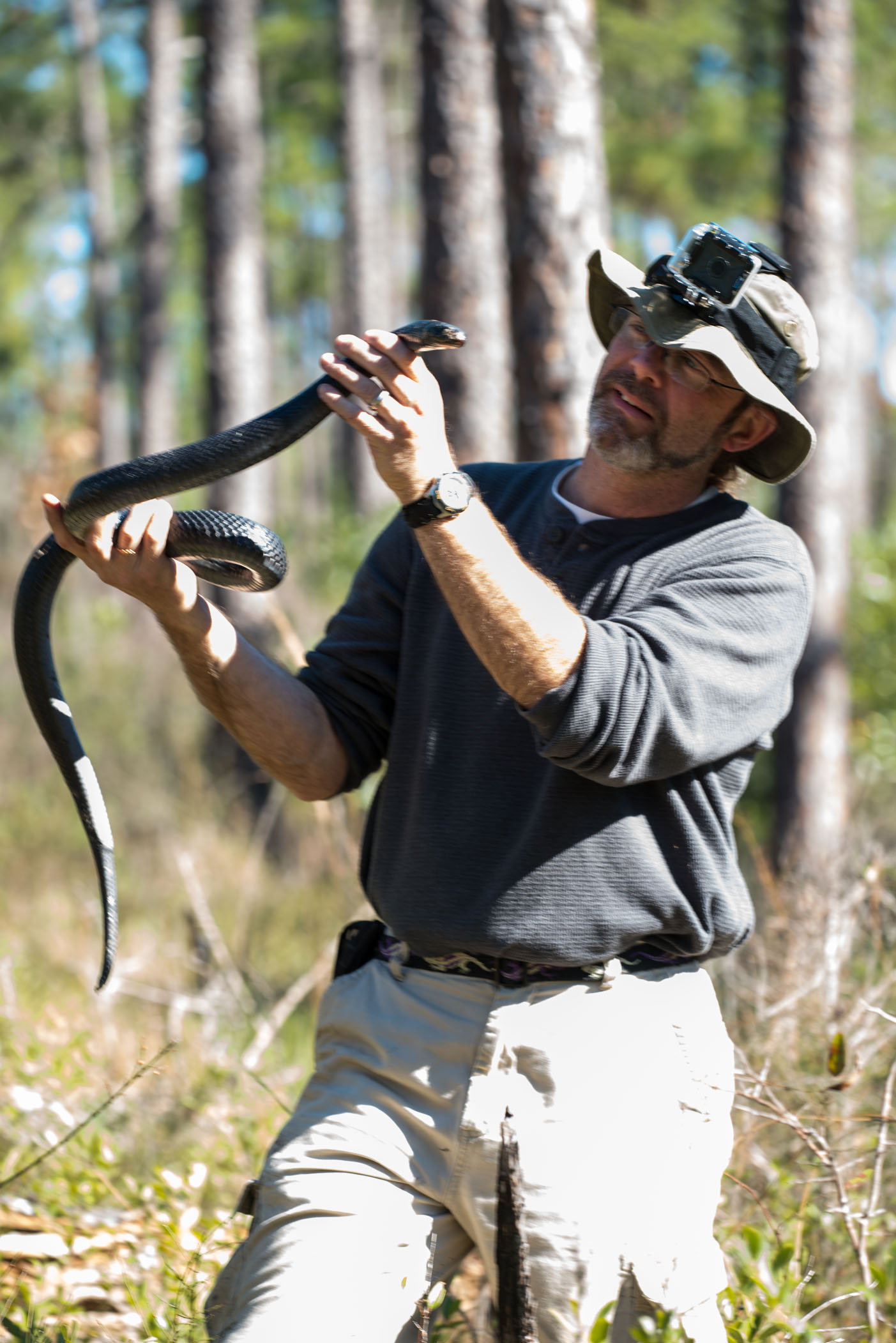
This year we had an exciting Rat snake rescue performed by longtime ENP volunteer supporters Jim and Alice Hardy.  Jim and Alice documented the exciting events that occurred when they found an adult Eastern rat snake tangled in a roll of garden netting. 

Jim works to free the wild rat snake

Jim worked tirelessly to free the snake from the netting and Alice captured the event on her iPad – I later edited it into a video for you to view and learn from.  Garden netting such as this can be very harmful to wildlife so please, we ask that you to please consider the misunderstood wild creatures such as snakes when you use netting such as this.  Thank you, Jim and Alice, for freeing this snake so that it may go on about its life helping to keep nature in balance. 

Watch the Rat snake rescue video below –

____________________________________

Outreach

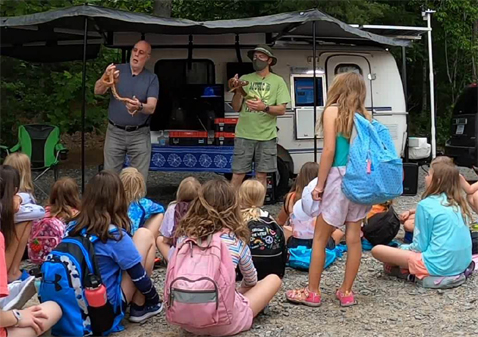
The 2022 outreach season was wonderful and full of excitement.  Even with “the virus” still running amok on planet earth, we saw our outdoor programming return to almost “normal” – and then some.  As in the pre-pandemic world, we presented at many of the same outdoor venues as in years past and in several new locations.  What allowed us to make this happen so well this year was support from our amazing volunteer program staff extraordinaire Marian, Paulina, Jim & Alice, Ron & Rachael, Michael & Katrina, and Cade who were always there when needed to make the magic happen for our outreach program participants and animal ambassadors.  The second reason this year’s outreach programming went so well was also due in part to the creation of our amazing new mobile outreach classroom – the SS NaSA PoD

The Mobile Outreach Classroom Project

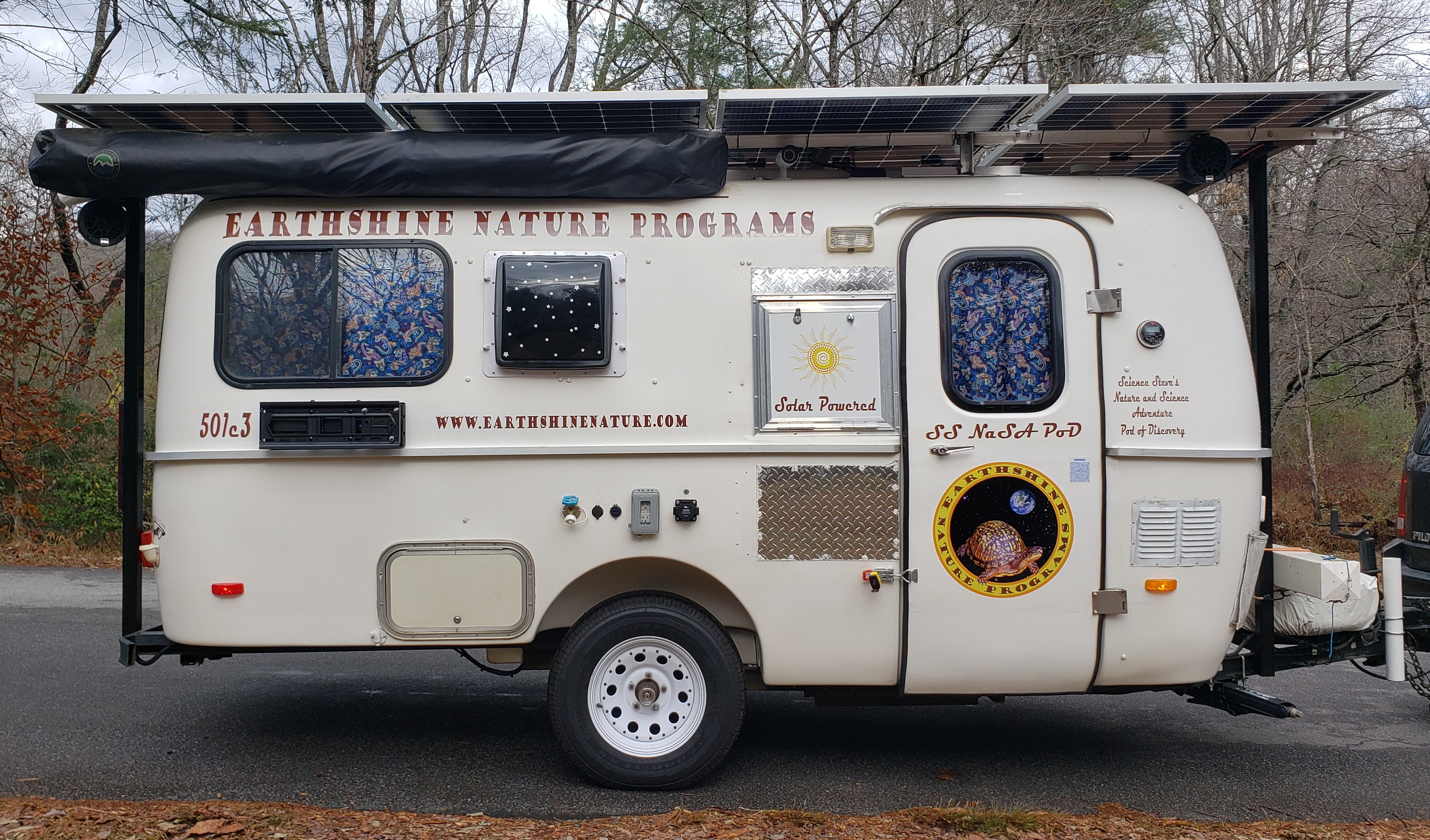
Last year we introduced you to our plan to construct a mobile outreach classroom to provide us with a better way to take our programming on the road in the time of covid-19 and beyond.  The wonderful news is that with your help – we did it!!! Shortly after last year’s newsletter arrived in your mailboxes, ENP received a most generous donation from Asher and family that allowed us to purchase the 1995 Casita RV pictured here as it was when we purchased it – which we then set to work on converting into our mobile classroom. 
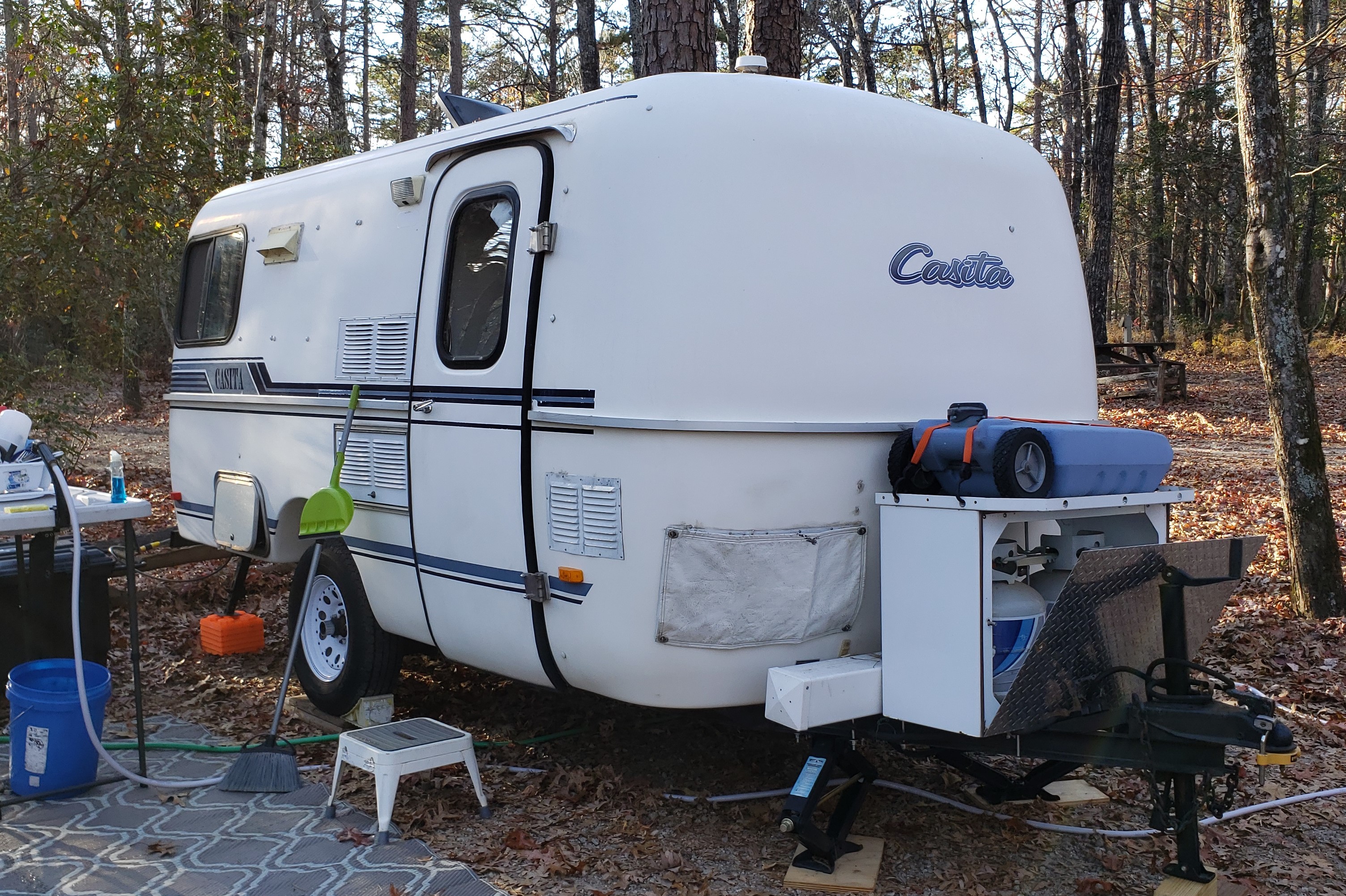
We worked all winter and into the spring to retrofit the little Casita camper and by May it was mostly complete.  With Asher’s help, we also gave it a name – the SS NaSA PoD – which stands for

Science Steve’s Nature and Science Adventure Pod of Discovery

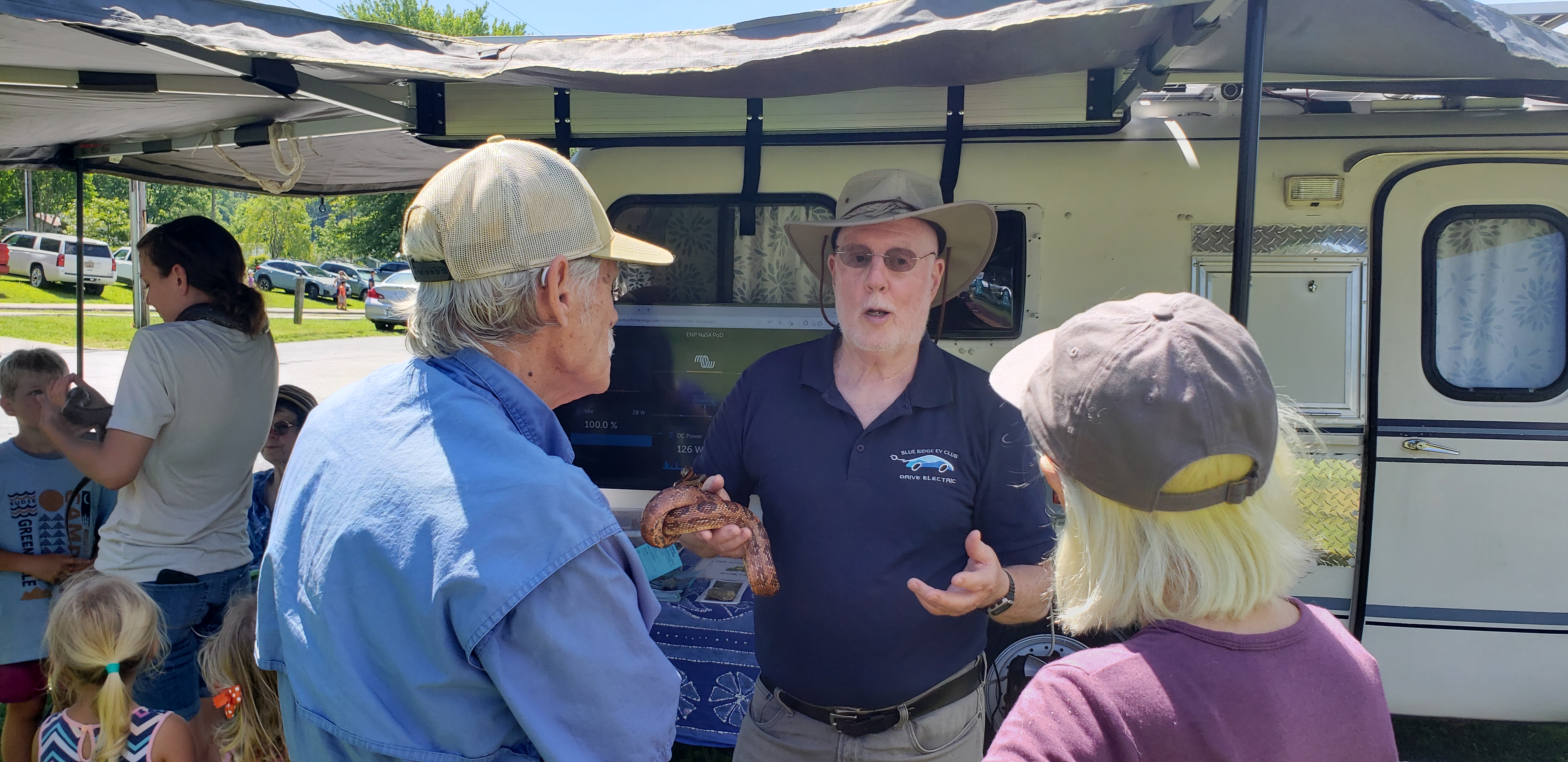
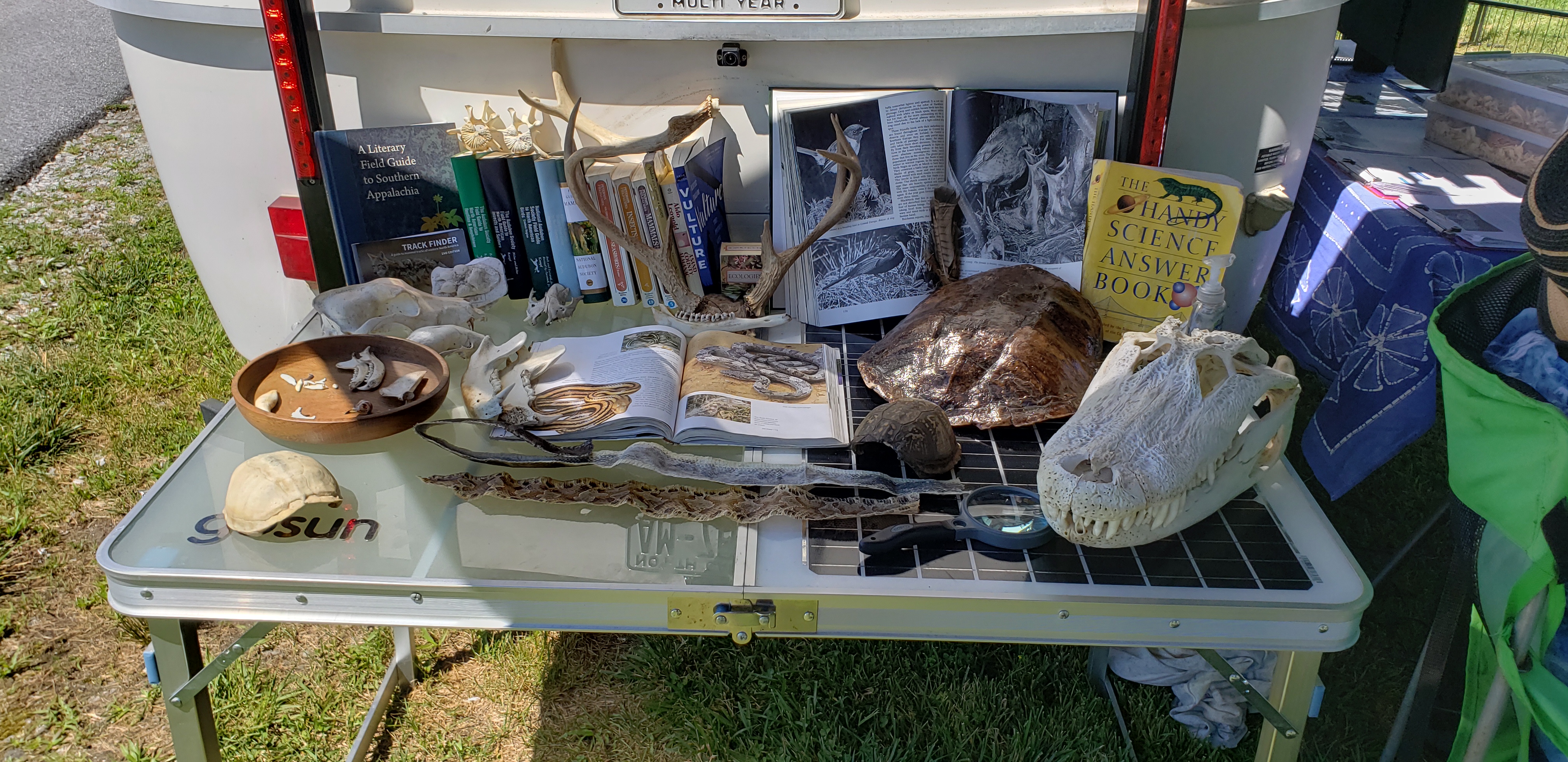
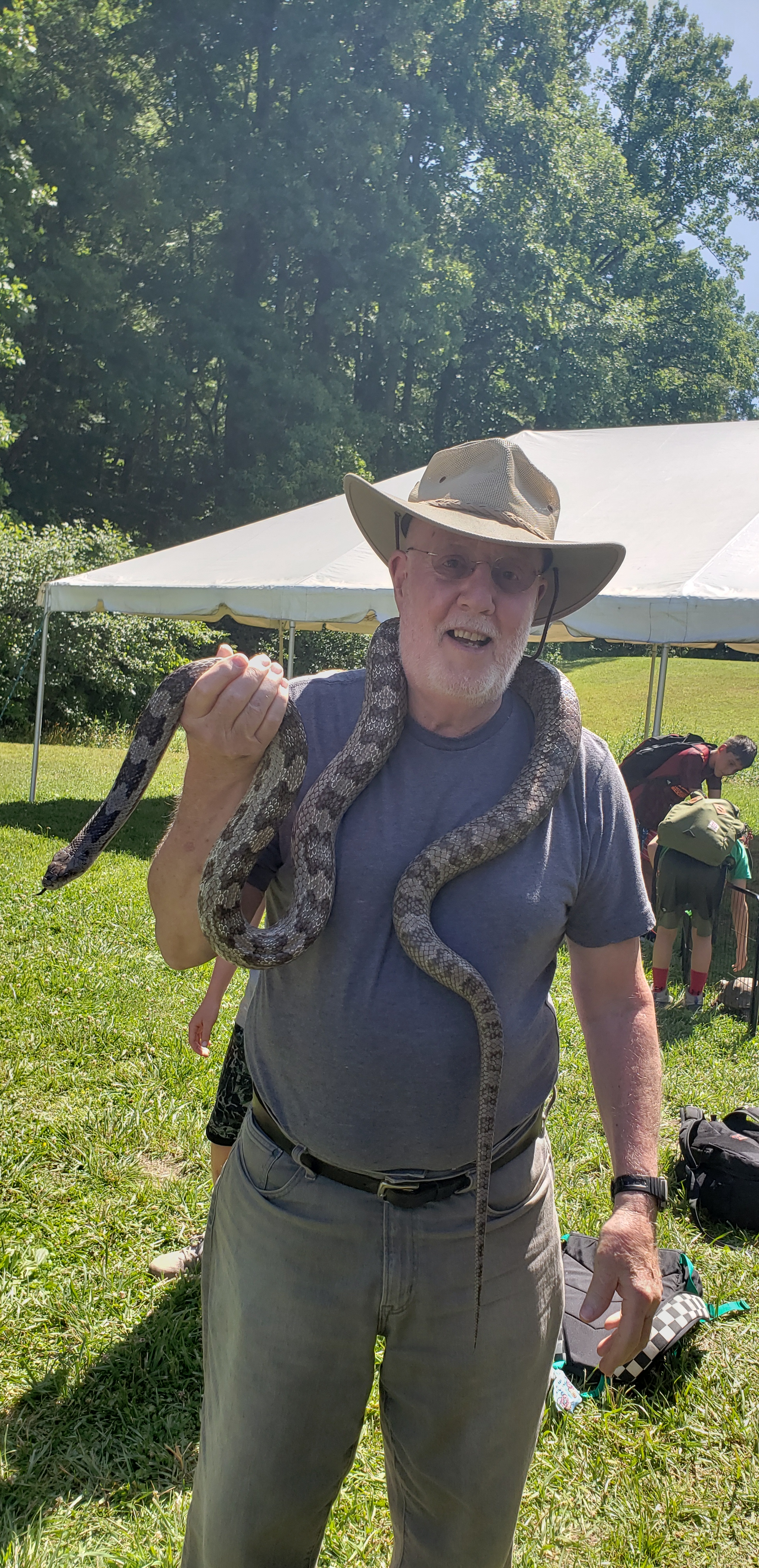
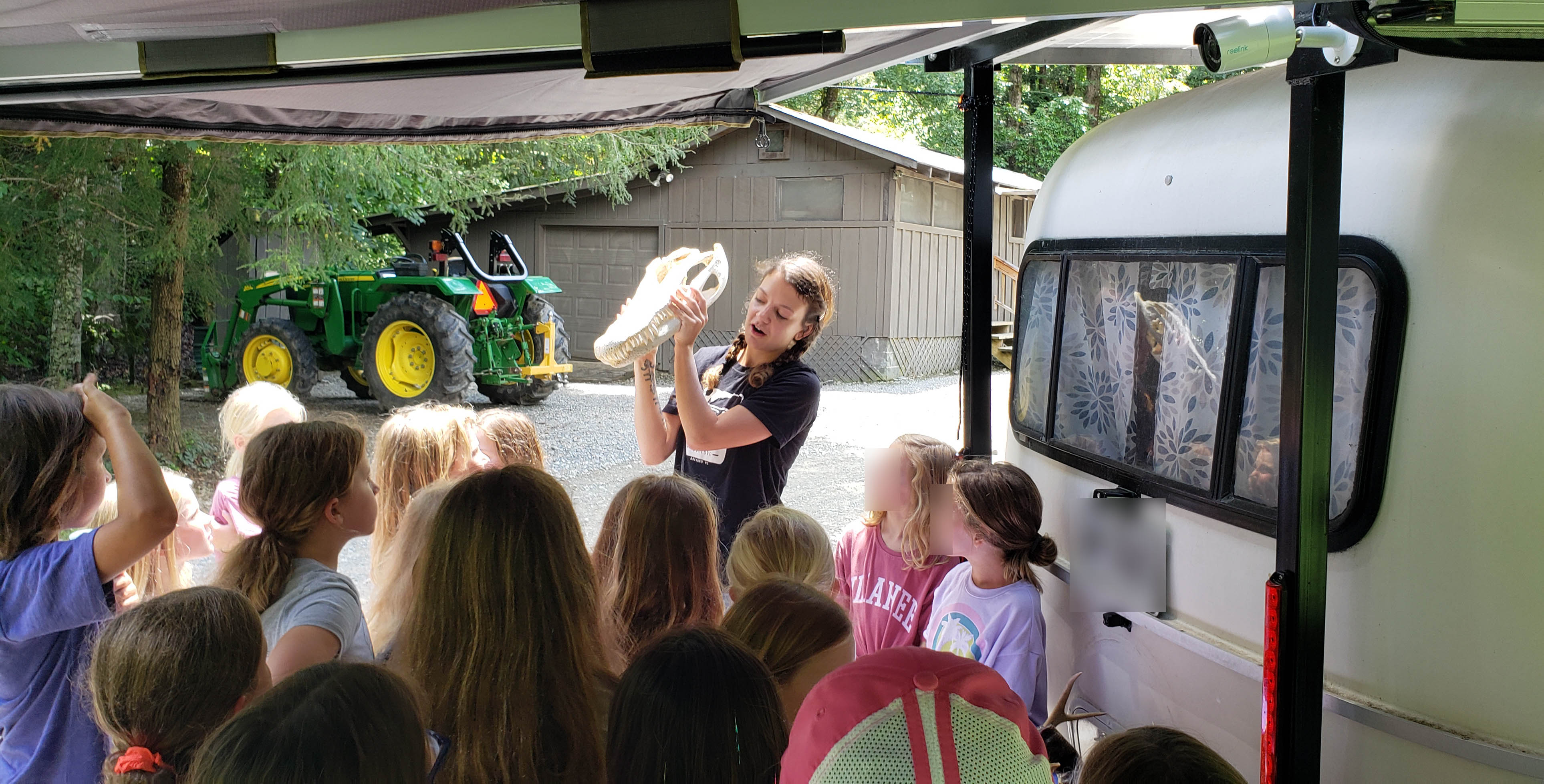
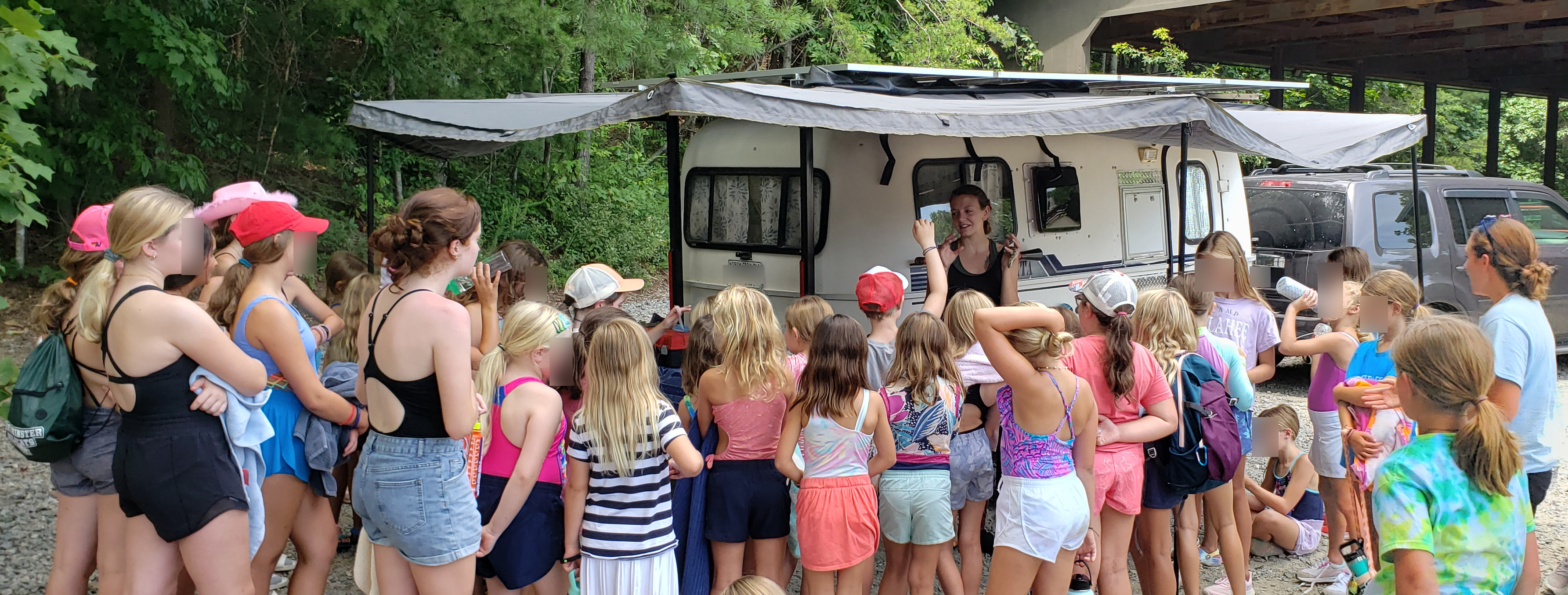
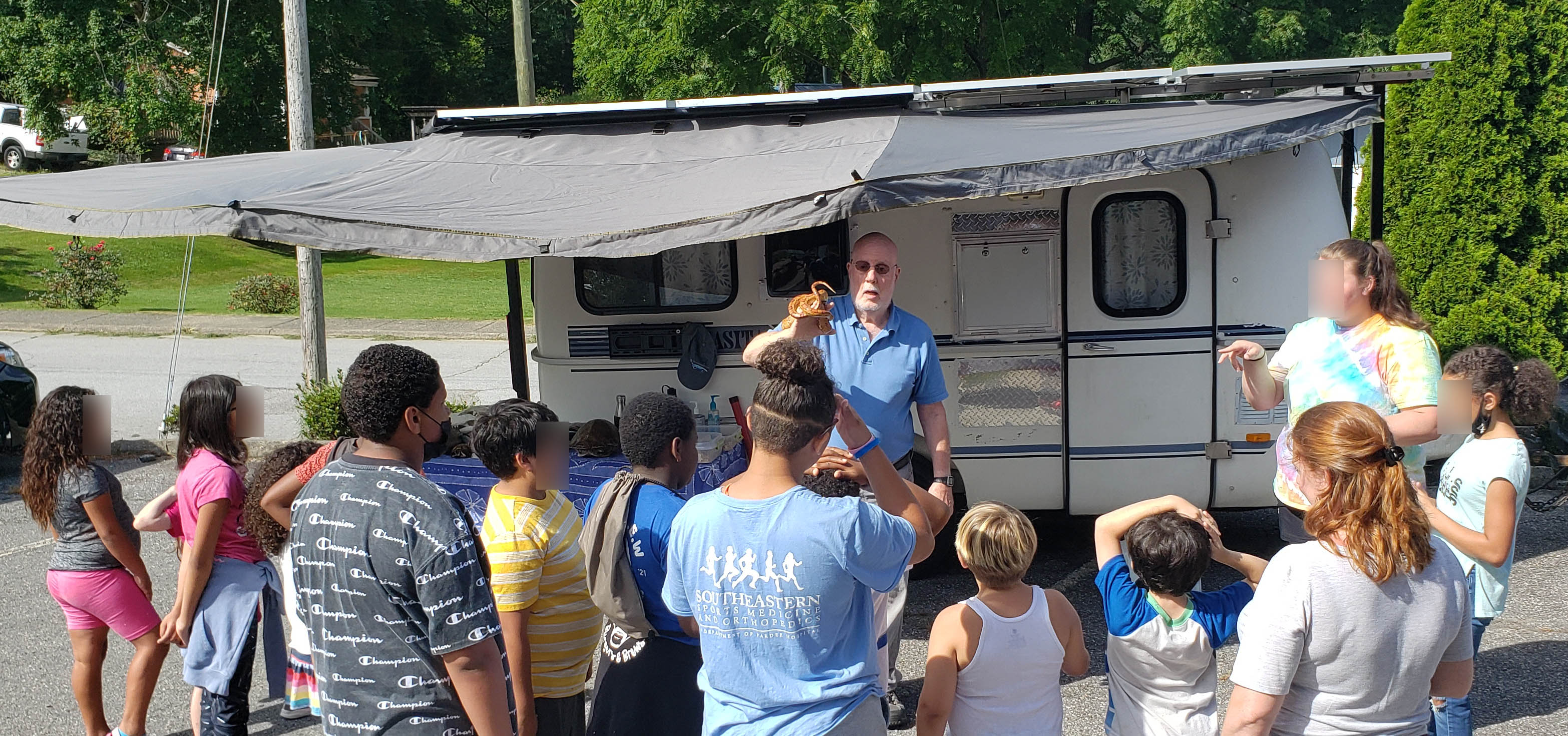
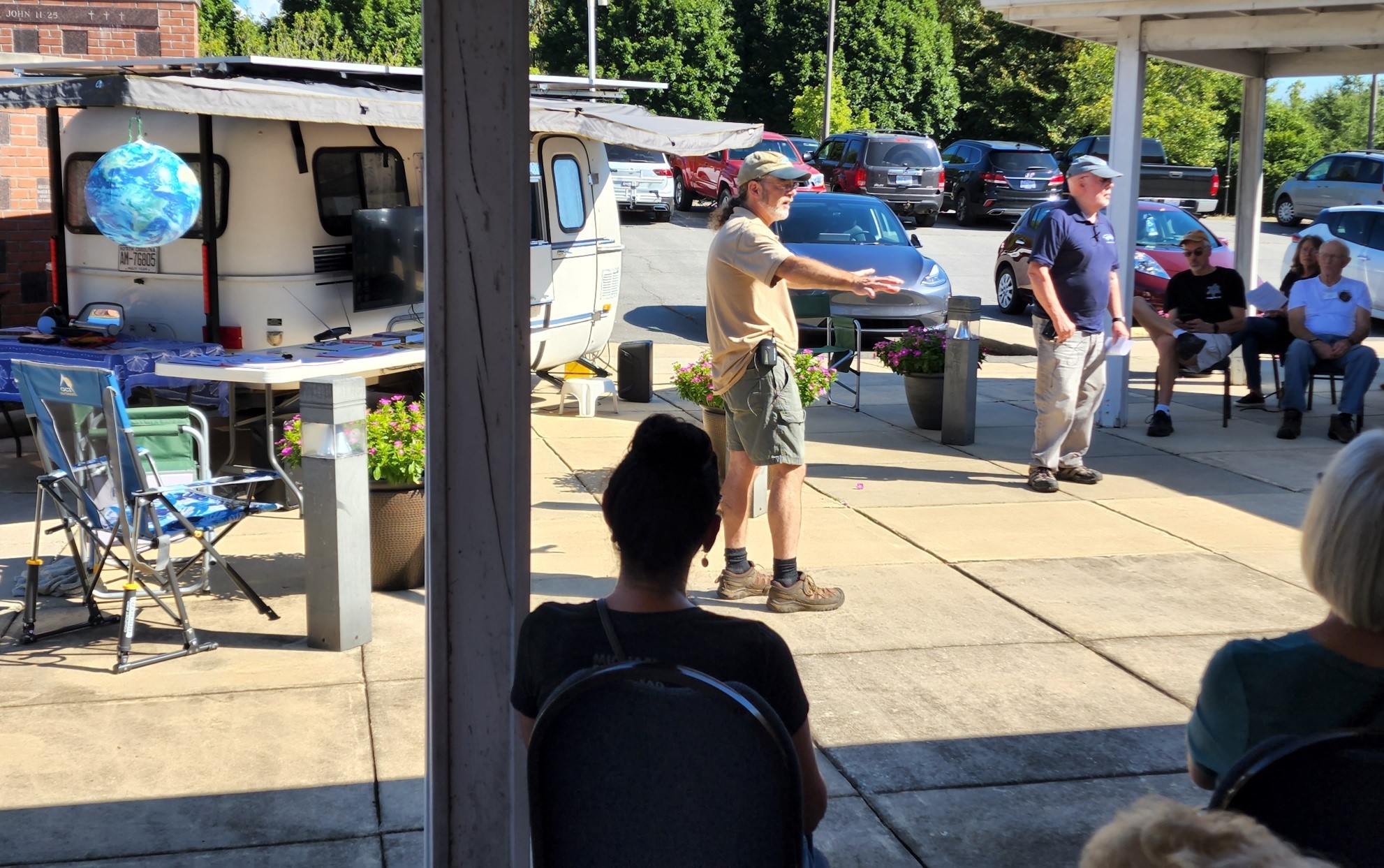
– or just “The PoD” for short.  We put The PoD to work doing what it was designed to do – take our wildlife, nature, and science programming to many local and regional camps, schools, and even two outdoor festivals!  It was a wonderful programming season and the SS NaSA PoD performed exactly as we designed it to do – it is a wonderful addition to our programming offerings.  We are so grateful for the most generous outpouring of support we received from all of you who worked with us to make this amazing project happen (and to my wonderful wife Marian who put up with my long hours working on this project that she often called my “mistress.”) 

THANK YOU ALL SO MUCH for your amazing generosity!!!   

What follows are photos beginning with how the PoD looks today after our work to retrofit it as a mobile classroom, and a few photos of the PoD in action from over the summer of 2022.  Please enjoy the fruits of your support and be content in the knowledge that your incredible support is helping us to continue to plant great seeds of curiosity, knowledge, and wonder wherever we may travel.

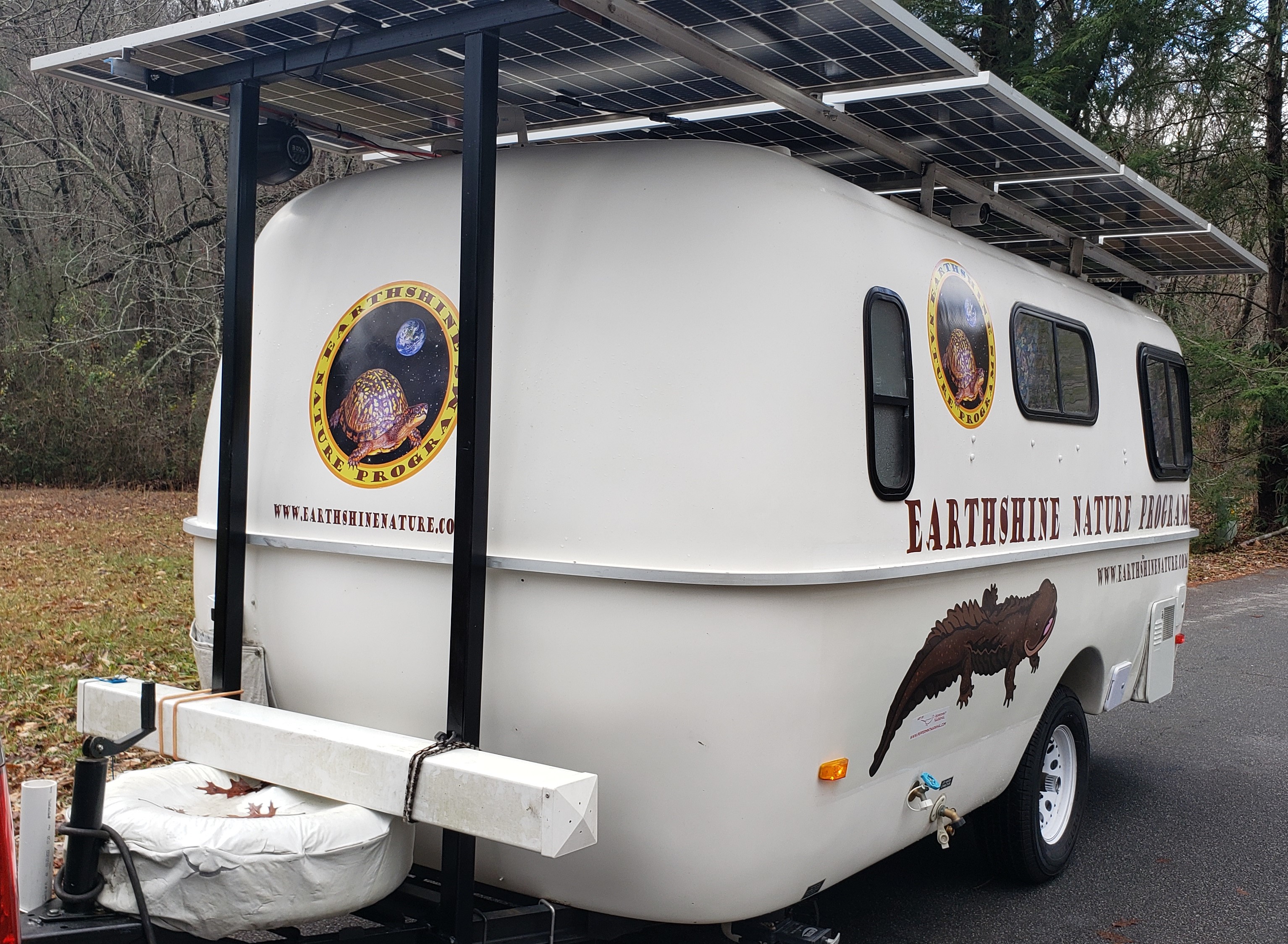
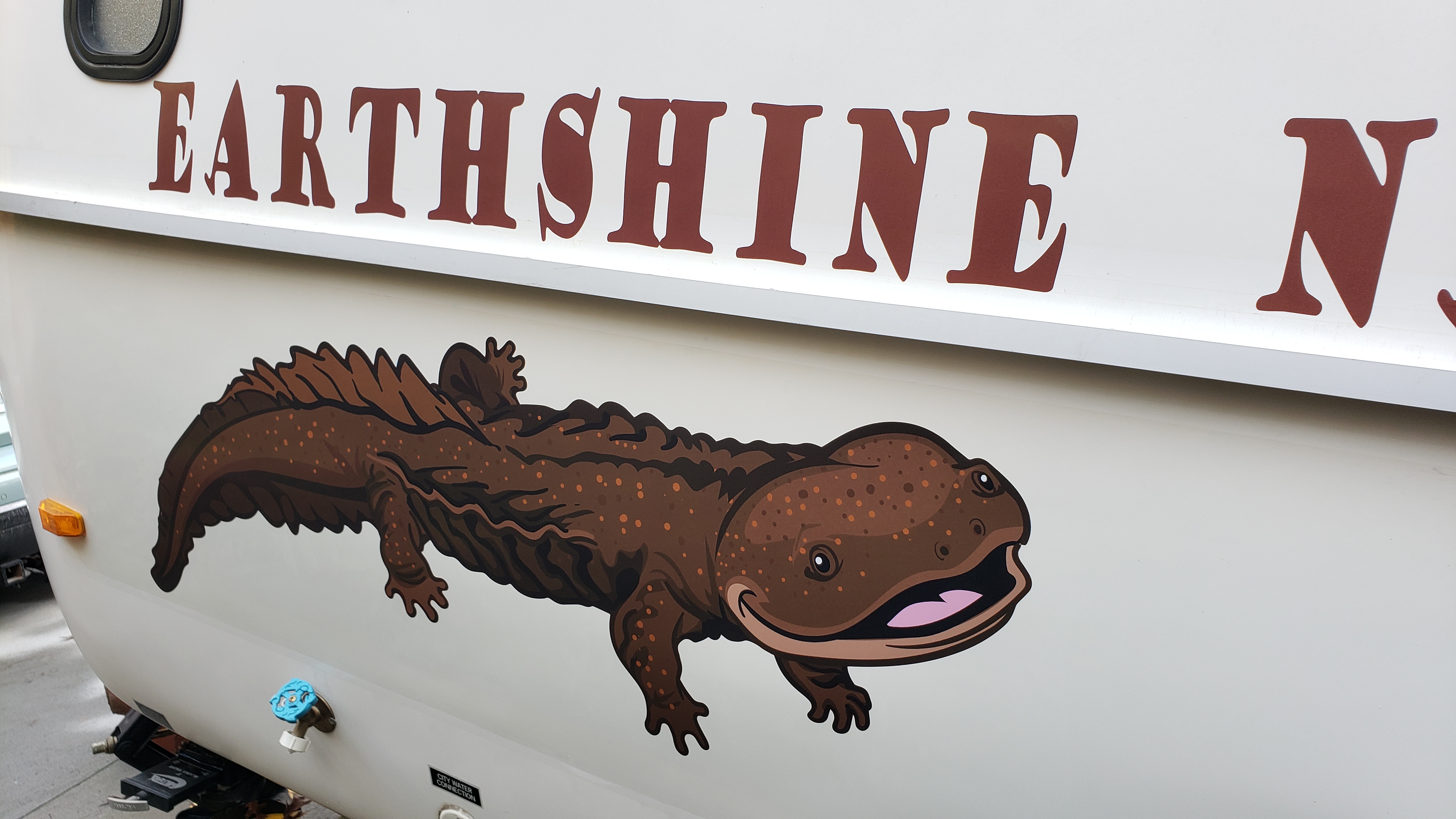
The custom Hellbender artwork on the PoD was donated by Peppermint Narwhal – please visit them today:

www.peppermintnarwhal.com

Your support of Peppermint Narwhal helps wildlife species in need.

If you are interested in discovering all the details of the acquisition, construction, and implementation of the SS NaSA PoD, please take a look at our previous post on this blog for all the details.

Remember to look for the SS NaSA PoD out there in 2023 and beyond! 

While the PoD is working exactly as we engineered it to do, and doing it very well – the one big issue we are having is with its tow vehicle, an aging Honda Pilot with high miles that struggles to pull the PoD up hills – and in our area, we are known for the hills that we call mountains.  Needless to say, we are concerned about the remaining lifespan of the Honda and truly do hope it makes it a bit longer until we are somehow able to source an all-electric truck to be used as the PoD’s dedicated tow vehicle/outreach/work/utility vehicle for ENP.  Please do contact us if you would like to assist us with the acquisition of an all-electric work truck to be used primarily as the tow vehicle for the SS NaSA PoD. Follow this link for more information on our future outreach vehicle plans and for ideas on how you can help us make it all happen.

Speaking of vehicles

September 29th, 2022 was the three-year anniversary of driving the ENP Chevy Bolt EV – The “Mighty Bolt” as we lovingly call her – as our outreach education and wildlife rescue vehicle.   

The Mighty Bolt in its element

I have estimated that if ENP had been using a petroleum-distillate-powered vehicle during this time, its fuel costs would have been around 13 cents per mile, and when we account for the mileage we have driven the Mighty Bolt EV during that time, our fuel costs for a legacy vehicle (such as the Honda Pilot we use to pull the PoD with a fuel economy of around .13 cents/mile) would have added up to around $5,400 for three years of use – not including the cost of repairs, “tune-ups,” and maintenance costs associated with “legacy” vehicles.  Since the ENP outreach EV is fueled (charged) primarily from our student-built classroom solar array – its fuel costs are zero ($0.00/mile) for its daily driving duties.  Even if it were charged primarily using the energy mix from the local power grid it would still only cost ~.01 cents/mile to drive.  These savings are substantial for a small, volunteer-operated, environmental conservation and education outreach organization.   All this awesome gives the Mighty Bolt EV very small business and environmental footprints, and it continues to serve as a wonderful energy education teaching tool inspiring the next generation to think above and beyond the status quo and work hard to have better Leave No Trace (LNT) ethics than past generations.  As a very wise person once said: “Work very hard to leave the earth better than you found it.” Here at ENP that bit of wisdom is at the center of our mission and we work very hard every day to make that mission a reality.

The Mighty Bolt EV and SS NaSA PoD are owned by ENP and are used primarily as our outreach vehicle and mobile classroom.  They are both fueled mostly by renewably generated electricity provided by the ENP/Trails Science student-built classroom solar array and the PoD’s rooftop solar array.  They both serve as wonderful teaching tools for our Trails students, ENP outreach program participants, and everyone we meet via our programming. 

This year ENP was interviewed for a story about the Eastern box turtle in Our State magazine!!  What an honor!! Read the story via this link: https://tinyurl.com/ourstate1 or if you prefer the full link:

www.ourstate.com/tracking-turtles-with-the-box-turtle-connection

Organic Garden and Chickens

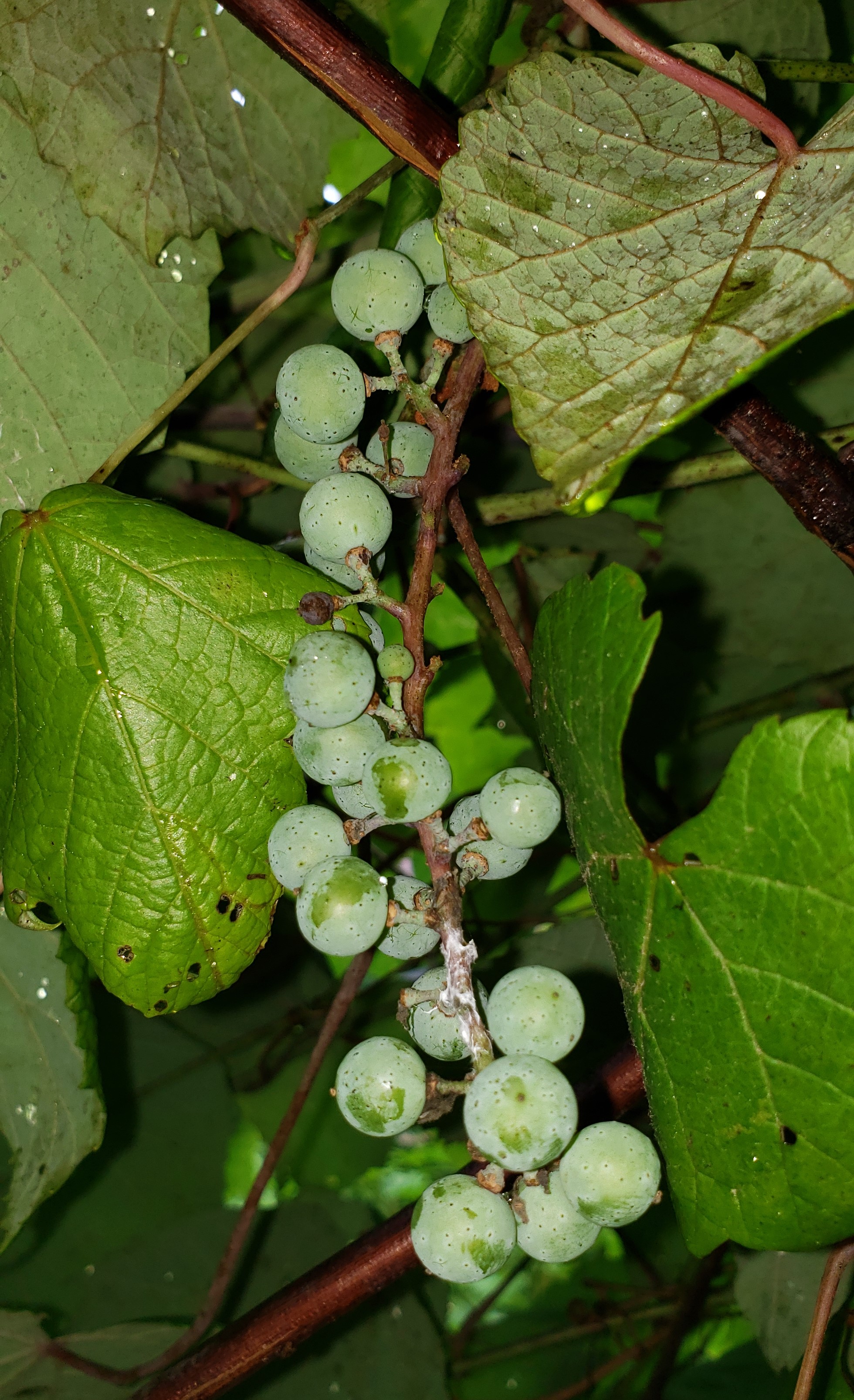
This was the sixth year for our student organic garden project.  We produced loads of green beans, hot and mild peppers, cherry and grape tomatoes, three varieties of carrots – Cosmic purple, Solar yellow, and Lunar white (cool theme right?) – and finally, after many years of waiting – our native grape vines produced fruit!  All of this wonderful organic produce was shared among the students, staff, chickens, turtles, and tortoises!

No veggie is safe around here!

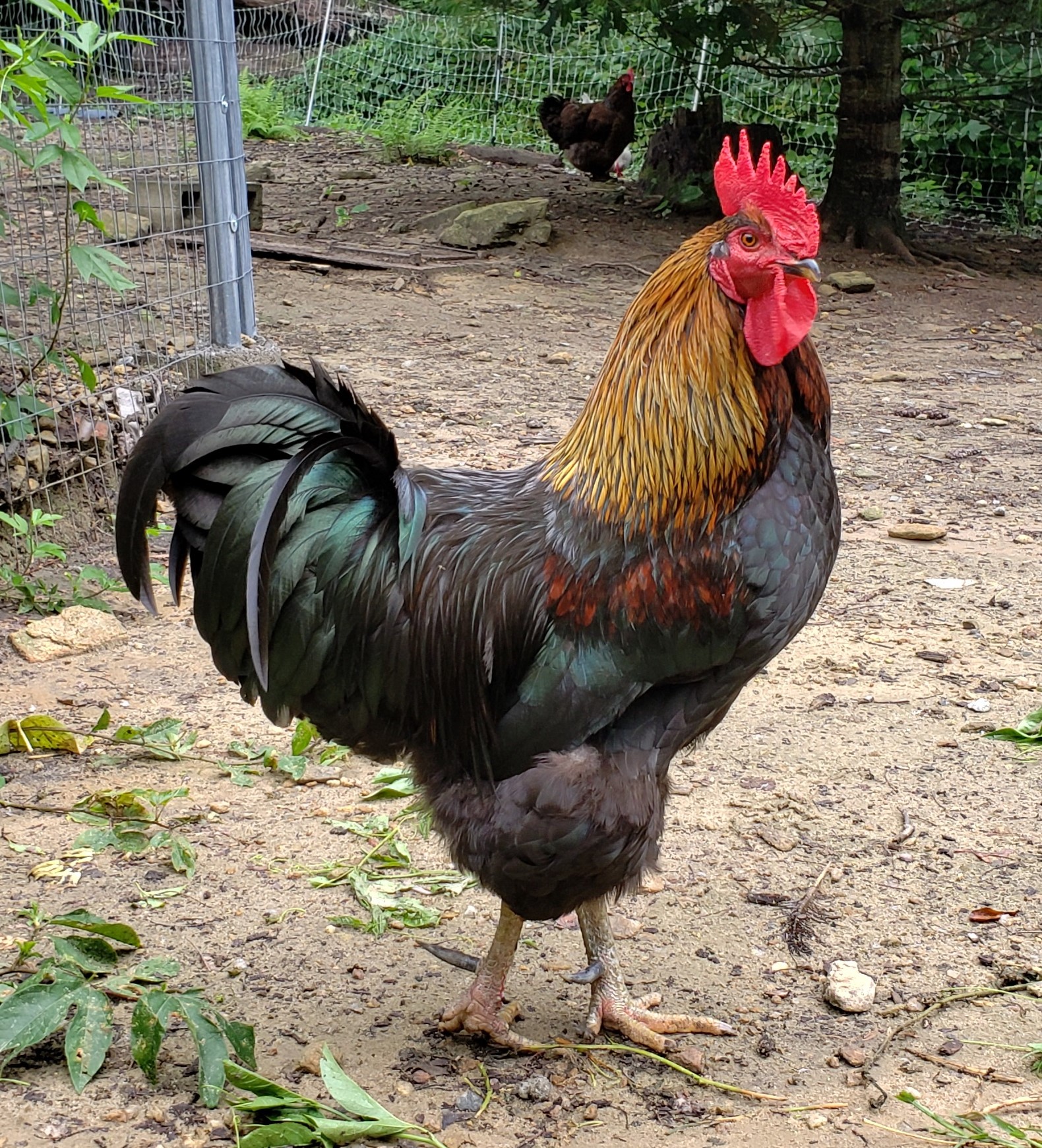
As in previous years, we noticed vigorous plant growth and far fewer pests this year due to the chickens scratching up and eating many of the pests overwintering in the soil.  We have always believed the only way to have a truly organic garden is to not use any toxic chemicals or fossil fuels in the preparation and tending of the garden so, as in past years, the students and I prepared the garden using only human, chicken, and solar power, and fertilized it with well-seasoned composted food scraps and cage waste from our chickens and education animals.  Our small flock of friendly chickens are happy and healthy, but they are not producing many eggs due to their age.  Next year we will introduce a few young hens to the flock to increase egg production for our students.  Our chickens are free-range, organically fed, and have been hand-raised by our students as pets.  They are wonderful, friendly, therapy animals – with the great side benefits of giving us tasty, organic, free-range eggs, no-cost organic fertilizer, and pesticide-free pest control for our student garden project. 

The ENP Renewable Energy Program

High above the ENP/Trails Science wilderness-based classroom

On November 8th, 2022 we celebrated five full years of producing clean, “locally grown” renewable solar electricity with our student-built classroom solar array!! This year we achieved another milestone on that same day with the final completion of the entire solar array!  Therefore, November 8th is not only our solar activation day – it is also our solar array completion day – very cool indeed.  But what steps were needed to complete the array and why did it take us so long?  The answer to that question is in how we constructed the array – in phases.  Phase 1, the blue (5.4 kW) center section of the array, was completed on November 8th 2017.  Phase 2 consisted of the East (4.8 kW) and West (7.2 kW) arrays – the darker colored sections in the photo – that were completed on July 4th 2019 – giving the classroom array a combined output power of 17.4 kW.  Then, this past spring we had the good fortune to be able to acquire four slightly used solar modules (1.2 kW) from a friend.  Along with these new-to-us modules came several micro-inverters which allowed my students and I to install them rather quickly onto the remaining open spaces on the eastern and western sides of the solar array support structure.  We then used some of that same hardware to install our two remaining spare solar modules (.5 kW) into the final two open spaces on the array – so with the installation of these final six solar modules (Phase 2.1) – our student-built classroom solar array is now fully complete!!

     My students and I installing the last solar modules

The combined array now has the capacity to produce over 19 kW of solar-produced renewable energy!  This classroom energy project has been a phenomenal success!  As of the writing of this document our student-built solar array has produced over 69 megawatt-hours of clean, renewably-produced, electricity! That is enough energy to power an average American home for over 6 years or drive an average EV over 250,000 miles – and it also has offset close to 50 tons of CO2 – amazing!! Since our classroom solar array has been online it has consistently, quietly, and without any pollution or toxic emissions, produced several times the energy needed to meet the daily requirements of our classroom building, education animal habitats, and our all-electric outreach vehicle’s daily driving electron fuel needs – all this and with power to share!  We produce so much electricity that we send the surplus out into the local energy grid giving our closest neighbors on the campus of Trails Momentum loads of renewably-produced energy.  Some of that excess electricity even goes to our nearest off-campus neighbors – so our classroom continues to be a renewable energy power plant not only for our classroom and campus – but also for the local community!!   

All of this solar-powered awesome was made possible with the most generous support of Bob Harris of Black Bear Solar Institute, Pisgah Forest residents Jim and Alice Hardy, Lake Toxaway Charities, Trails Carolina, Trails Momentum, and our many other wonderful project supporters – maybe you were one of them – and all of our amazing Trails students, and ENP interns, and volunteers – THANK YOU ALL!!

With the full completion of Phases One and Two – and now 2.1 – the most complex portions of our classroom solar array project are fully complete. However, we are continuing to fundraise for Phase Three – the final phase of our long-running classroom energy project.  This will consist of two interconnected parts:

Part One – a “secure power” off-grid circuit that will allow us to use energy directly from the solar array during power outages when the grid goes down and we have sunshine hitting the array – so only during the day.  With your support in previous years, this part of Phase Three is now fully installed and wired but due to the pandemic setting many things back, it is not yet online – but we do hope to see it go live soon. 

Part Two – this will consist of a “plug and play” battery storage system that will store much of the excess electricity produced during the day and will then supply that stored solar energy to the building’s systems at night and during power outages – which happens frequently in our remote wilderness location. Once Phase Three is fully complete and online we will then use our original power grid connection to our utility as a backup power source during long periods of dark/rainy/stormy weather.  As with the Secure Power portion of Phase Three – we have completed much of the preparation for the battery storage unit to allow it to function in a “plug-and-play” manner once we raise the funds needed to purchase the remaining primary components – the storage batteries and battery inverters. 

To make the remaining portion of the 3rd and final phase of this amazing student energy S.T.E.M. project a reality for our classroom, our students, and our animal ambassadors, we need your continued support in this final push to the end. 

Please consider a year-end gift to Earthshine Nature Programs to help us reach our renewable energy-powered goals. Read on for several other unique ways you can support us later in this document. 

Watch a short time-lapse video of Phase Two of the solar array’s construction

Isn’t science amazing!

___________________________________________

  Origin Story/Supporter Spotlight

In 2007 – just a few weeks after I discovered Tripod as outlined earlier in this newsletter – I met Billy and Gail Hagler.  They were visiting Earthshine Lodge where I was working as program staff.  I spoke at length with the Haglers about the unique importance of nature and box turtles and we realized that we were kindred spirits in our love of wild things and wild places. 

The Haglers then told me all about a box turtle their grandson had found recently on their land in a nearby community.  Since their grandson was visiting from afar and would be unable to take the wild turtle home as a pet, the Haglers wondered if it would be possible to somehow keep track of this special turtle that their grandson had named Mr. Bones.  I suggested using radio telemetry and the Haglers loved the idea and asked what I needed to make it all happen.  I outlined the plan and the Haglers supported the project thereby becoming ENP’s very first supporters – even before ENP officially existed.  I then attached a micro-radio transmitter to the carapace (upper shell) of Mr. Bones and we released him into his home habitat on the Hagler’s property. 

   Mr. Bones the Eastern box turtle with his transmitter

We then started keeping track of Mr. Bones (and another turtle they found and named Mrs. Bones) so the Hagler family could follow the events of their lives from afar via the magic of the internet.  Weekly I would locate both turtles, collect vital location, environmental, and movement data, then make a short video of their status and upload it to a YouTube page which later became the ENP YouTube channel.  We tracked Mr. Bones for several years until his transmitter prematurely failed in 2012 and we lost track of him.  Luckily, we were able to continue tracking Mrs. Bones for several more years as she led us on many amazing adventures until the day I found her transmitter alone in the forest without the turtle it was supposed to be attached to.  It had small scratch marks on its casing and attachment adhesive.  I have had transmitters damaged and removed from turtle’s shells before and I believe it to be the work of curious squirrels/rodents or possibly a neighborhood dog.  As for Mr. and Mrs. Bones, I am sure they are safe and happy living wild and free in the wonderful remote forests, fields, rock outcrops, and riparian areas of the Hagler’s beautiful nature preserve.  Although we eventually lost track of both Mr. and Mrs. Bones, we were able to gather valuable data on the travels of the Eastern box turtle in the mountains of Western NC as well as provide a young boy and his family with a unique way to learn about the secret lives of a most unique and beautiful animal – the Eastern box turtle.  This was ENP’s very first wildlife conservation education project and it would not have been at all possible without the Haglers who made it happen with their most generous support. 

THANK YOU Billy, Gail, and family for supporting ENP over the years without you, ENP may never have happened.

It is with a heavy heart that we must report that Gail Hagler passed away recently and was laid to rest upon the very same lands where both Mr. and Mrs. Bones roam wild and free among the beautiful flowers, ferns, forests, and trails that Gail and Billy love so much.  Rest in Peace Gail Hagler – you will be missed by many.

If you would like to follow in the turtle tracks of Mr. and Mrs. Bones, their stories will be forever preserved on the ENP YouTube channel and can be found via these links:

Mr. Bones Tracks: https://tinyurl.com/bonestracks  or if you prefer the original link: https://youtube.com/playlist?list=PLDE596565944C8A26

Mrs. Bones Tracks: https://tinyurl.com/mrsbonestracks Or if you prefer the original link: https://youtube.com/playlist?list=PLF53F20D890D9AAC9   

________________________________________________________

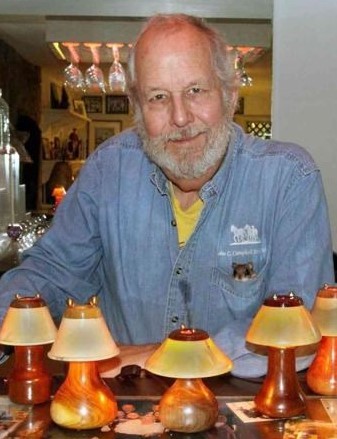
Sadly, this year we also lost another great friend of the wild things and ENP – Allen Robinson. 

Allen had worked with us as a wildlife outreach programming presenter for the last two years, sharing his love of a very secretive and beautiful creature – the Flying squirrel (look in his shirt pocket in the below photo) – with our summer day campers at Campus Adventures at Brevard College. 

Allen was also an accomplished wood turner as you can see from the beautiful works of art that decorated his home – some of which appear in the foreground of the photo of Allen and his furry “flying” friend. 

We at ENP wish Allen a peaceful rest among the woods, wild lands, and wild things that he loved so much.

_________________________________

A few years ago ENP was featured in the Laurel of Asheville.  Read the story at this TinyURL link:

https://tinyurl.com/yb7zxhdp 

or just search online for “Laurel of Asheville Earthshine Nature”

__________________________________

Wildlife Conservation Education Programs

Our wildlife conservation/field study programs ended several years ago and we are now focusing all our energy on our classroom and environmental education outreach programming, wildlife rehabilitation, and renewable energy education programs.

However, you can still learn what we learned in our wildlife adventures by purchasing a copy of the first of these three publications or preordering the others –

Snake Tracks: The Rattlesnakes of the Blue Ridge (available)

Turtle Tracks: Box Turtles of the Blue Ridge (preorder)

Snake Trails: The Rat Snakes That Live Among Us (preorder) 

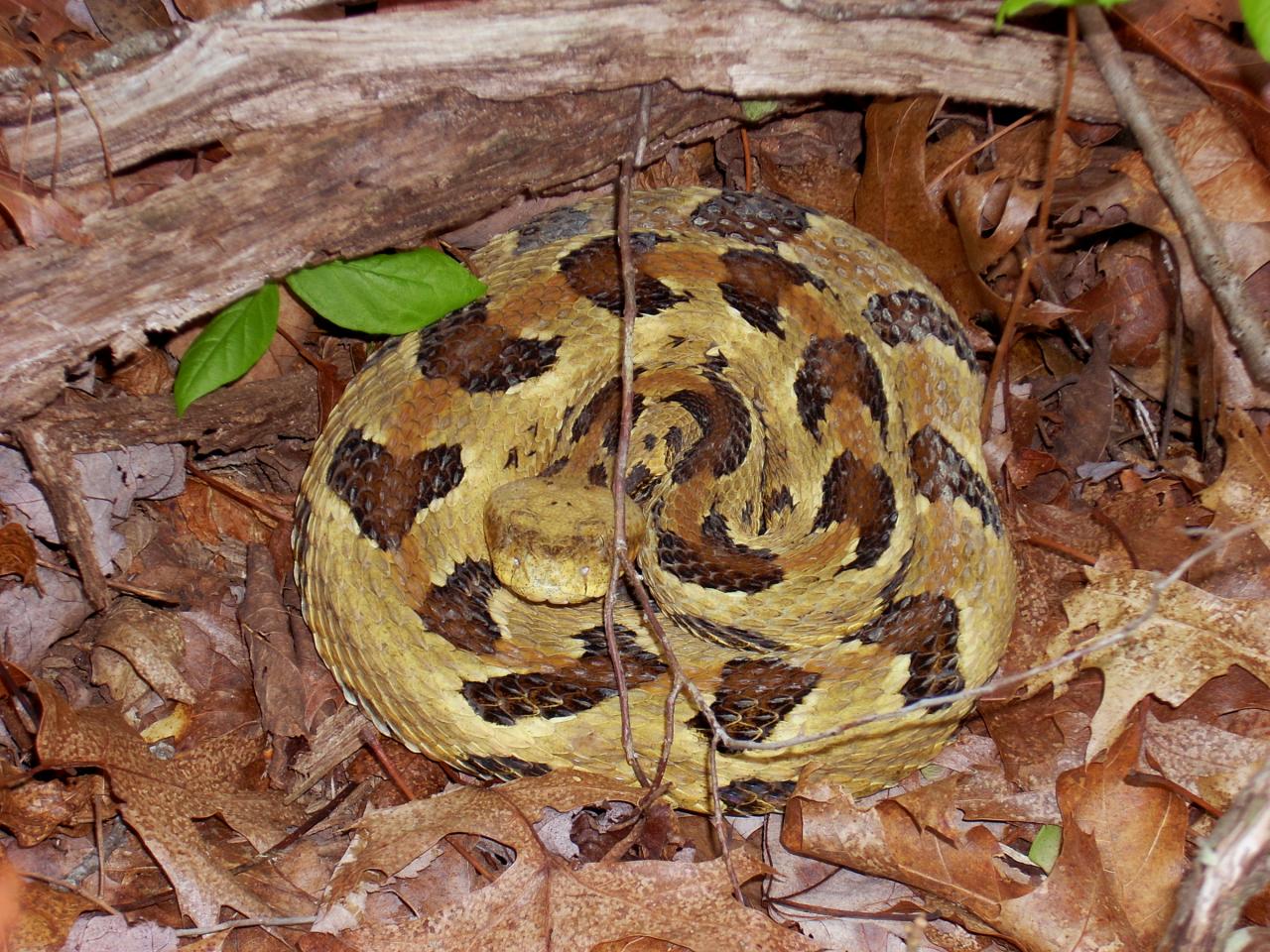
These three publications contain a naturalist’s perspective on the discoveries we learned by following the secret lives of Utsanati and Zoe – the two wild Timber rattlesnakes we followed in their native habitats for four years, and the stories of Mr. Bones, Mrs. Bones, Catherine, Jimmy, Mojo, and several other Eastern box turtles and Two Eastern rat snakes (blacksnakes) Apollo and Splinter – that we followed between 2007 and 2016 using radio telemetry techniques in the beautiful Blue Ridge mountains of WNC.  Within the pages of these documents you will find an overview of the natural history of each species, a consolidation of my field observations and personal reflections, as well as tracking, and activity maps, and many high-quality photographs.  These overviews of our three biggest conservation projects offer fascinating insights into the lives of these unique, beautiful, and often very misunderstood creatures as well as provide the reader with useful information on coexisting with these animals and other native species on your lands.  All proceeds from the sale of these publications will be 100% directed toward our continuing nonprofit wildlife conservation, rehabilitation, and environmental education mission and projects.  To purchase or reserve your copy(s) please send us an email or use the contact link on our website           

www.earthshinenature.com/contact

As you know we at ENP love the more misunderstood wild creatures of the world, and since 2018 we have also been following the lives of two Black vulture (Corygyps atratus) families.  One of the families used a remote rock shelter at the top of a sheer cliff face as a nursery for its young where we set up several cameras to observe the baby vultures and their parents from egg to fledge.  Watch their epic-length story below or on our YouTube channel via this TinyURL link: https://tinyurl.com/vulturestory or if you prefer the original link: https://youtu.be/jI-FLPrF3zc

SPECIAL THANKS to John V. for making this unique project possible.

During the pandemic, we learned of another family of Black vultures living in an abandoned house, and as with the rock shelter family, we set up our cameras and started collecting data.  We are still in the data-collecting phase of this project and have yet to produce a video documentary of the unique wildlife activity at this location – but we did deploy our cameras at a nearby feeding site and captured some amazing footage of vultures (and many other species of wildlife) doing what vultures do best.  If you are interested in learning all we are learning about the amazing and very misunderstood world of the vulture, just follow these links:

Let’s Talk About Vultures blog post: earthshinenature.wordpress.com/2021/10/21/lets-talk-about-vultures-part-1/ or use the TinyURL: https://tinyurl.com/vultures1

The Wild Restaurant video series is on YouTube: Search for Earthshine Nature Programs then navigate to The Wild Restaurant playlist or type in the TinyURL link: tinyurl.com/thewildrestaurant

Or use the full link: https://youtube.com/playlist?list=PLpltqHFlPTaLf_dR26XKKAbNp-BQfemop   

A Vulture Family Album video playlist is on YouTube: Search for Earthshine Nature Programs then navigate to the playlist, use the TinyURL: tinyurl.com/vulturefamilyalbum

or type in the direct link:: https://youtube.com/playlist?list=PLpltqHFlPTaKOZ0bK4WbafUK7K482XatY

Hopefully, after learning a bit more about these beautifully bizarre and most misunderstood birds with unique table manners, maybe you will come to have greater respect and admiration for the most-important role they play in nature as I have done while working on this unique project.

THANK YOU to everyone who supported us and helped us make this very special project a reality!!!

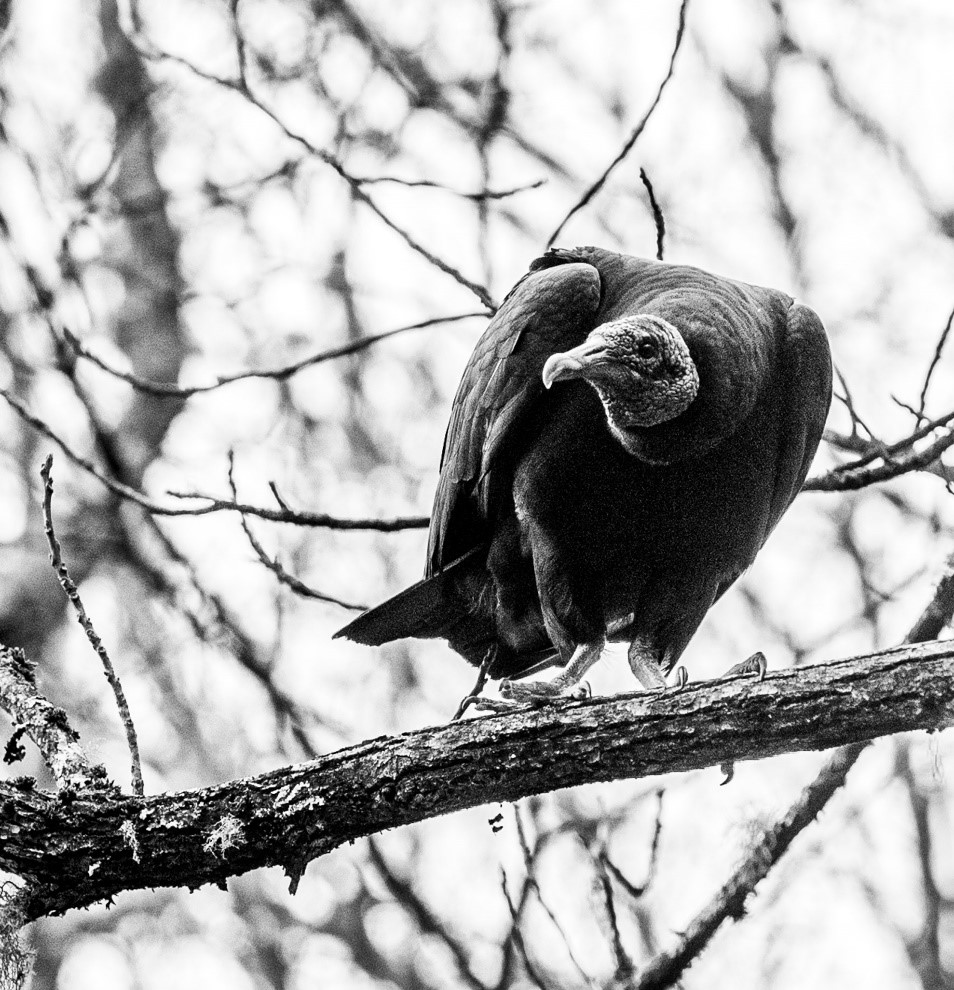
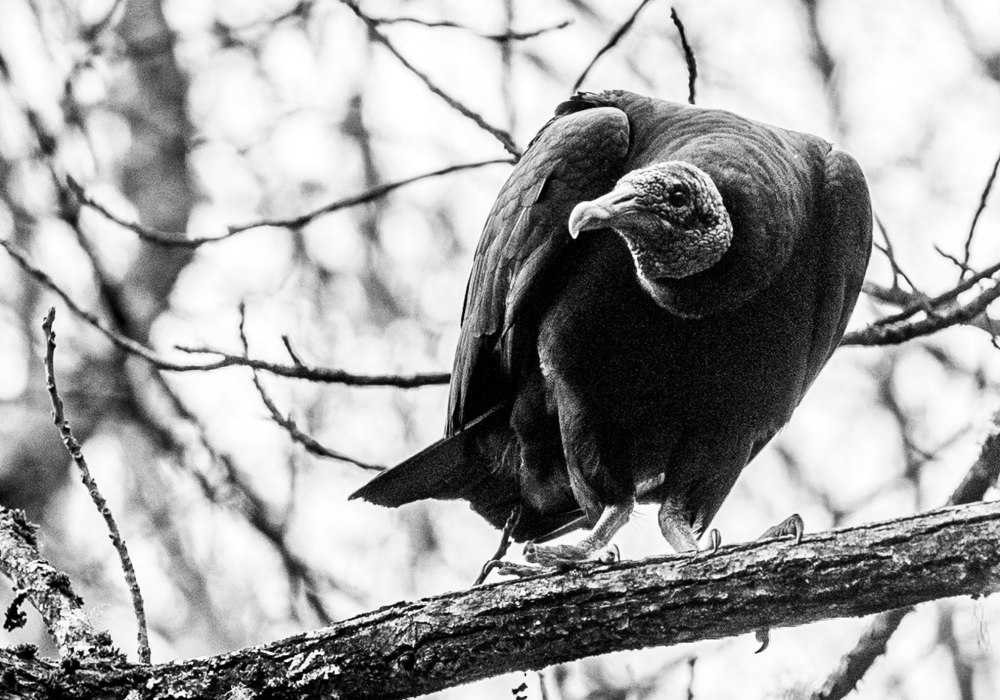
Black vulture photo by Steve Atkins of

Fox Cove Photography

www.foxcovephotography.com

There Are Many Ways to Support Our Work

We welcome your support in keeping our unique programming alive.

There are many ways you can choose to help us make our programs and projects a reality. 

  • Donate on our website www.earthshinenature.com/donate
  • Send a donation to our “snail mail” address at the end of this newsletter. 
  • Visit our Patreon page www.patreon.com/earthshinenature and support us with one-time or ongoing monthly donations. 
  • An easy way to support us – at no cost to you – is via Amazon Smile donations. Just visit: smile.amazon.com and sign up to support Earthshine Nature Programs every time you make a purchase on Amazon using your Amazon smile account.   
  • Support us with a Legacy Donation.  This is a gift from you to ENP in your will.  It could be monetary, land, or even a vehicle donation. For more details please visit: www.earthshinenature.com/donate
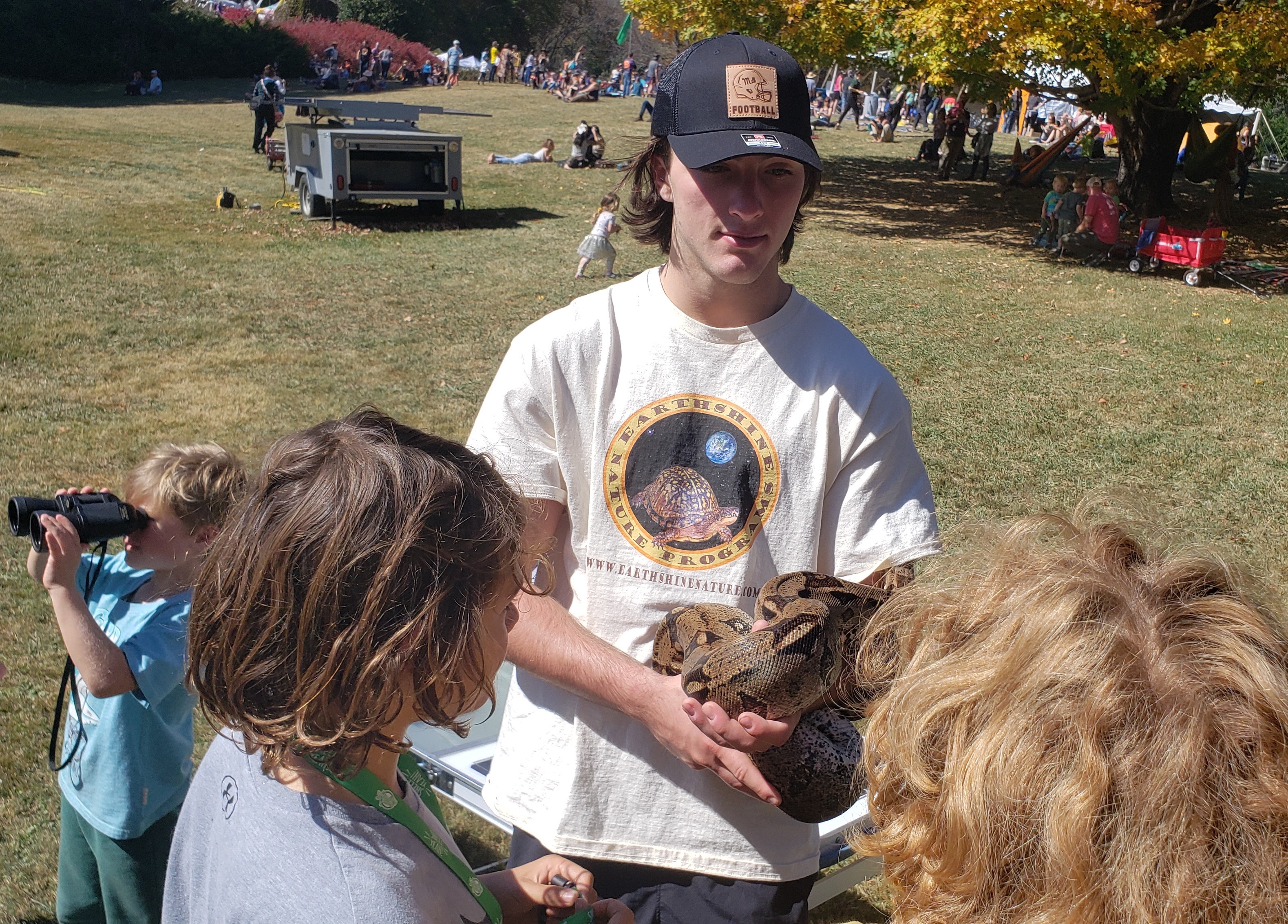
  • You may choose to donate time and energy by volunteering with us as we always have many opportunities available from working festivals, in the garden, cleaning animal habitats, etc.

However you choose to support us, your support will have a lasting positive impact on our ability to bring our nature, wildlife conservation, and science literacy programming to the hundreds of young naturalists, curiosity-seekers, scientists, and thinkers that we encounter each year via our outreach programming in the local and regional community, and through our wonderful partnership with Trails Carolina and Trails Momentum where Steve works as naturalist to provide nature and wildlife knowledge, science education, and inspiration to their populations of outstanding youth.  Learn more about them at:

Trailscarolina.com and Trailsmomentum.com

All donations to ENP are tax deductible. Receipts are available upon request.

THANK YOU SO MUCH FOR YOUR SUPPORT

Without your support, Earthshine Nature Programs would not function.  Please consider making a tax-deductible one-time donation, end-of-year, or legacy gift to us today or in the future.  Earthshine Nature Programs is a volunteer-operated, nature and wildlife conservation, and science communication, donation-funded, 501c3 not-for-profit organization.  At ENP we are passionate about sharing our love, respect, and curiosity for nature, wildlife and wild places, environmental stewardship, science literacy, and evidence-based decision-making with everyone we meet – especially our classroom and outreach programming students.  It is today’s children who will grow up to make the big wildlife and nature conservation, science, and energy decisions of the future, and it is our ongoing mission to communicate to our students the most up-to-date, unbiased, peer-reviewed evidence, practices, technologies, and environmental ethics so they will be better informed and ready to take on the world and will work together to bring the changes that will guide us all forward into a more prosperous and all-inclusive future guided and shaped by facts, evidence – and a healthy dose of common sense. We feel that by sharing the facts and evidence, demonstrating working models of what is possible, respectfully coexisting with each other, and working together toward the common goal of creating and maintaining a better world for all living things today and into the future – we will bring the changes that will make all our dreams come true.

Earthshine Nature Programs (501c3) is supported primarily through monetary, resource, and time donations from caring, concerned individuals just like you.  We fundraise and acquire grants and donations from any and all sources that would like to support us. With your support from a one-time donation of equipment or funds, a year-end gift, a legacy gift, and/or your continuing patronage and hands-on volunteering, together – we will continue to create something truly unique and wonderful that will serve to educate and inspire the thousands of students, summer campers, knowledge seekers, and others we meet each year with a newfound curiosity, greater respect, an evidence-supported understanding, and a powerful conservation ethic for caring for the natural environment that supports us all and gives us all life.

Sincerely, Steve O’Neil

Executive Director of Earthshine Nature Programs (501c3)
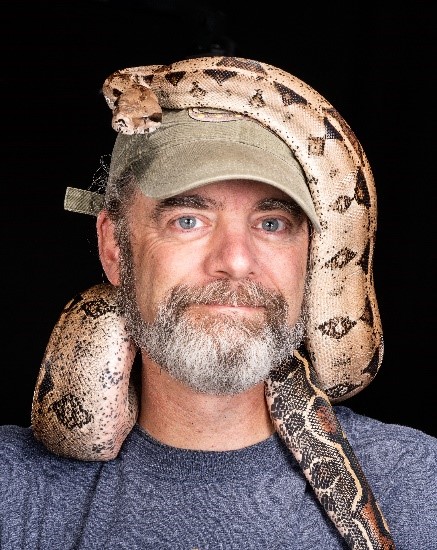
Steve and Ashley – By Evan Kafka  http://www.evankafka.com 

Snail Mail: please contact us if you are interested in sending us anything in the mail.

Phone: (828) 606-8939 

Email: earthshine.nature@gmail.com

Website:  www.earthshinenature.com

Nature Blog: www.earthshinenature.wordpress.com

YouTube: www.youtube.com/user/snakesteve68

EV Blog:  bluewaterleaf.wordpress.com

Please note: any/all ads that appear within or below this post are not provided, supported, or endorsed by ENP nor are we supported in any way by these ads –
Let’s talk about Vultures – Part 1

Last year, in the early days of the pandemic when the world was on lockdown, my head and heart were overwhelmed with the realities of being a human in 2020 – so I decided to take a long cleansing walk in the forest near my home. The welcome walk in nature gave me a much-needed, grounding, escape form the storm of viral madness humanity was experiencing.

During my walk I stopped by the old abandoned house in the forest to look around.

As I crept through an open doorway and into what may have been a dining room at some point in many decades past, my feet made the old floor boards groan, snap, and creak – and I stopped in my tracks when suddenly I heard a guttural hiss-growl coming from the upstairs bedroom just above my head! This unusual vocalization was followed the pitter patter of little feet and then more of the same hiss-growling!

I am a person of science and am in no way superstitious – but the odd sounds, made by an unseen source, somewhere deep in the dark and hidden recesses of a moldering old house in the forest – they dredged up old emotions and twisted mental images of outlandish, occultish, dead and “undead” things, brought and taught to me – and many of us – when we were impressionable little children and young adults – before we learned the realities of the world. These unusual ideas and images – that exist only in the fight or flight deep instinct-driven hidden recesses of our our African-savannah-evolved-ancient-primate-living-in-a-high-technology-modern-world brains – often take shape in festering, rotting, decaying, and/or ethereal or supernatural forms found in the pages of countless popular books, outdated holiday celebrations, bedtime and campfire stories, multitudes of movies and TV shows, grammar school classrooms, and church pews. These outlandish stories and images arise from our ancient fears of the harsh realities of nature such as pain, injury, disease, death, being eaten by predators – you know, the stuff of living as a being who is a part of nature. These stories would often be shared with our long past ancestors via metaphorical stories, art, music, and dance, as a way to explain our place and purpose in this thing we call nature, and what are these things we call life, the universe, and everything. They were then passed down via our progenitors and often used as a way to teach good life lessons about which creatures, kinds of people, and situations should be avoided, how to relate with others, and/or just to scare the begeezus out of us kids around a campfire in a dark forest. These stories and myths were and are often still are a part of our evolving cultural identity.

In today’s modern world many of these old ghost stories only amount to harmless Halloween fun and yet others have been augmented and exaggerated by modern movie and TV magic and are food our deep evolution-derived instincts, more recent religio-political tribal focuses, and our evolutionarily derived pattern-seeking misunderstandings – in other words; they are designed to feed on our fears of the unknown. Today it seems that many of these stories are more about the acquisition of money than the life-lessons taught via the mythology passed down from our ancestors.

Sadly, in many cases, a few of these ancient myths and stories – often revolving around and/or being combined with exotic animal parts from wildlife such as snakes, scorpions, bats, sharks, bears, turtles, tigers, elephants, rhinoceroses, pangolins, and vultures just to name a few – have been used by modern day witch doctors, snake oil salesmen, mediums, and other charlatans promising unprovable and outlandish claims such as foretelling your “fortune,” giving you good luck, making it rain, curing what ails you, making you live longer, making you stronger, and even saving your soul – but the reality of all these situations is that those selling the animal part associated “cures” are only swindling crooks who just want your money.

A bizarre example: smoking or ingesting dried vulture brains will give you good luck and/or allow you to see into the future – yes, for some strange reason this is a “thing” in some parts of the world.

It seems that the “human condition” has become a great detriment to all those who were born an animal.

But I digress from my ramble…let’s get back to the old house in the forest.

Due to all the before-mentioned mostly harmless mind-altering social conditioning I experienced as a child – for the briefest of moments I may have thought those creepy sounds emanating from the upstairs bedroom of a rotting old house in a deep, dark forest suggested it might be full of one or more of the following; ghosts, ghouls, haunts, demons, devils, gremlins, poltergeists, were-creatures, “cryptids” and/or other bizarre dead and/or undead things that might go bump in the night. But then, lucky for me, in a fraction of a second my reason took over, I recovered my logic, pushed the childish thoughts out of my mind and I knew that whatever was hissing and walking around upstairs was just a local wild resident of the forest and they were using the old home as their habitat. It was as simple and and wonderful as that and I knew that there was nothing at all for me to be afraid of.

I silently listened, the hissing soon stopped, and I decided I really needed to find out what was going on in that upstairs bedroom but I did not want to disturb it so I departed the scene and returned a few hours later with my GoPro camera mounted on a long bamboo stick. I crept up to the outside of the old house and slowly raised the camera up to an upstairs window to get a look inside. As soon as the camera cleared the window frame and had an unobstructed view of the room – the hissing returned! I held the camera still for a few seconds, panned it around, then retracted it back down and the hissing tapered off and stopped. I departed the scene and trekked back to my home to review the footage – it was an older GoPro so no wireless connectivity or backscreens. What I found was a welcome surprise – a family of vultures were residing in the upstairs bedroom of the old home! I had suspected vultures because I have some previous experience with them (more on that story in a later post) – but I had to be sure. These were Black vultures to be exact – Coragyps atratus is their Latin name. Below is the photo I captured with my GoPro on that spring day when we first met. I enhanced the image of the parent and one of the two chicks and added a description.

On that day I decided to start a field study and documentation project of the vultures living in the old house – but before I tell you more about this new project, here are a few fun and important facts about vultures (aka buzzards).

Black vulture by Steve Atkins of Fox Cove Photography

Vultures are some of the most misunderstood creatures on planet earth. They are also some of the most important.

Worldwide, there are 23 species of vulture – 14 of these are listed as threatened or endangered.

Vultures have excellent senses of sight and smell – some better than others – and they use their keen senses to detect food items, avoid predators, and communicate.

Unlike many other members of the raptor family, vultures are very social creatures and are often seen feeding, soaring, and roosting together.  A group of roosting vultures is called a venue, volt, or committee. When vultures are grouped together feeding on a carcass – this is called a wake. A flock of vultures is called a kettle. 

It is a myth that vultures will circle a dying animal. Circling vultures are riding thermals in the attempt to get to a higher elevation so they can get a better view of the terrain below and thereby either spot a dead animal or catch a scent and follow it to its source so they can then have a feed.  

It is a myth that vultures will prey on healthy farm animals.  However, the Black vulture, and California condor, and many other vulture species, have been known to occasionally feed on the afterbirth from livestock as well as dead livestock and stillborn young as seen in the next photo. 

California condors feeding on a stillborn calf. Photo by Kiliii Yuyan.

Photo Source: https://www.worldphoto.org/blogs/14-06-17/remarkable-images-wild-edges-our-world

Sadly, although many species of vulture are protected by law from harm in most parts of the world, vultures are often illegally shot or poisoned by farmers and ranchers who incorrectly believe the birds are a threat to their animals.

Unlike other raptors such as owls, hawks and eagles, a vulture’s feet and legs are not strong enough to kill or carry away prey.  To feed their young, vulture parents will gorge themselves with food then carry it back to their young and either regurgitate it from their crops for the chicks to eat or they will allow the young to eat it directly from their mouths.  The following short video shows a down-covered Black vulture chick being fed by a parent.

Vultures feed mostly on carrion (dead things) and by doing so they keep the energy flowing through the ecosystem, reduce the spread of diseases, flies, and other disease vectors, as well as bad smells, and in doing all these things they help keep the earth cleaner and safer for all the other healthy animals – including us human animals.

Photo Source: Internet

Like us, vultures seem to prefer their food to be freshly dead – but when they have no other option they will eat many days dead, bacteria, and maggot-ridden, rotting meat.

Some vultures do not have strong beaks so they often rely on other animals, time and decay, to open the carcass so they can get to work. California condors however, are able to tear into the tough hides of Elk, horses, and cattle as seen in an earlier photo.

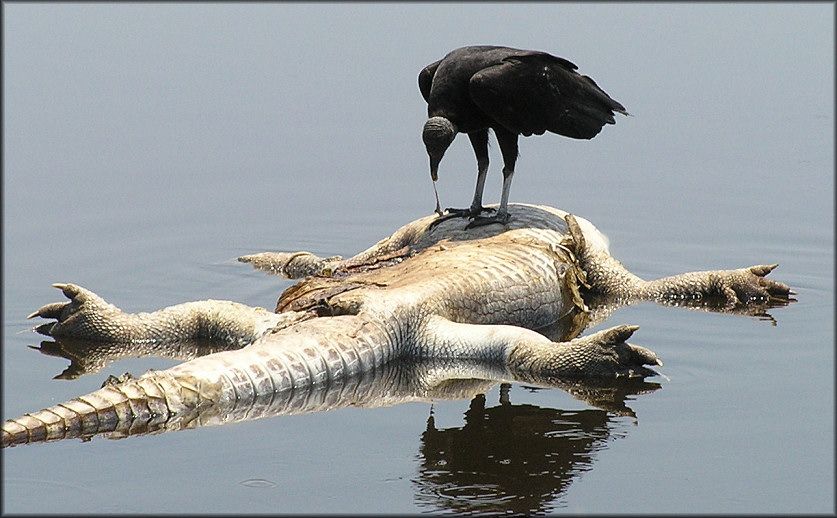
When animals – wild and domestic – are accidentally killed by the machines of the human species – cars, trucks, trains, mowers etc. – they are often damaged allowing vultures easier access to their meal. However, the situation in which many of these animals are found – on the sides of roads – increases the danger to scavengers such as vultures that may feed upon these deceased creatures.

Photo Source: https://commons.wikimedia.org/wiki/File:Turkey_Vultures_eating_road_kill_-_Stierch_01.JPG

The naked heads of many vultures allow the birds to have an easier time eating without getting all manner of blood, body fluids, bits of meat, and the associated bacteria, matted into their feathers. What matter they do get on the skin of their heads will easily bake off in the sun while they are riding high on thermals. Their bald heads may also help with thermoregulation.

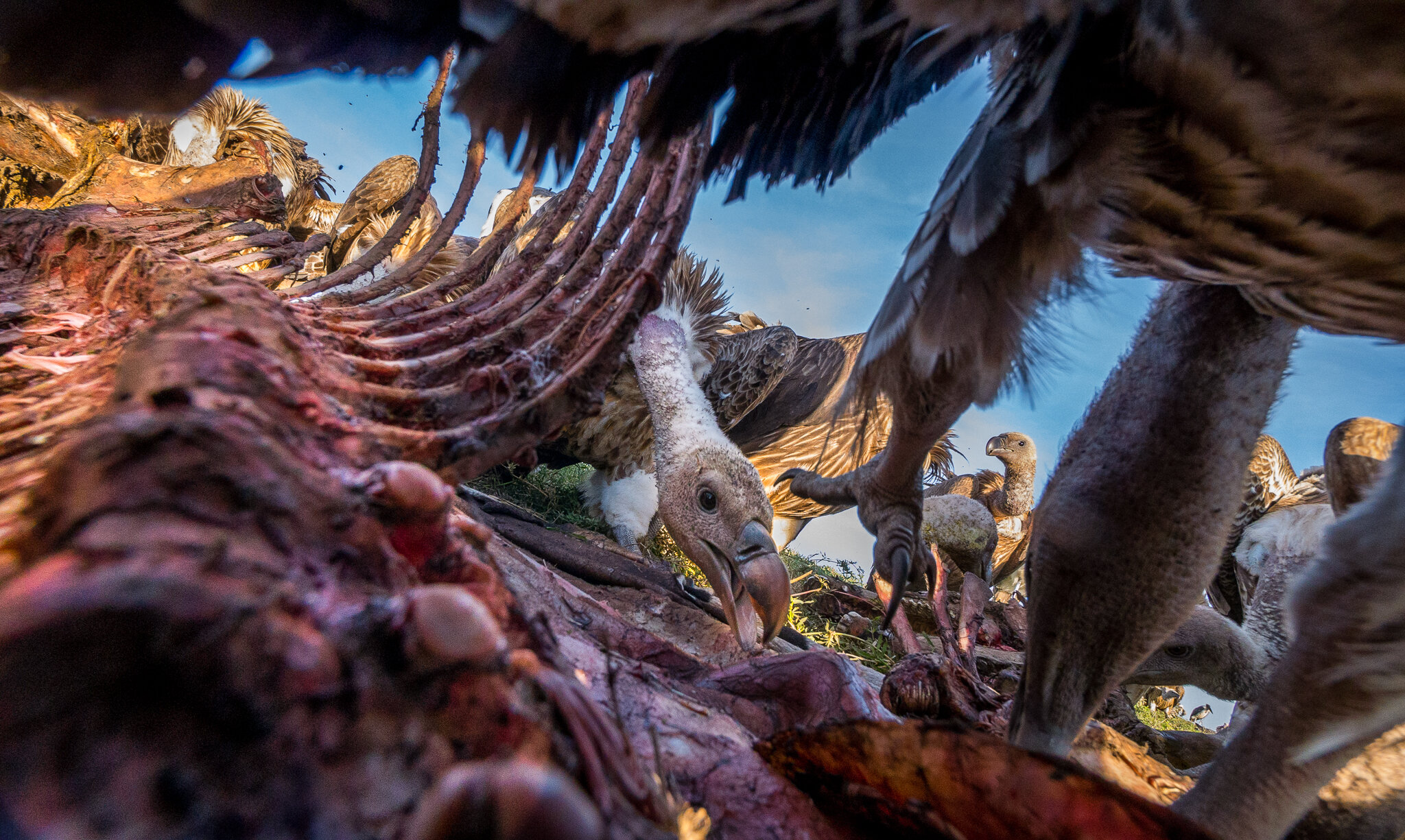
Ruppell’s Griffon vulture. Vultures are some of the fastest declining birds in the world the moment. This image was taken while covering this decline for National Geographic Magazine. Ndutu plain, Serengeti National Park, Tanzania. Shot using specially adapted Panasonic Lumix camera, 7mm lens and pocket wizard.
Photo Source: https://charliehamiltonjames.com/photographs

Their stomach/gastric acids are some of the strongest on earth (around 10-15x more acidic than ours) and are able to destroy most infectious diseases such as Salmonella, Botulism, Anthrax, Tuberculosis, Cholera, Rabies, and yes, possibly even Ebola and the SARS/Corona viruses. Vultures and their super effective digestive systems stop these deadly diseases in their tracks before they can escape the animals they have sickened and killed and make it into the ecosystem and/or into other animals – potentially infecting other wildlife, livestock, pets, causing mass die-offs of wildlife, livestock, and yes, even epidemics and pandemics impacting both animals and people. Vultures are nature’s hazmat crew and sanitation engineers all rolled into one flying feathered friend.

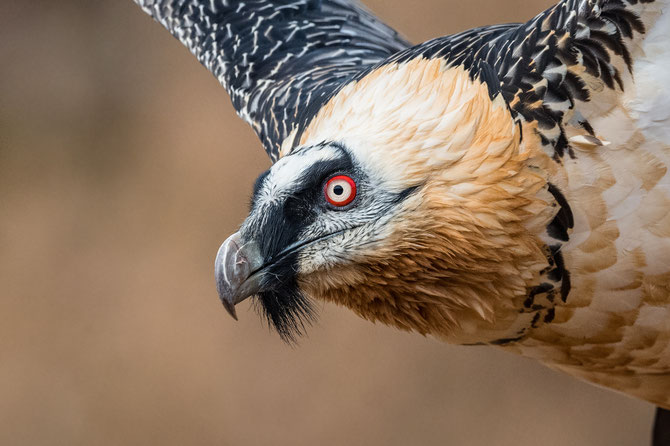
The Bearded vulture eats mostly bones and it has gastric acids that are able to digest most bones in less than a day! I suppose a French speaking Bearded vulture would say “Bone” Appetit. 

Bearded vulture photo source: https://4vultures.org/vultures/bearded-vulture/

When threatened, a vulture may regurgitate (vomit, barf, hurl, blow chunks, etc.) its last meal – sometimes in the general direction of a potential attacker.  While this bizarre action may serve to frighten off the attacker, it also serves to lighten the vulture’s load so it can take flight easier and therefore escape danger faster. I know one thing for sure – steaming-gastric-acid-soaked-bloody-rotten-meat-maggot-and-bacteria-infested vomit would make me back off really freaking fast!

Vultures often defecate (poop) their liquid excrement onto their own legs and feet.  This serves to cool their bodies by evaporation and the highly acidic nature of their excrement serves to sterilize the skin/scales of their legs and feet – legs and feet that are often standing in the steaming, festering, blood and bacteria-laden, entrails of the decaying animals they are perfectly adapted to eat.  

When vultures defecate on the ground around a carcass they are feasting upon, their highly acidic excrement also serves to kill pathogens in the soil that may have leaked out of their deceased, decomposing, and possibly diseased meal – before they have a chance to contaminate nearby water sources and other healthy animals. 

New world vultures do not have a syrinx (“vocal cords”) like many other birds – so they are only able to make guttural hissing and “growling” sounds. An example is the hissing sounds agitated baby vultures make – yes, this is the sound I heard in the old house in the woods.

Vultures will often stand with their wings outstretched. This posture is called the Horaltic Pose and it may serve to help with thermoregulation, allow the sun to bake germs off of the bird’s feathers/skin, and it may also be a form of intraspecies communication.

Photo Source: https://appvoices.org/2018/10/16/versatile-vultures/

In this following video clip of Black vultures mating I captured this past summer, we see a close up of a Horaltic pose followed by an amazing mating sequence.

The planet’s highest-flying bird is the Rüppell’s vulture that flies to an altitude of over 11,300 meters (37,000 feet/7 miles)! 

Rüppell’s griffon vulture coming in for a landing. Photo Source: https://charliehamiltonjames.com/photographs

One of the largest flying birds on the planet is the Andean condor – a type of vulture – it has a 3 – 3.4  meter (10-11’) wingspan. 

Andean condor in flight.

Photo Source: https://tourdeamigos.com/the-andean-condor-7-interesting-facts-about-chiles-national-bird/

The California condor is North America’s largest bird and it almost disappeared into extinction in the 1980s due to many threats including the insecticide DDT, poaching, toxic lead shot in its food sources, and the fact that it is an evolutionary anachronism.  Today it is slowly making a comeback due to wildlife protection efforts such as the Endangered Species Actnonprofit management efforts, the banning of DDT, and reduction in the use of lead shot.

Photo Source: http://backcountryutah.blogspot.com/2010/06/see-california-condors-at-free-event.html

Other North American vultures – the Black vulture and Turkey vulture – are doing well due in part to the protections mentioned above as well as the abundance of road-killed animals, landfills full of human food waste, and climate change creating warmer winters. All of these things have contributed to allow their population numbers to increase and they are even extending their range in some areas. 

Black Vultures (Coragyps atratus) feeding on a dead feral hog.
Photo Source: https://www.sciencephoto.com/media/1135728/view/black-vultures-eat-dead-hog

Even with the threats vultures are exposed to USA, overall they are increasing their population and expanding their range. However, vultures in other parts of the world such as Africa and India are suffering greatly due to human-wildlife interactions, poisoning, poaching, and ancient/traditional “medicine” and other bizarre practices and beliefs such as the before-mentioned practice/belief in some African countries that eating/smoking dried vulture brains will give you the ability to see into the future – obviously it won’t. 

The following video should be seen by everyone.

Also in Africa, wildlife poachers will intentionally poison vultures feeding on the carcasses of animals the poachers have previously killed for their body parts – parts that are sent to the traditional Chinese “medicine” markets and/or sold alongside vulture brains and other parts in local “bush meat” and/or “witch doctor”/fetish markets. The poachers believe that killing the vultures will reduce the chances of being spotted by game wardens, naturalists, and conservationists who look for vultures circling over a carcass as indicators of poaching activities. 

In fact, the trade in illegal wildlife parts brings in more dirty money second only to the illegal drug trafficking trade. If we do not stop the poaching and trade in illegal/exotic and “traditional medicinal” wildlife – we will surely suffer more wildlife extinctions as well as epidemics, pandemics, and ecosystem collapse in the future. For more on how all these issues are connected I suggest watching the amazing documentary Racing Extinction.

Sadly, by killing vultures for their brains/bush meat, and by the poisoning of vultures by poachers – we humans are only making life harder for ourselves in the long run – but our track record proves that we are very good at this are we not? 

A man holds cape vulture heads up offering them for sale in the ‘Muthi’ market (witch doctor market) Durban, South Africa. Taken while posing as a tourist. Photo Source: https://charliehamiltonjames.com/photographs

By killing vultures and other scavengers for whatever the reason – humans are also creating the perfect conditions for future wildlife and human disease outbreaks, epidemics, and even pandemics from zoonotic diseases that have jumped from animals into the human population. This happens due in part from the build-up of disease-ridden, rotting carcasses of wildlife that have died of natural and human related causes, the carcasses are then fed upon by feral dogs – which can then spread diseases such as Rabies back to the human populations. This has already happened in India, Nepal, and Pakistan due to the veterinary use of diclofenac – a low cost NSAID given to livestock by farmers. It is also highly toxic to vultures and caused a rapid decline in their numbers until a team of scientists discovered it was the culprit and found other, more vulture friendly options. Local vulture numbers are now back on the rise in these areas. Read the full story here and here. Life, it is all connected.

Furthermore, the practice of concentrating exotic live animals and their parts – and associated exotic diseases – in the “bush meat” and “witch doctor” markets in Africa, in the “wet” markets in China, and in underground wildlife markets over the world, also plays a huge part in bringing wildlife diseases from the wilderness into human populations. This is how it is thought that many of our most dangerous zoonotic diseases – including SARS CoV2 – jumped from wildlife into the human population.

Ebola, SARS, SARS CoV-2 (aka Coronavirus), AIDS/HIV, Zika, Bubonic plague, Hantavirus pulmonary syndrome, and many other zoonotic diseases and the resulting infections, outbreaks, epidemics/pandemics originated in wild animals and then made their way into nearby human populations. This reality exists because humans either started incorrectly/illegally handling/preparing and then eating uncooked/lightly cooked “bush meat” and/or concentrating wild animals from many different parts of the planet into unhygienic markets and wildlife farms where the operators of these establishments practice unhealthy animal husbandry, care, preparation, and then promote the sale, use, and ingestion of these animals and/or their parts.

In the following video, science writer David Quammen explains Zoonotic diseases and the concept of spillover – a concept we all need to understand.  

Vultures help stop these spillover incidents from happening, they quickly remove dead animal carcasses from the landscape, they help keep energy and resources available and flowing throughout the web of life, and they help us in so many other ways – if only we could stop the intentional destruction and disruption of vultures and their habitats, if we could only just respect them and let them live and do their jobs – we human animals would be far better off. Everything is connected.

Unlike in other parts of the world, all vultures in the USA are protected under the migratory bird protection act.  Harming them will get you stiff fines and possibly jail time. (IMHO I think the fines should also come with a heaping helping of hot vulture vomit hurled at the perpetrator.)

There is hope.

Many people love vultures – what follows are a few beautiful examples.

Some places people celebrate the amazing vulture with festivals and events such as:

The Athens-Clarke County Vulture Festival

The Hinckely Ohio Buzzard Festival https://www.hinckleyohchamber.com/buzzard-day/

The first Saturday in September is International Vulture Awareness Day

There are many nonprofit organizations around the planet working to understand, and conserve vultures. Below are a few for you to please consider supporting.

Vulture Conservation Foundation – an organization working to help European vulture species.

Birdlife International is working to help vultures in Africa – please visit their website to learn more about their efforts to help stop the extinction of these iconic and most important birds. https://www.birdlife.org/african-vultures

Vulpro in South Africa https://vulpro.com/

Ventana Wildlife Society – working to save California Condors and other raptors. https://www.ventanaws.org/

Hawk Mountain Sanctuary in Pennsylvania – working to conserve all raptor species. https://www.hawkmountain.org/

Please consider supporting my nonprofit organization Earthshine Nature Programs as well.

We are all working very hard to conserve, protect, and educate you about the great importance of vultures and other misunderstood species of wildlife.

Photo Source: https://www.ventanaws.org/condors.html

Vultures are so important to a healthy ecosystem that is is no wonder the new world vulture family’s scientific name is Cathartidae which comes from cathartes, Greek for “purifier.” 

In parts of Tibet, China, Buthan, Mongolia, and India – monks and others practice the ancient tradition known as Sky Burial. In these sacred rituals a deceased person’s remains are offered to vultures and other scavengers to be bya gtor or “bird scattered” with the main function of the tradition being to “dispose of the remains in as generous a way as possible (the origin of the practice’s Tibetan name).” Sadly, this amazing and beautiful natural practice is suffering on many fronts due to the decline in vulture populations, political pressures, and in my humble opinion the most despicable of them all – tourism. Sacred burial sites and rites should not be commercialized so gawking outsiders can watch from the sidelines while sharing/tweeting photos and comments to their friends while the greedy few running the tourist operation stand by and profit from it. In my opinion, offering selfish tourist excursions to watch Sky Burials is just as disrespectful as sharing photographs/videos of any stranger’s death/funeral process, climbing Uluru, or building an oil pipeline through a sacred native American burial ground – and then bragging about it by sharing it with “friends” on social media.

To me, the Sky Burial is a beautiful tradition that more should practice. Having one’s mortal remains scattered to the four winds on the wings of majestic vultures is a truly a remarkable and beautiful catharsis, it is a transition from one life into the next, a sharing of energy and resources, a most intimate and natural way to connect back to ones roots in the circle and the cycle of life, death, and energy on planet earth. It is a far better option than many of our “modern” chemically, energy, resource, intensive, web of life and environment-ignoring, very wasteful “western” burial practices – and I am not the only one who thinks so. Give this video a watch for more on this subject.

Feel free to learn more about the sacred ritual of the Sky Burial and the threats to them, by watching the following short documentary.

Vultures are true cathartic heroes of the ecosystem. If only we human animals could just let vultures live and do their thing and live up to their family name – the world would be a far better place in which to live.

All North American vulture species mate for life and nest on the ground in caves, rock outcrops, on islands, and in abandoned buildings…and this last fact leads us back to my observational study of the Black vulture family living in the old abandoned house in the forest near my home. Below is a photo of momma vulture’s eggs she laid on the floor amid the debris in the upstairs bedroom of the old house.

Over the next five months I monitored the vulture family with several trail cameras. With these cameras I was able to capture several unique angles of the vulture chicks as they grew up revealing the development of the baby vultures and the surprisingly tender care provided by both parents.

Over time the birds became more accustomed to my presence and accepted me as if I was just another inhabitant of their habitat. After a few weeks they even stopped hissing at me when I would pay them a weekly visit to change out the batteries and memory cards in the cameras. I felt very privileged that they had allowed me to witness such an amazing and tender time in the lives of such beautiful and remarkable creatures.

I greatly respect vultures and all wildlife and I always give them space. With the vultures I needed to be extra careful due to their defensive mechanism – vomiting up their last meal in your general direction – yuck! So, in order to avoid being on the receiving end of warm vulture vomit, I always respected their space and did not physically visit their upstairs “nursery” and “play room/exercise areas” – except for on one occasion I will describe later in this post. All my camera gear was mounted on long poles positioned on the outside of the old house with their lenses looking in windows, or in from holes in the walls/ceiling/floor so they would have an unobstructed yet respectful view of the growing vulture chicks and their parents. I could then lower the cameras out of view of the birds to service them with little or no disturbance to the animals.

After observing the vulture family for several months, the day finally came when I trekked back to the old house only to discover that the vultures were gone. I pulled down the cameras and saved all the footage with the intention of someday editing it into an educational documentary of their time growing up in the old house.

However, there was one very big missing piece of their story – the hatching of the eggs.

Since I had first discovered the vulture’s nest site a few weeks after the chicks had hatched, I was not able to record their story from egg to fledge. I felt that their story, and the story of all vulture families everywhere, would not be complete without the special moments of their birth and their earliest days as fluffy, helpless, down-covered, dinosaur-lookalike, little chicks.

Therefore, for the 2021 nesting season I decided to once again set up the trail cameras and attempt to capture the special early moments of the birth of a new generation of Black vultures as well as many more unique moments and camera angles of their young lives growing up in the old abandoned house in the forest.

In late March 2021 I journeyed back into the forest and back to the “Vulture House” as I now call it. Since I did not see or hear any birds as I approached the house and as I made my way inside – I assumed the vultures had not yet started nesting so I made my way upstairs to visit their nursery room before they started the nesting process.

I carefully climbed the creaky old staircase, turned the corner, and peered into the dim room while waiting for my eyes to fully adjust – and then I froze in my tracks – there it was, a parent vulture sitting on the floor! For a few long seconds it did not move – it was probably as startled as I was. It then jumped up and flew to the closest window. It sat there in the window for what seemed like a long period of time nervously watching me as I watched back – it then defecated, regurgitated, and took flight. I felt bad that my mistake had frightened it off the nest and deprived it of its last meal but the damage had already been done so I quickly took the opportunity to check out the nesting area where I found the two light blue brown-speckled eggs, I took a few photos and some video of the nest and nursery room, and then quickly departed.

Yes, I had a camera running as I often do – so what follows is a video of the above encounter.

A week later I returned and installed a single trail camera monitoring the nesting vulture and her eggs and I later installed second and third cameras. I set all cameras to record motion-activated video and left them in place for several months until the time of fledging.

I captured some amazing footage of this year’s vulture family and their neighbors who call he old house their home, but as I have so much footage from over two seasons – it will take me several months to complete the final product that I will eventually share with you.

Until that time I invite you to please enjoy the following new wildlife documentary series that spun off of the Vulture Family project: I call this new series: The Wild Restaurant

Some background on this new series: During the later part of the time the vulture family resided in the old house I had a spare camera – so I conducted a secondary wildlife monitoring project at the same location.

In this series I ask the viewer the following questions:

Have you ever wondered what happens to wild animals when they die?

Are you fascinated by wildlife, animal behavior, birds, vultures, and other scavengers?

Have you ever wondered what your pets do (and eat) when they run free?

Are you a biologist, naturalist, woodsman, wildlife biologist/researcher, conservationist, or birder?

Are you tired of all the short, data-lacking, click-bait style videos on the internet?

Are you tired of video narrators talking too much?

Are you into data and content-rich, long-duration, educational, documentary-style videos? (If you prefer shorter videos – then I have created time-lapse versions of these as well.)

If you answered yes to any of these questions then this video series may be for you.

This unique video series documents what happens to wild animals when they die of unnatural causes due to unfortunate encounters with the machine creations of the human species such as automobiles, lawnmowers, etc. In this series, I move* a few of these unfortunate deceased wild creatures out of the road and place** them on the “feed rock” in a remote location and wait and see who comes to dinner at the Wild Restaurant.

*It is always a good idea to move deceased wildlife out of the roads to protect other animals that may scavenge them from meeting the same untimely end. But only do this if you can do it safely without becoming “roadkill” yourself.

**I must tie the animal carcasses to the “feed rock” or they will be dragged out of the camera frame by the eagerly feeding scavengers. This may look odd to some viewers – but it is the simple reality of the situation.

I have completed and produced all episodes of this new series for 2020-2021 and you are welcome to view all of them below or on the ENP YouTube channel where you will find both the full length and time-lapse versions of each episode.

Please Note: This series contains natural imagery that may be disturbing to some viewers but please be aware – these images are real and unaltered. They are the not so cute and fluffy realities of the natural world that all creatures – including we human animals – are a part of and rely upon for our very lives – and our eventual deaths. We are all short-term, impermanent, temporary, physical manifestations of energy and matter that we and our science describes as mother nature/reality. When we die we give our matter and energy back to the cycle of life for it to be recycled into another living thing – and vultures and other scavengers help make this energetic journey possible.

Please enjoy the reality of The Wild Restaurant

In a few months, after hours and hours of editing, I will post the story of the fascinating story of this vulture family from egg to fledge. At some point in the future I will also publish the story of my first encounter with a wild vulture family nesting in a remote rock outcrop at the top of a high cliff.

Threats to Vultures (and other birds)

There are many threats to vultures. One that is less of a threat now (in the USA) than in the past is lead. When lead was used as the primary component in shotgun shell pellets (aka lead shot) for hunting waterfowl and in fishing gear – it became a problem for vultures and other scavengers as well as waterfowl and the humans who eat them by poisoning these animals via the foods they eat. The unused remains (guts, carcass, etc.) of animals killed by hunters are often dumped in landfills and other dumping grounds, near wild game/meat processing facilities and hunter check-in stations, and even randomly on the sides of roads/forests/waterways. These concentrations of carcasses and randomly distributed animal parts are easily located by vultures and other scavengers where they essentially become “fast food” for the scavengers. These carcasses may be easy pickings but they may also contain shot/bullet fragments made of lead leading to the unintentional poisoning of the scavengers. Lost lead sinkers from fishermen may also create a poisoning problem for our native birds and wildlife and the humans who may eventually eat them. For more details on this topic – click each page of the following pamphlet to enlarge.

Pamphlet Source: https://www.nps.gov/pinn/learn/nature/upload/USGS_lead_poisoning_wild_birds_2009.pdf

I have hunted in the past and I am a fishermen. I am also a volunteer wildlife rehabilitator and I have worked for a veterinarian and I have seen first hand what lead poisoning can do to an animal’s body – so I fully understand the real dangers of lead poisoning from the use of lead in our ammunition and fishing equipment.

Today, due to science-supported common sense regulations banning lead in certain high-risk situations such as waterfowl hunting, the use of lead as hunting ammunition is dropping and so are the lead levels in the environment – and that is a very good thing for wildlife and all living things including us human beings. It has been shown many times over throughout history and via scientific research; no matter the source – lead is a toxic danger to wildlife and humans. It is time we all work to reduce lead levels in our lives and in the lives of the wildlife we love.

More on the dangers of lead to our native wildlife and humans can be found via the following links:

Evidence of Lead Shot Problems for Wildlife, the Environment, and Human Health

New Federal Rule to Ban Lead in hunting and fishing gear

USFWS Lead Shot Regulations

Trumpeter Swan Lead Shot Poisoning Investigation

Bald Eagles and lead

From the American Eagle Foundation

From the Humane Society Veterinary Medical Association

Ruppell’s Griffon vultures (Gyps rueppellii), Ndutu plain, Serengeti National Park, Tanzania, Africa Photo by Charlie Hamilton James https://charliehamiltonjames.com/photographs

Even with the dangers of lead in their food, and the illegal killing of these federally protected birds – vultures in the USA have seen an overall increase in numbers – but they continue to face many other dangers as do many other bird species. The dangers I speak of are not from hunters legally shooting birds such as turkeys, ducks, and geese for meat, or people killing vultures and other raptors out of misplaced fears, misunderstandings, or malice. Hunting, and the illegal shooting of raptors takes a very small number of birds per year when compared to the other causes of anthropogenic bird mortality in the USA.

The statistics indicate that large numbers of birds are unintentionally killed or impacted by the energy grids of the world. Humanity’s need for energy and electricity has spawned tens of thousands of energy production stations (coal, oil, solar, wind, hydroelectric, and geothermal) as well as the hundreds of thousands of miles of high-tension power lines, and countless substations and transmission lines that distribute the power to our homes and businesses. Vultures and many other birds are injured or die when they collide with power lines or are electrocuted when they step in the wrong place on top of power pylons/poles, and yes, many birds are also killed by impacts with wind turbines. Many wind/renewable energy opponents will attack wind turbines as the primary culprits in bird deaths claiming they murder copious quantities of birds with FUD spreading memes such as this one…

(I do not see any dead birds in the lower photo…do you?)

It is a truly sad fact that collectively, many millions of birds (and bats) do in fact die from anthropogenic causes. From energy and communications-related infrastructure collisions and electrocutions from power lines, to wind turbines, solar-thermal installations, and cellular telephone towers (that all work together to allow you to use your personal/laptop computer, mobile device, to read these words, make calls, text/tweet your friends, check your Facebook/Twitter/Instagram feed etc.). Many birds also die by poisoning from the before mentioned lead shot issues, and pesticide poisoning from toxins such rat poisons and the pesticides and insecticides people spray on their yards and gardens and farmers spray on their crops and livestock. These toxins often then bioaccumulate/biomagnify through the food web eventually impacting the tertiary consumers and scavengers such as raptors like eagles, hawks, owls, and vultures.

Photo Source: https://www.raptorsarethesolution.org/about-us/

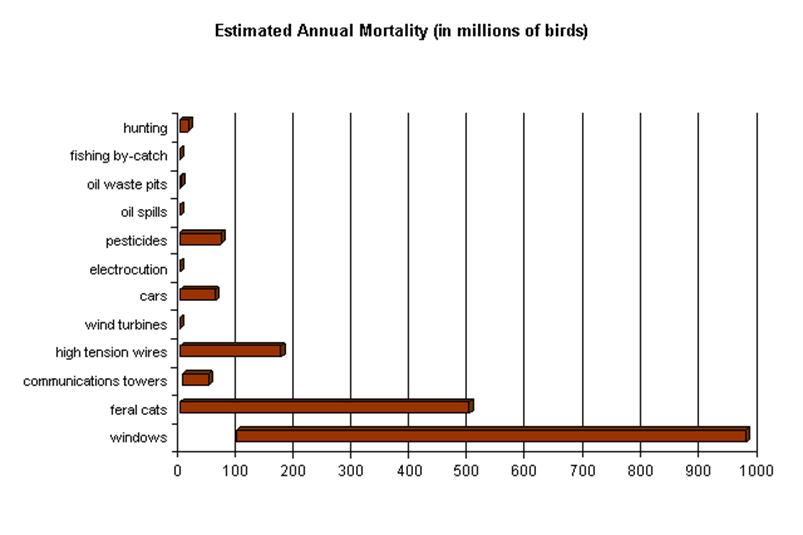
The statistics reveal that it is a far more complex problem that just energy and communications infrastructure and toxins causing the majority of bird deaths in the USA. The numbers indicate the vast majority of bird deaths come in the form of collisions with the reflective window glass of large buildings and your own home’s glass windows reflecting the sky and forest outside causing the deaths of birds who fly into them at high speeds when they mistake the reflection for the sky or forest. Then there is the issue of feral cats and your pet housecat doing what they do best – killing things. These two things together kill many billions more birds than the few hundred million killed by energy and communications infrastructure each year.

California condor basking in the winter sun. Photo Source: https://www.audubon.org/field-guide/bird/california-condor#

In my humble opinion an even larger but underreported and under-studied culprit in bird and other wildlife deaths come from the fossil fuel industry in the form of the millions of tons of toxic particulate emissions from energy production, the oil and fuel spills from pipelines, ships, drilling/mining, and refining operations, hydraulic fracturing (fracking) and other mining-associated waste pits, and other mishaps directly or indirectly related to the entire fossil fuel energy supply and use chain – and the related anthropogenic climactic changes impacting all bird and wildlife species including us human animals.

All these things together are responsible for sickening and killing uncountable numbers of birds, bats, other wildlife species annually.

Some research is suggesting that the problems surrounding the fossil fuel industry are also responsible for directly and indirectly harming and/or causing the deaths of not just birds but millions of humans each and every year. “Now just hold” on I hear you saying – “my pet cats, cell phone towers, and windows are not killing people!” Yes, that in fact may be true – but fossil fuel acquisition, transport, and use, and their associated environmental degradation and pollution, (and the wars and indigenous land grabs fought to keep them flowing) – are indirectly and directly harming – and yes, killing – human beings all over the planet.  In fact, research outlined in this article from The Guardian suggests that human deaths directly connected to fossil fuels and their environmental impacts are in the millions…with a death toll that “exceeds the combined total of people who die globally each year from smoking tobacco plus those who die of malaria.”  

Source: https://www.sibleyguides.com/conservation/causes-of-bird-mortality/

Source: https://www.statista.com/chart/15195/wind-turbines-are-not-killing-fields-for-birds/

As often is the case – the statistics from several sources, and the how/when/by whom they were compiled, may reveal vastly different numbers. This may be the case but it does not remove the issue from the table. My sources, listed later in this document, from independent science research organizations, wildlife, bird, and environmental advocacy groups, the energy sector, and even the news media, all seem to agree that yes, billions of birds of many varied species are being killed by several different anthropogenic causes and yes, it is a fact that wind turbines do kill some animals – but far less than the dramatized numbers purported by greedy supporters of the fading fossil fuel industry who are terrified of losing out to cleaner, renewable energy sources such as wind and solar.

If Saskatchewan Proud, the generators of the earlier anti-wind energy meme, really want to attack the industry responsible for killing the most animals – then I suggest they should attack the fossil fuel companies they support/and or are funded by that are quickly destroying our shared environment in the name of putting short-term massive profits before wildlife, people, or planet. I am sure that is what this oil-soaked pelican would like to do, but he cannot – because he is a pelican.  This is why we humans must be a voice for the voiceless and this is exactly why I write blog posts such as this – I do it for them, and for you.

pelican

Photo Source – and a very good read:   http://www.cnn.com/2012/04/20/opinion/brazile-earth-day-bp/ 

The massive oil spill resulting from the 2010 BP/Deepwater Horizon incident killed an estimated 102,000 birds alone (far, far, more than the purported few dozen as described by SP in the earlier meme). Recent estimates indicate that over 1 million birds and over 1,400 dolphins have died as a result of the disaster.  The deaths of wildlife and the resulting environmental damage, as well as the economic damage to the livelihoods of so many fishermen and tourism providers along the gulf coast – is in the billions of dollars. The damage to the ecosystem of the gulf is so great that scientists have yet to fully realize the true damage and cost of what was the USA’s greatest anthropogenic environmental disaster.

Obviously, the individuals behind Saskatchewan Proud and other like-minded, logic-lacking, profit-seeking, organizations have knowingly and purposefully created this and other erroneous misinformation propaganda campaigns on social media sites in the attempt to somehow build support for their fossil fuel supporting organizations and political agendas. They have succeeded greatly, not in propping up their destructive, toxic, earth and life killing industry – but in showing their ignorance, denial of the truth, and complete willful disregard for the future of their own beautiful country, its people, and its wildlife.

The threats to vultures, other birds, and many other species of wildlife are real – and they are almost all anthropogenic in nature. It is time we all work together to reduce these threats to birds, to all wildlife, and to nature as a whole because in reality mother nature is all we really have.

Photo Source: https://pixels.com/featured/turkey-vulture-soaring-at-active-arenal-volcano-costa-rica-at-su-reimar-gaertner.html

“When the condors are wheeling in a flock round and round any spot, their flight is beautiful,” “It is truly wonderful and beautiful to see so great a bird, hour after hour, without any apparent exertion, wheeling and gliding over mountain and river.” – Charles Darwin

If you made it this far – thank you! Now enjoy this special “Easter egg” (or vulture’s egg) and follow along as a friend and I explore the “Vulture House” for the first time. This was many years before I knew the vultures use it as an annual nesting site.

The old house has deteriorated rapidly since then so it may not be very long before it collapses.

Special Thanks to Paulina Jones and Steve Atkins for assisting me with this project and to Alan Cameron for the use of a camera during the early days of this study.

Please consider supporting our wildlife conservation and education/outreach programs, YouTube videos, and blog posts, with a donation to our small, volunteer-operated 501c3 nonprofit organization

Earthshine Nature Programs

THANK YOU

Sources in no particular order:

Vulture facts: https://www.thespruce.com/fun-facts-about-vultures-385520

Audubon – California condors: https://www.audubon.org/field-guide/bird/california-condor#

California condors: https://www.fws.gov/cno/es/CalCondor/Condor.cfm

Evidence of Lead Shot Problems for Wildlife, the Environment, and Human Health

New Federal Rule to Ban Lead in hunting and fishing gear

USFWS Lead Shot Regulations

Trumpeter Swan Lead Shot Poisoning Investigation

Bald Eagles and lead

From the American Eagle Foundation

From the Humane Society Veterinary Medical Association

Treehugger: http://www.treehugger.com/renewable-energy/north-america-wind-turbines-kill-around-300000-birds-annually-house-cats-around-3000000000.html

USFWS: https://www.fws.gov/birds/bird-enthusiasts/threats-to-birds.php

USFWS: https://www.fws.gov/southeast/news/2016/06/deepwater-horizon-oil-spill-killed-as-many-as-102000-birds-across-93-species/

USFWS: https://www.fws.gov/birds/bird-enthusiasts/threats-to-birds/collisions/communication-towers.php

USFS: A Summary and Comparison of Bird Mortality from Anthropogenic Causes with an Emphasis on Collisions: https://www.fs.fed.us/psw/publications/documents/psw_gtr191/psw_gtr191_1029-1042_erickson.pdf

Science News: https://www.sciencenews.org/article/windows-may-kill-988-million-birds-year-united-states

Science News: https://www.sciencenews.org/article/cats-kill-more-one-billion-birds-each-year

Science Direct: https://www.sciencedirect.com/science/article/abs/pii/S0960148112000857

US News and World Report: https://www.usnews.com/news/politics/articles/2019-12-24/donald-trump-windmills-and-the-truth-about-bird-death

Rabies: https://www.who.int/news-room/fact-sheets/detail/rabies

Think Progress: https://thinkprogress.org/chart-how-many-birds-are-killed-by-wind-solar-oil-and-coal-230d2a939bbb#.fx2aooqfm

Grist: https://grist.org/climate-energy/the-mystery-of-huge-solar-plants-and-tiny-dead-birds/

ABC Birds: https://abcbirds.org/program/wind-energy/

Smithsonian Magazine: http://www.smithsonianmag.com/smart-news/scientists-save-bats-and-birds-from-wind-turbine-slaughter-130262849/

Medium – Renewable energy myths debunked: https://medium.com/science-as-fact/the-top-five-myths-about-wind-and-solar-power-debunked-43b0452ef0bc

National Geographic: https://www.nationalgeographic.com/animals/article/how-is-wildlife-doing-now–ten-years-after-the-deepwater-horizon

NOAA: https://www.noaa.gov/deepwater-horizon-oil-spill-contributed-high-number-gulf-dolphin-deaths-0

Audubon: https://www.audubon.org/climate/survivalbydegrees

USFWS Nontoxic Shot Regulations: https://www.fws.gov/birds/bird-enthusiasts/hunting/nontoxic.php

North Carolina Wildlife Resources Commission: https://www.ncwildlife.org/hunting/waterfowl#7138774-non-toxic-shot-requirements

Florida Fish and Wildlife Conservation Commission: https://myfwc.com/hunting/regulations/birds/

Texas Parks and Wildlife: https://tpwd.texas.gov/education/hunter-education/online-course/firearms-and-ammunition-1/shotshells

California Department of Fish and Wildlife: https://wildlife.ca.gov/Hunting/Nonlead-Ammunition

Washington Dept. of Fish and Wildlife: https://wdfw.wa.gov/hunting/regulations/migratory-waterfowl-upland-game/non-toxic-shot

Audubon: https://www.audubon.org/news/more-one-million-birds-died-during-deepwater-horizon-disaster

USA Today: https://www.usatoday.com/story/weather/2014/09/08/climate-change-birds-audubon-society/15299231/

The National Zoo: https://nationalzoo.si.edu/migratory-birds/news/when-it-comes-pesticides-birds-are-sitting-ducks

Mashable India: https://in.mashable.com/science/22110/endangered-ice-age-vultures-invade-home-to-take-back-whats-theirs

The Environmental Defense Fund: https://www.edf.org/ecosystems/six-years-later-whats-ahead-gulf?utm_source=ggad&utm_medium=cpc&utm_campaign=gr-BPOil&gclid=CJSfutD0zc4CFcwlgQodKpQFBw

Charlie Hamilton James: https://charliehamiltonjames.com/photographs

Fox Cove Photography by Steve Atkins: https://foxcovephotography.com/

Wikipedia