Recently, Jim and I worked together to carefully machine some specialized support pieces for the Solar Inverter Battery Support Structure (SIBaSS – pronounced “Sea Bass” – LOL).
Take a look at some of the photos from that adventure below.
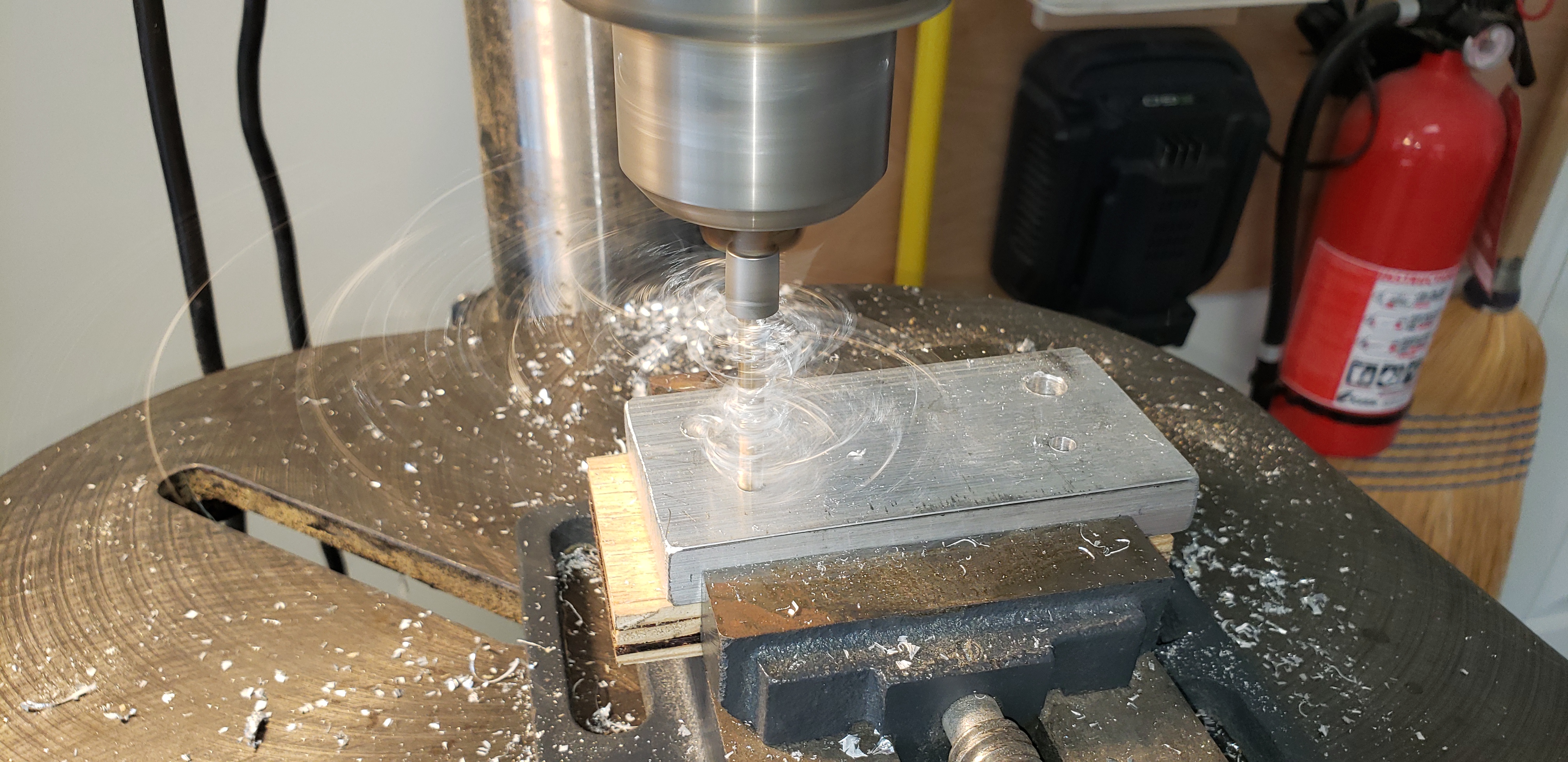
Drilling precision holes in a block of aluminum is fun!
Drilling a hole in a piece of T-Slot aluminum.
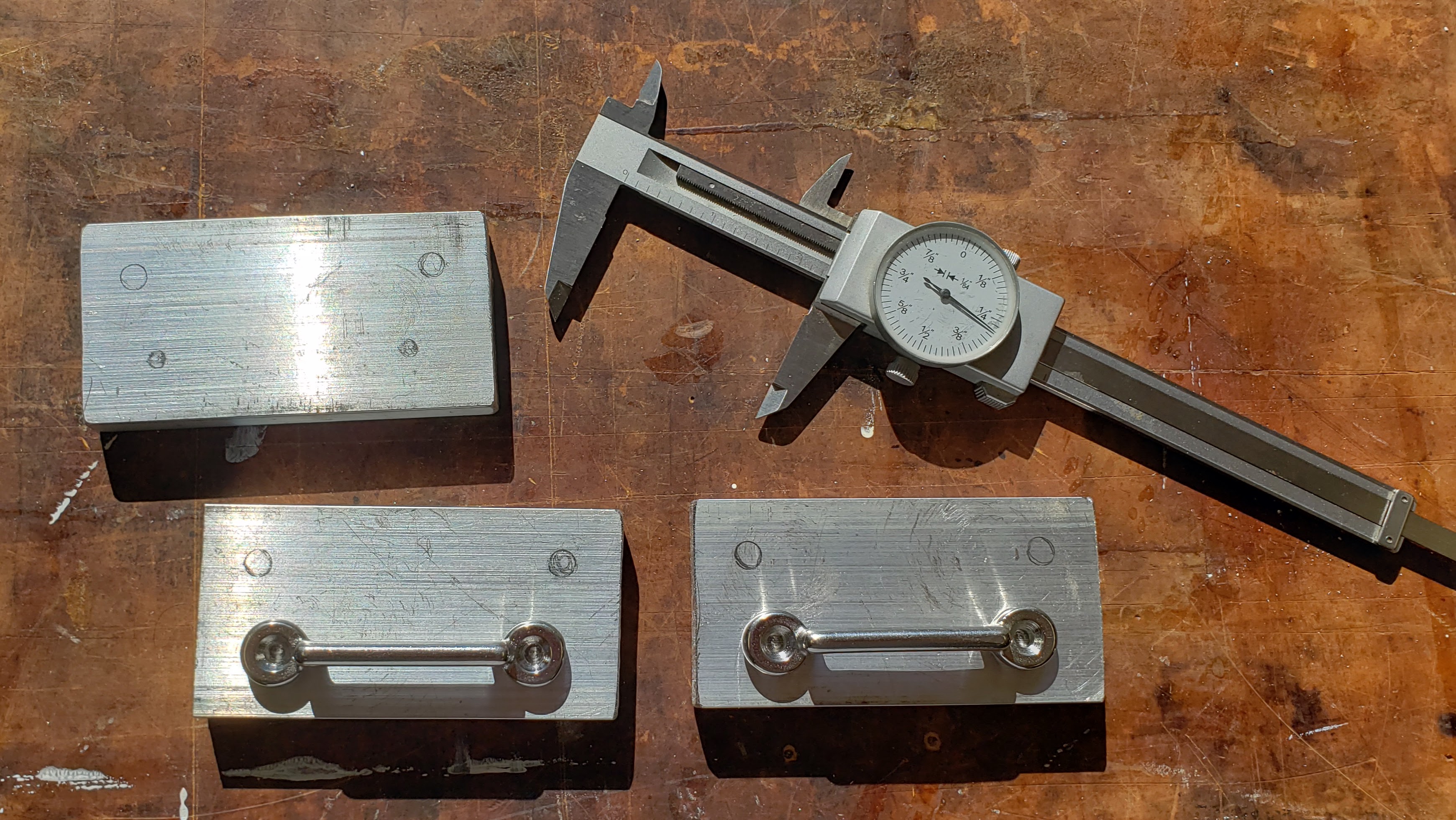
Aluminum blocks, strap cleats, and T-Slots in the process of being assembled.
Precision work.
All these parts were then applied to the SIBaSS and, with the webbing straps I will add soon, will all work together to hold the batteries and inverter securely in place.
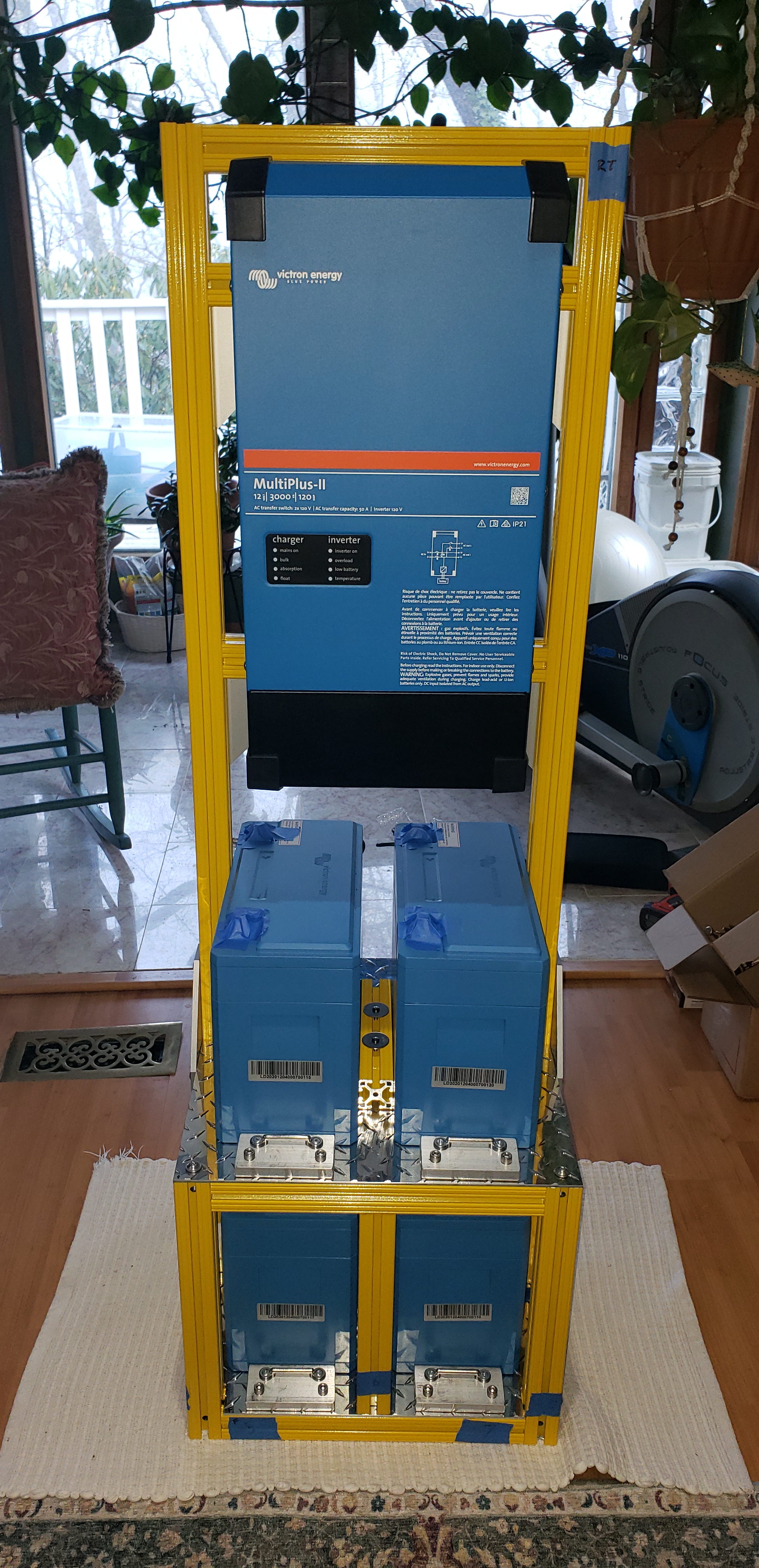
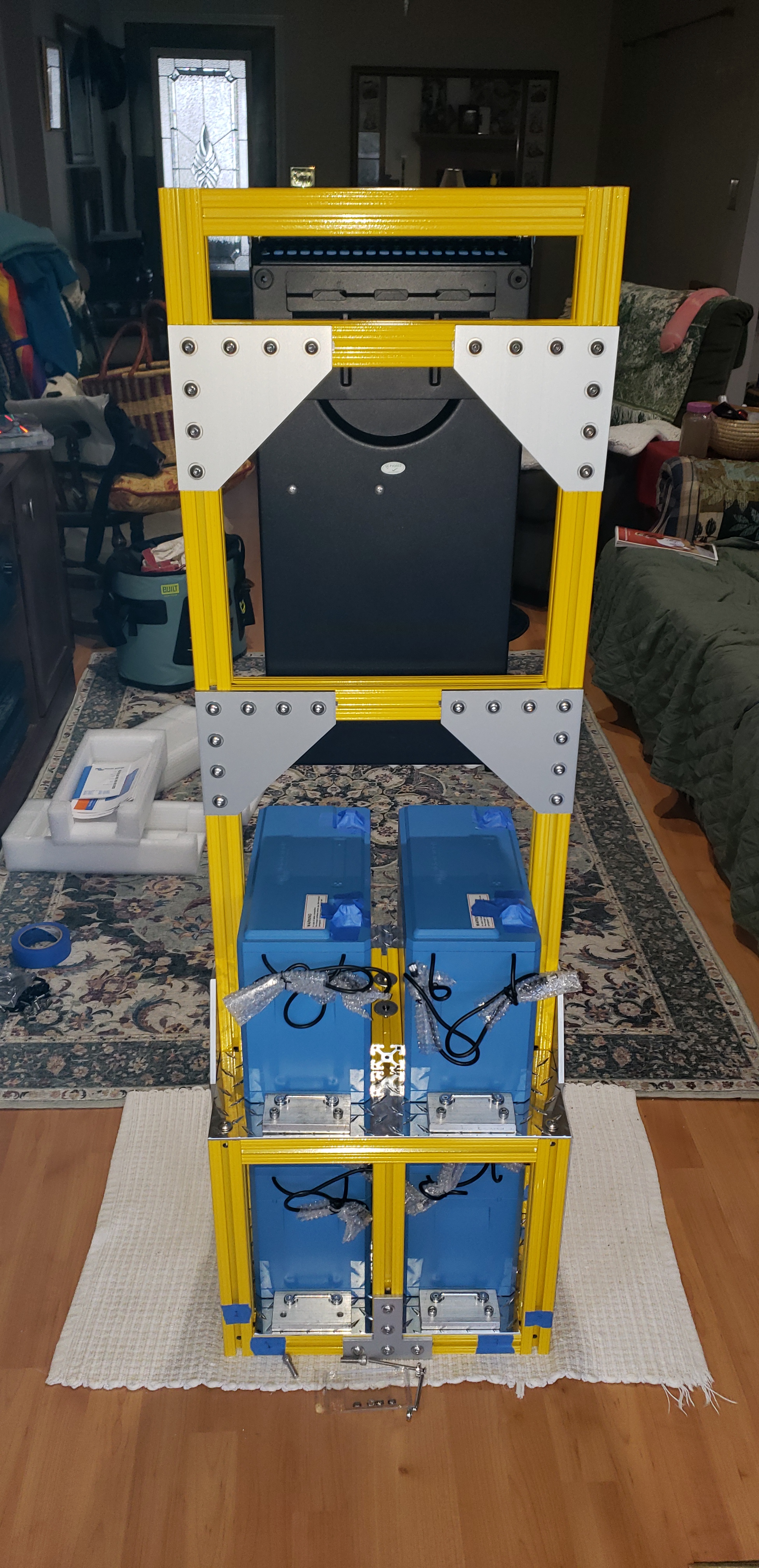
At this point in the build, this is what the SIBaSS looks like. The solar inverter is on the top of the structure and the four batteries are below.
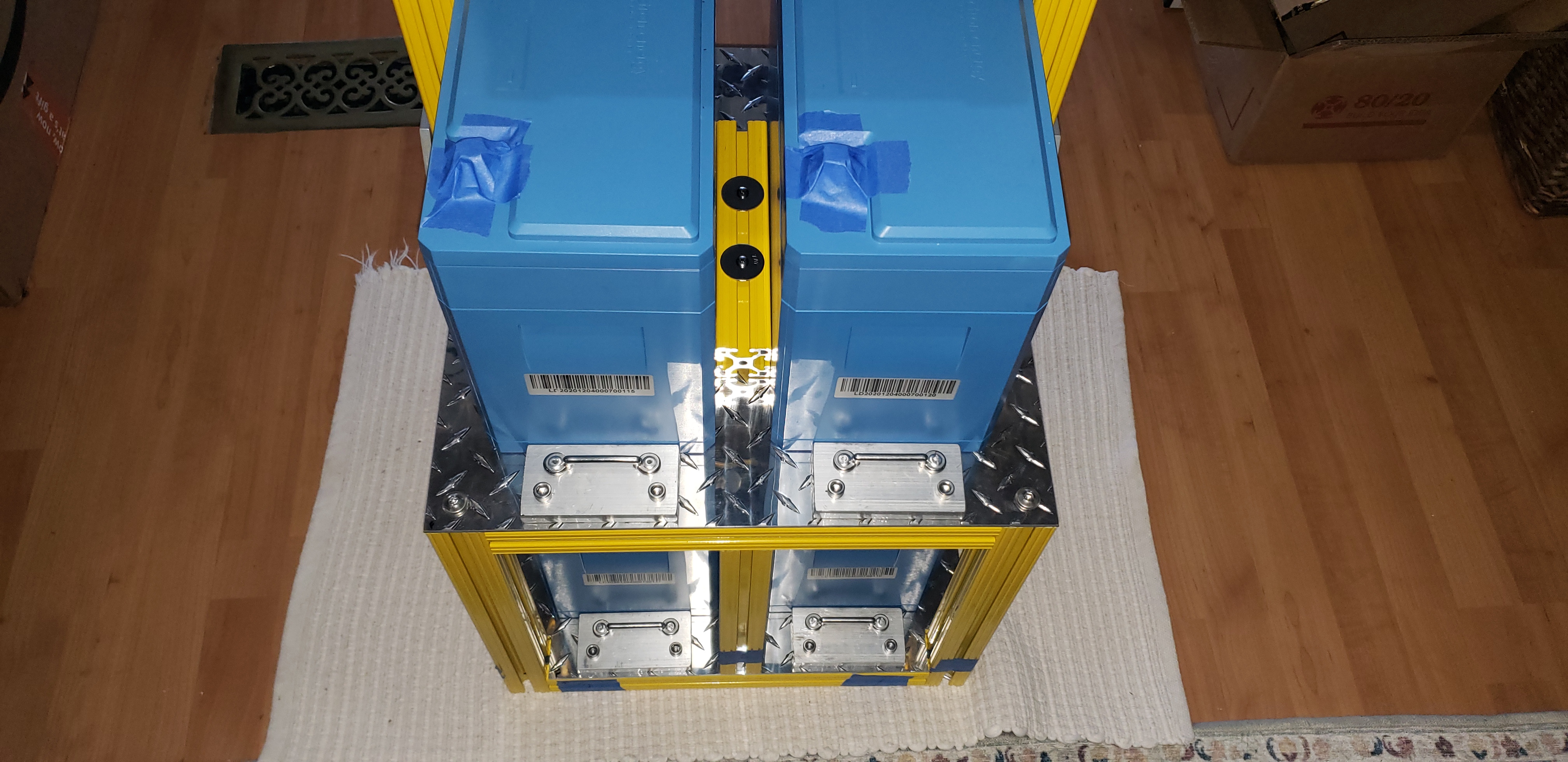
The aluminum blocks and yellow T-slot battery spacers are now in their final positions.
The back of the assembly. The large triangular gussets in the corners will serve to further strengthen the structure keeping it rigid and secure when the PoD is rolling down the road. A few small parts are still needed before the SiBaSS is complete and can finally be installed in the PoD.
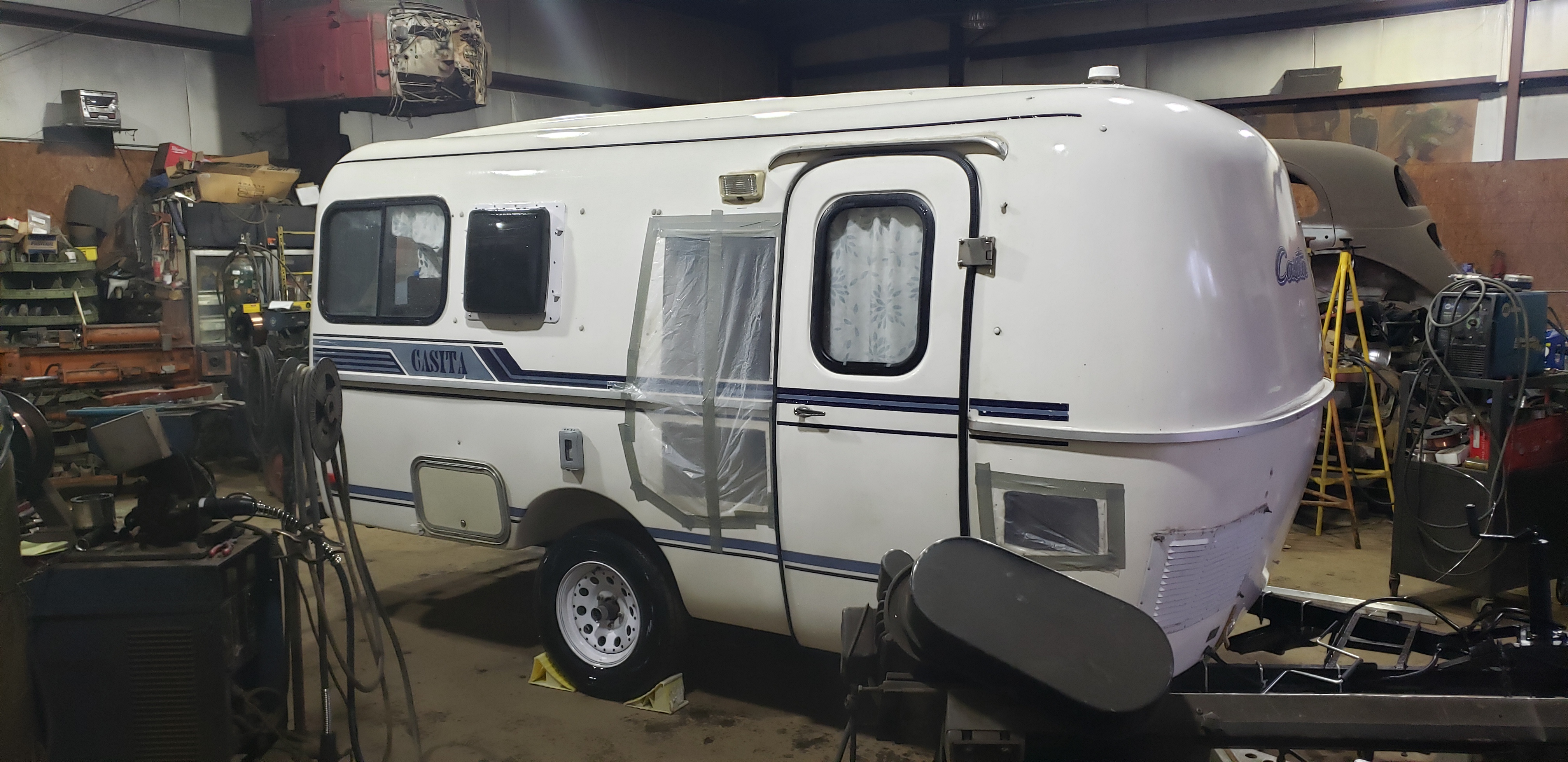
In other news, we have transported the PoD to the Red Dog the welder who is working his magic and, as I write this, installing the solar array support structure onto the PoD. Here are a few photos of this major step in the process. Below, Red is toting the PoD into the shop with his forklift.
The PoD in the shop. Note the plastic shields I installed over the future window holes and air conditioner service port in the side – it was raining. Of note – the skylight Jim and I fabricated and installed a few days ago had a very good test today and I am happy to report that it passed with zero leaks.
Day One: Getting ready to begin the welding job.
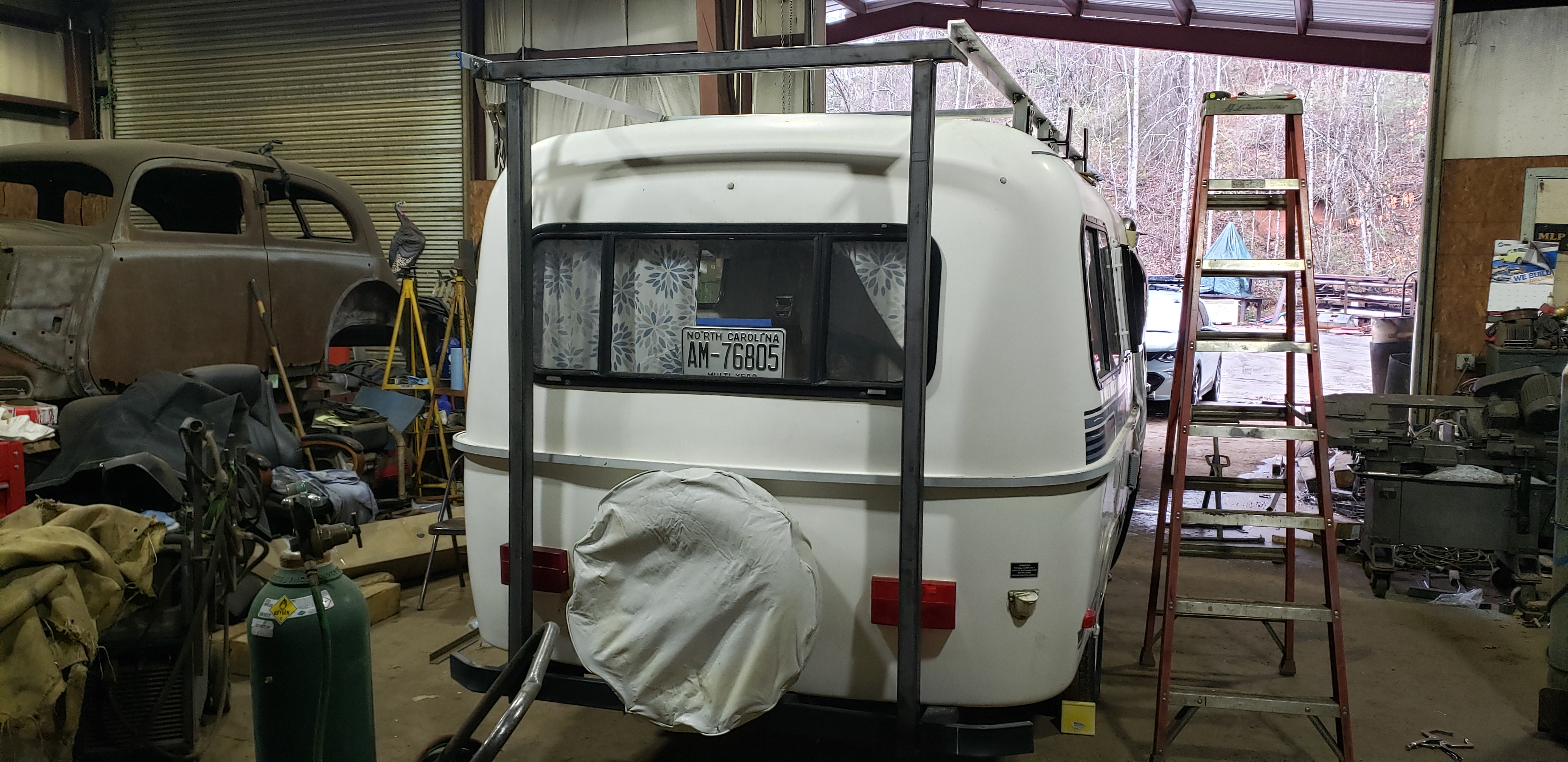
Hmmm, I might need to re-locate the brake lights to the other side of the steel support beams.
Getting things perfectly aligned before the welding begins.
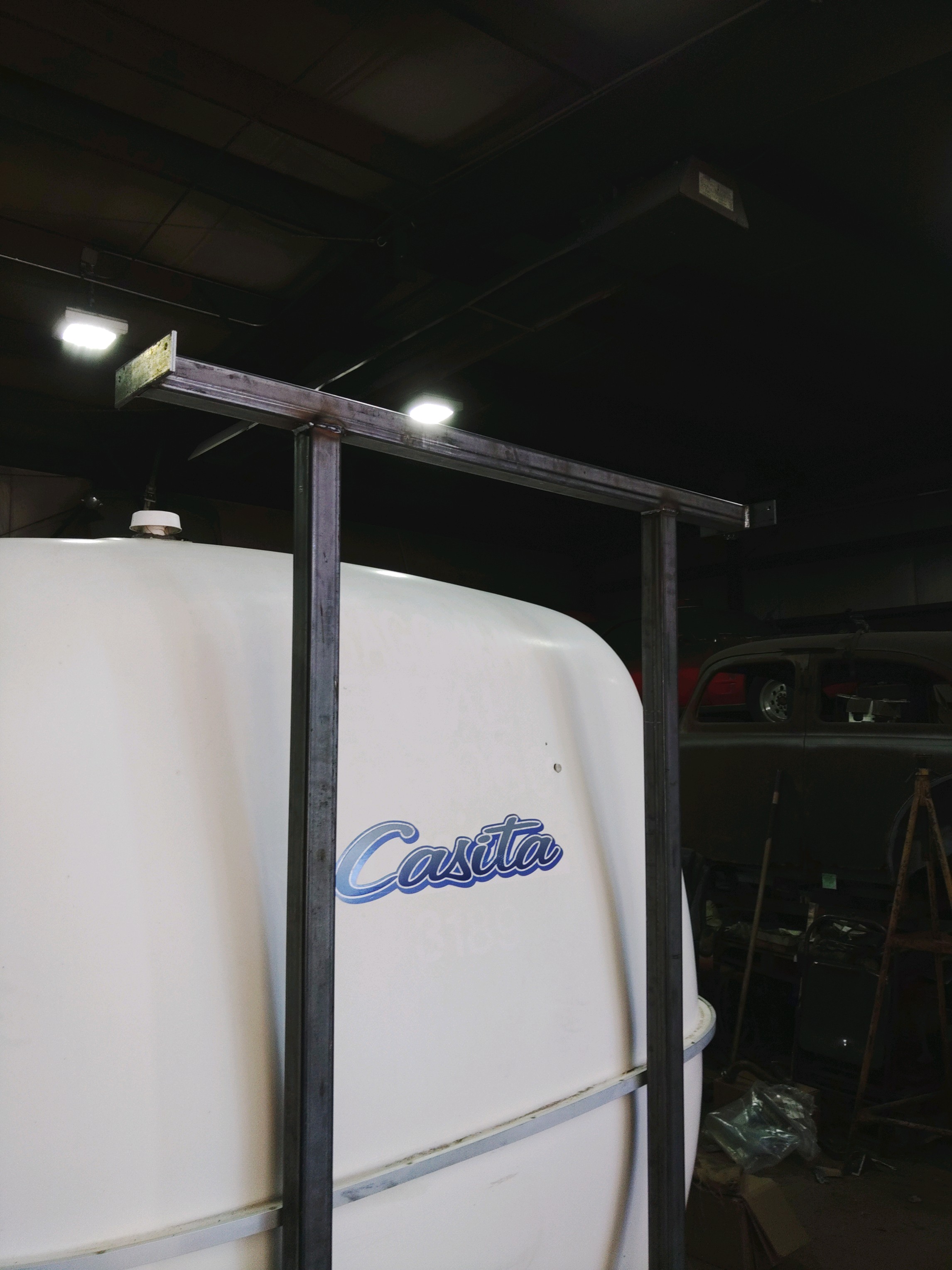
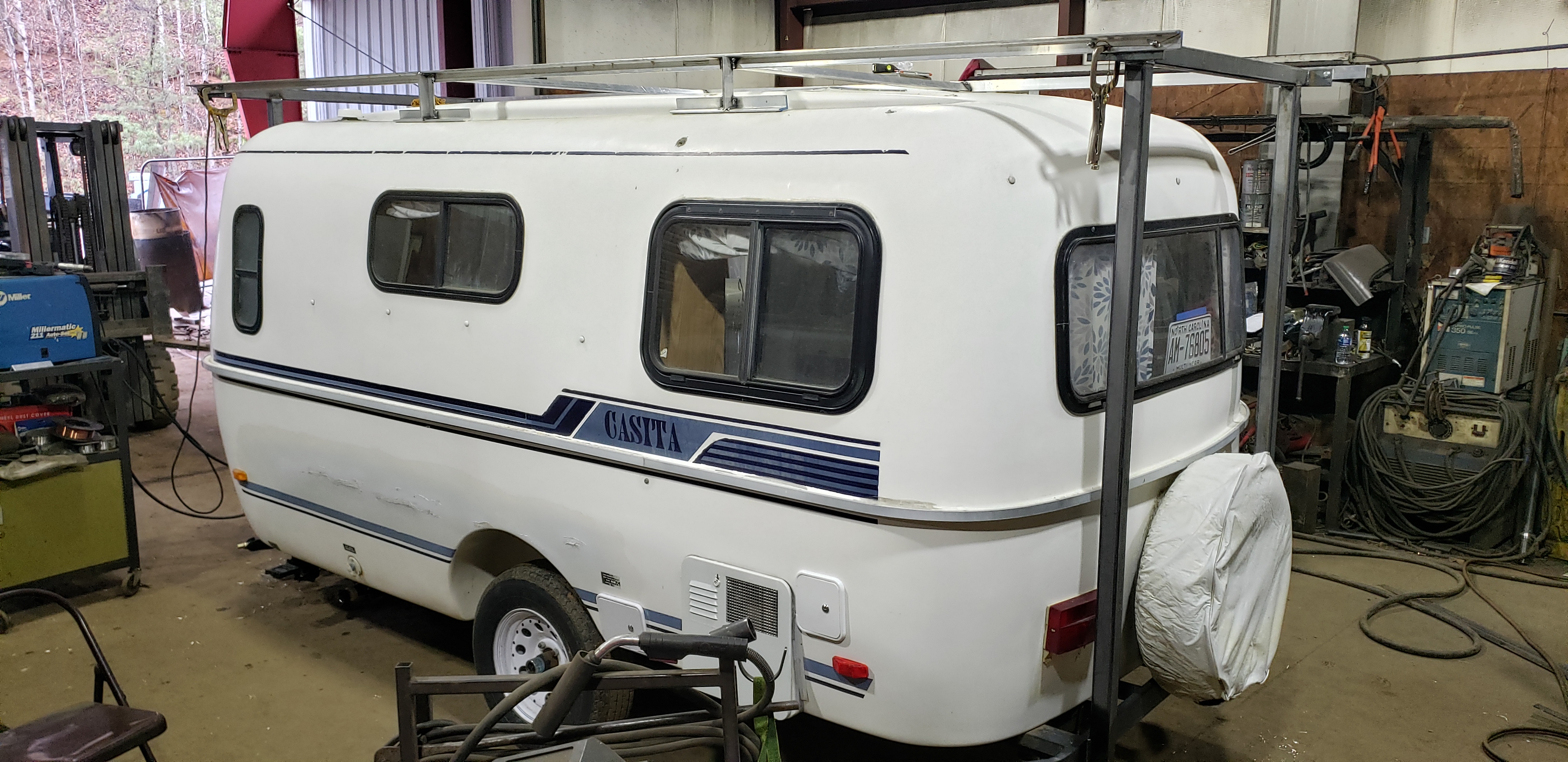
Array support structure taking shape.
Precision cuts require precision tools.
The solar array support rack being aligned. The solar modules (panels) will bolt directly to the shiny pieces of aluminum in the below photo.
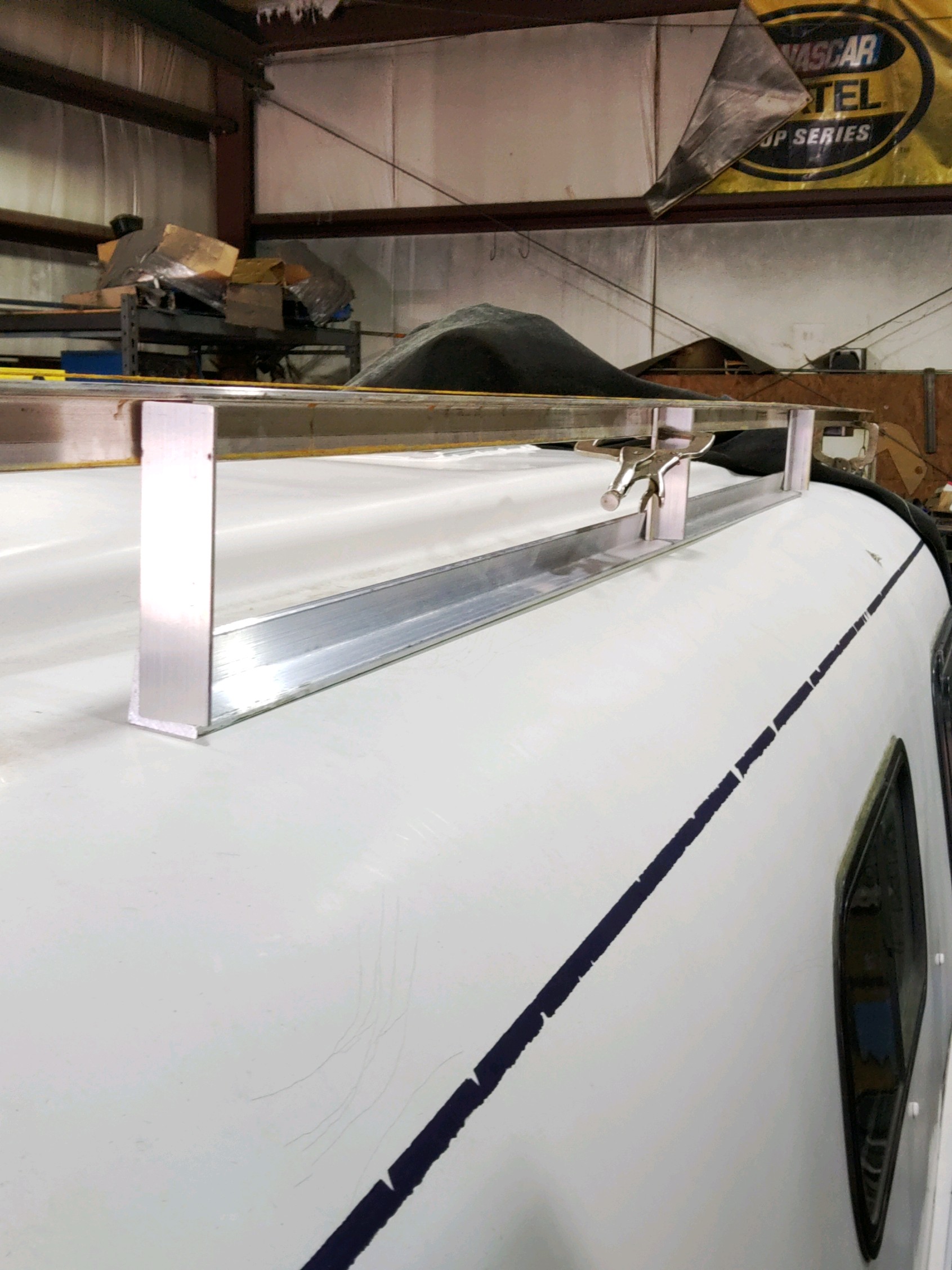
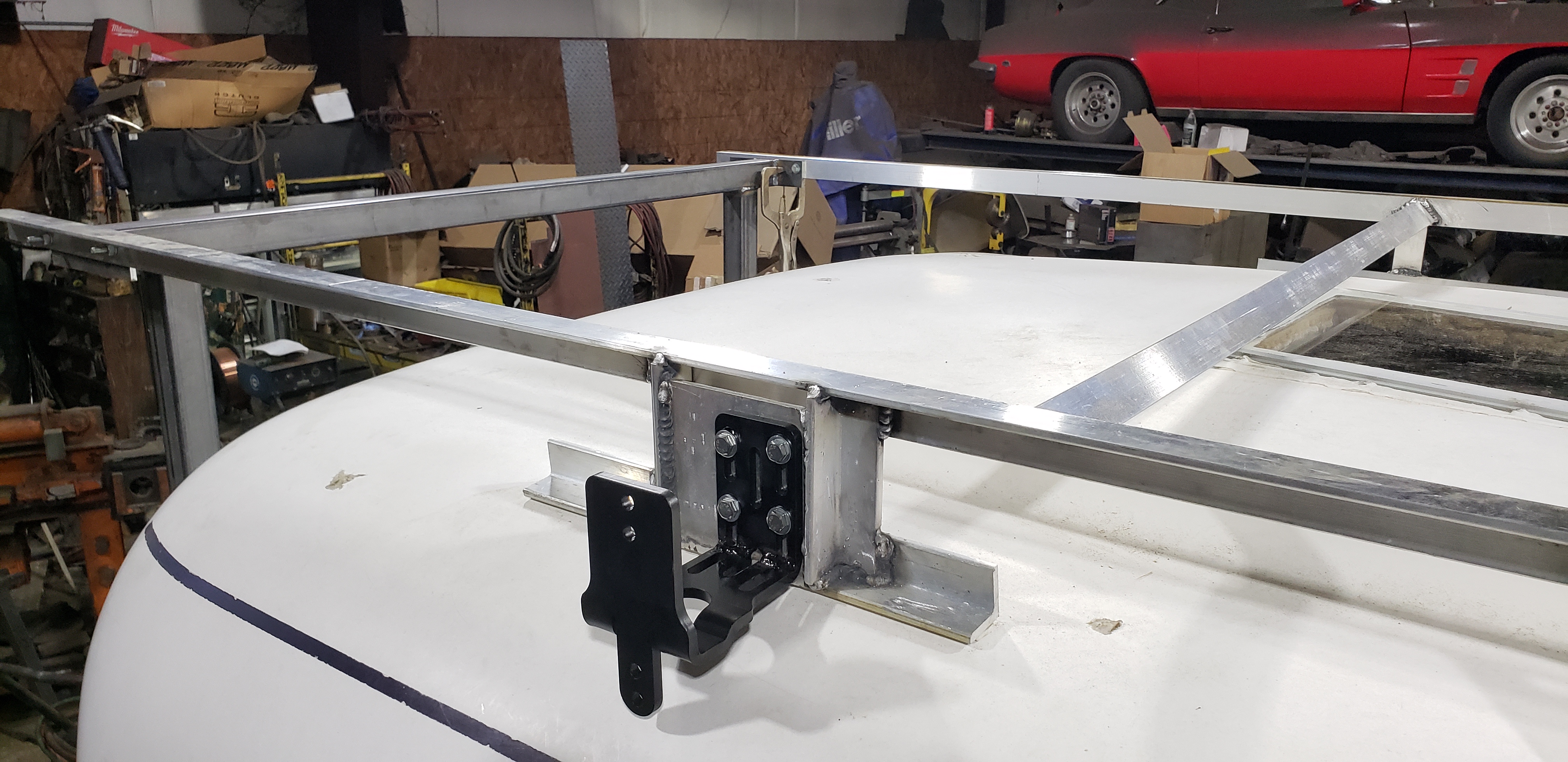
This rack system is a special challenge since the roof of the PoD is made of fiberglass. The next photo shows one of the long “foot-like” structures Red is fabricating that will help to distribute the weight of the solar array and the awning over the entire rooftop.
Day Two of the construction: the rack is starting to come together.
One of the three brackets where the awning will attach.
Stay tuned – there is much more to come.
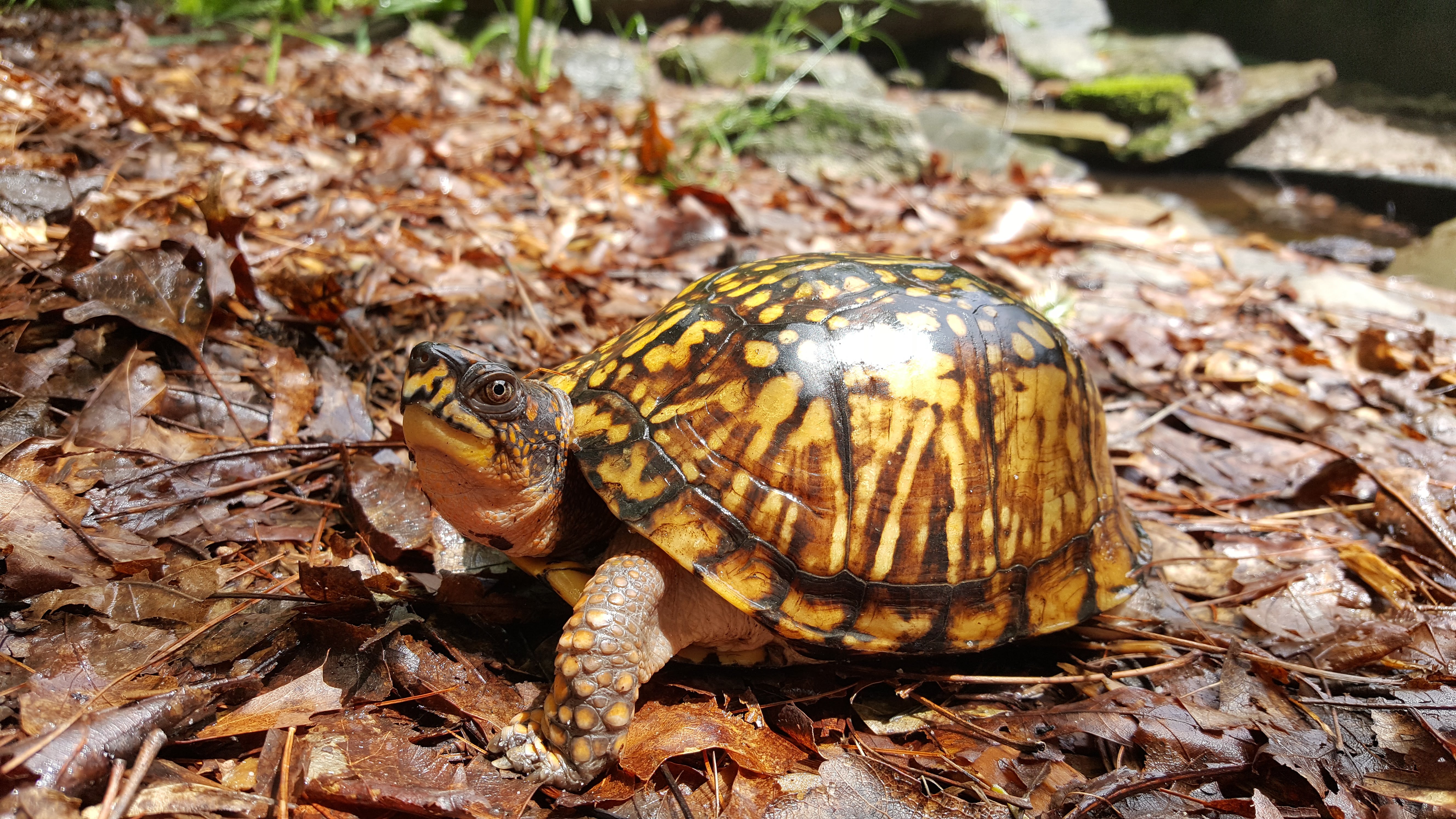
In closing, this is Tripod the Eastern box turtle – the ENP mascot. It will not be long before the warm sun of springtime awakens her from her long winter’s nap 🙂
Please subscribe and follow this blog for more updates.
We hope to have the ENP NaSA PoD in service on or before Earth Day 2022!
This amazing project will serve to inspire and educate all the curiosity seekers it will meet. But to do this right – we do still need your support. If you choose to assist us in making this project a reality, this unique mobile classroom will greatly benefit the nature and wildlife conservation, science, reality, common sense, and renewable energy awareness education for all our outreach program participants in the WNC region as well as our wonderful students at Trails Carolina and Trails Momentum who will all greatly benefit from the wonders it will contain while they are in class and in the field on expedition.
The construction and use of this unique mobile classroom will be documented on this blog, our end-of-year newsletter, and soon on our YouTube channel.
The ENP NaSA PoD and the Mighty Bolt EV (our primary outreach vehicle) are owned by ENP and used primarily as the ENP company outreach vehicle and mobile outreach classroom. They will be charged and fueled primarily with cleanly generated electricity provided by the ENP/Trails student-built classroom solar array and NaSA PoD’s rooftop solar array. They will both serve as outstanding teaching tools for our Trails students, ENP outreach program participants, and everyone we meet via our outreach programs.
Please note: any/all ads that appear below this post are not provided or endorsed by ENP nor are we supported in any way by these ads – they are an automated feature of WordPress.com.
Yesterday I took the PoD to meet metal fabricator Tim from Appalachian Sheet Metal and Fabrication in Weaverville, NC. Tim made some detailed measurements of the side of the Casita where the custom windows will be installed. Below is a photo of Tim making his measurements in preparation for the fabrication of the window frames.
It will take a few weeks for Tim to work his magic but hopefully, by early April I will be able to share the details of what Tim has created for us.
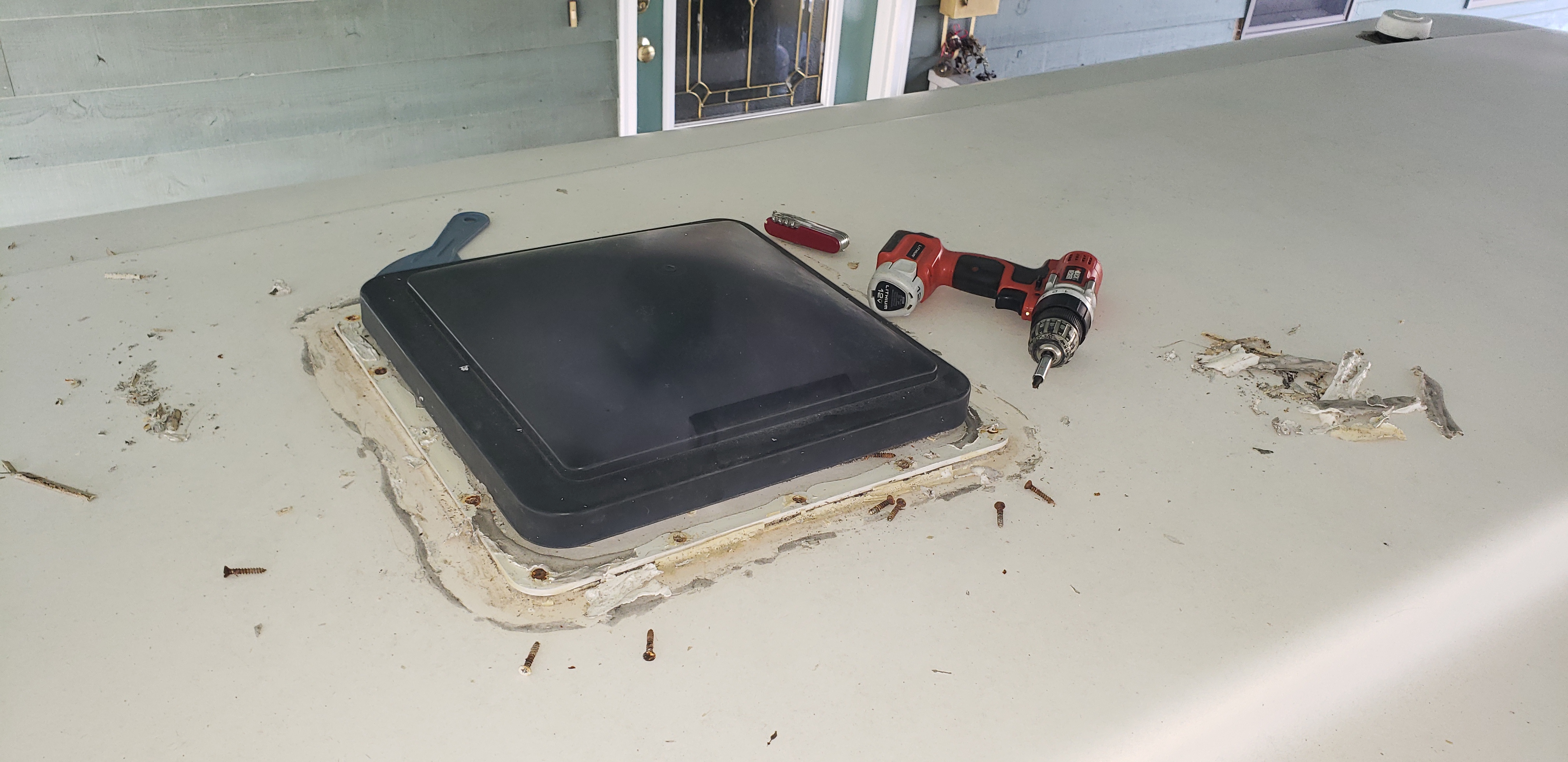
Also today Jim and I installed the PoD’s new skylight in the hole left by the removal of the old roof vent fan. In the next sequence of photos, you will see the process from start to finish. The first photo is taken from the roof of the Casita before I prepped the area around the hole in the roof. You can see the remnants of the old sealant as well as several broken screws sticking through the roof.
The old sealant came off easily with a razor blade but the old screw shafts had to be filed down to the roof-line with a metal file – that took a while. In the next photo, the surface has been prepped and cleaned and all screw shafts have been filed down.
Next Jim and I constructed the aluminum frames to hold the Lexan skylight. This was not as easy as it sounds and I could never have done it alone – Jim’s knowledge, expertise, and very nice tools allowed us to miter the corners of the frames and get everything lined up in preparation for installation
THANK YOU JIM!!
This is a photo of the skylight in its frame (with protective blue plastic coverings) just before I installed it on the roof.
In this next photo, we see the skylight installed in its final location on the rooftop with plenty of sealant under and around the skylight.
We needed to create a custom ultra-low-profile skylight since the solar array and its frame will need to be placed as close to the roofline as possible. An interesting point of note is that soon, with the placement of the solar array above the roof – the sky will not be very visible through this skylight. Maybe when that happens we will need to call it a solar array viewing port.
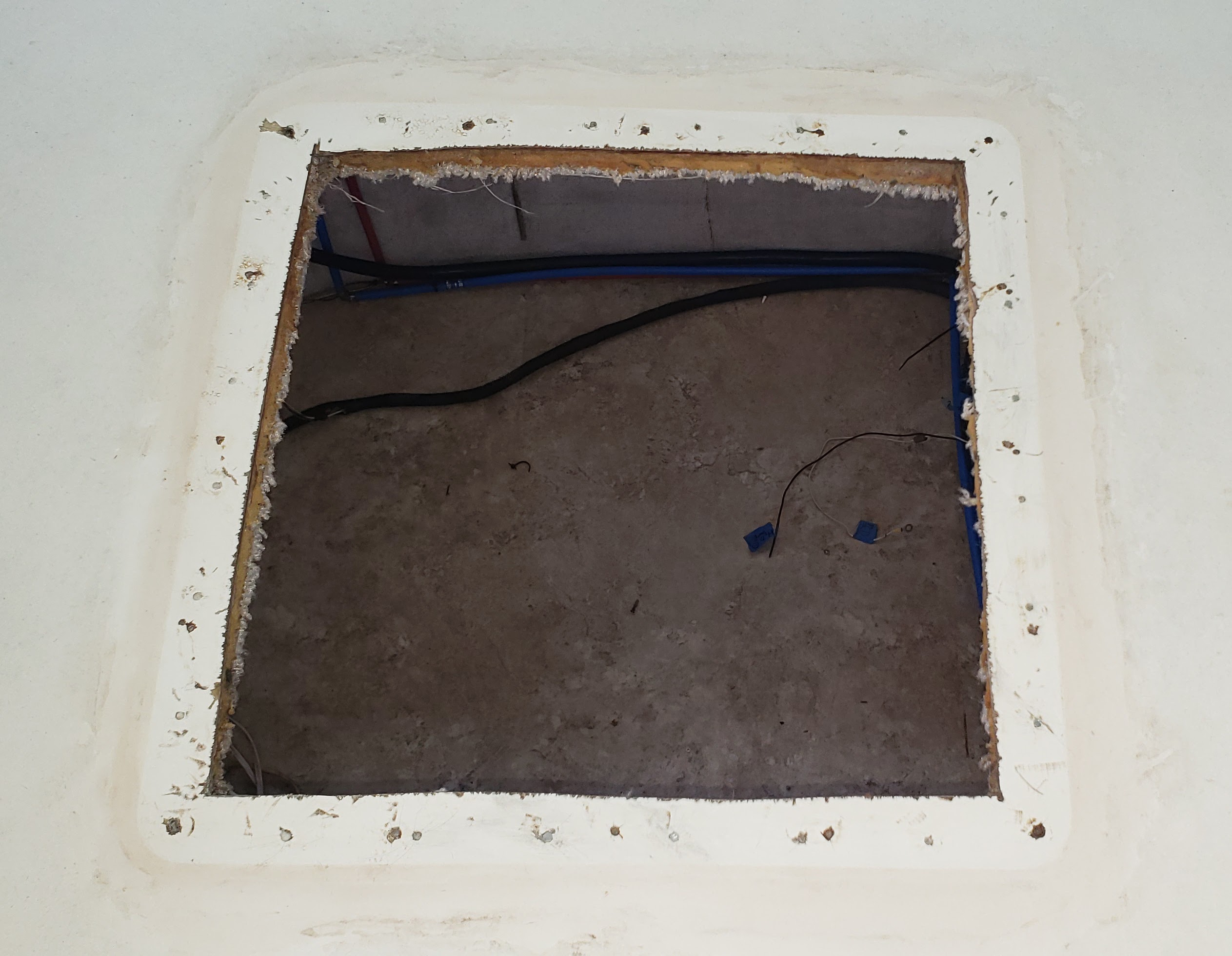
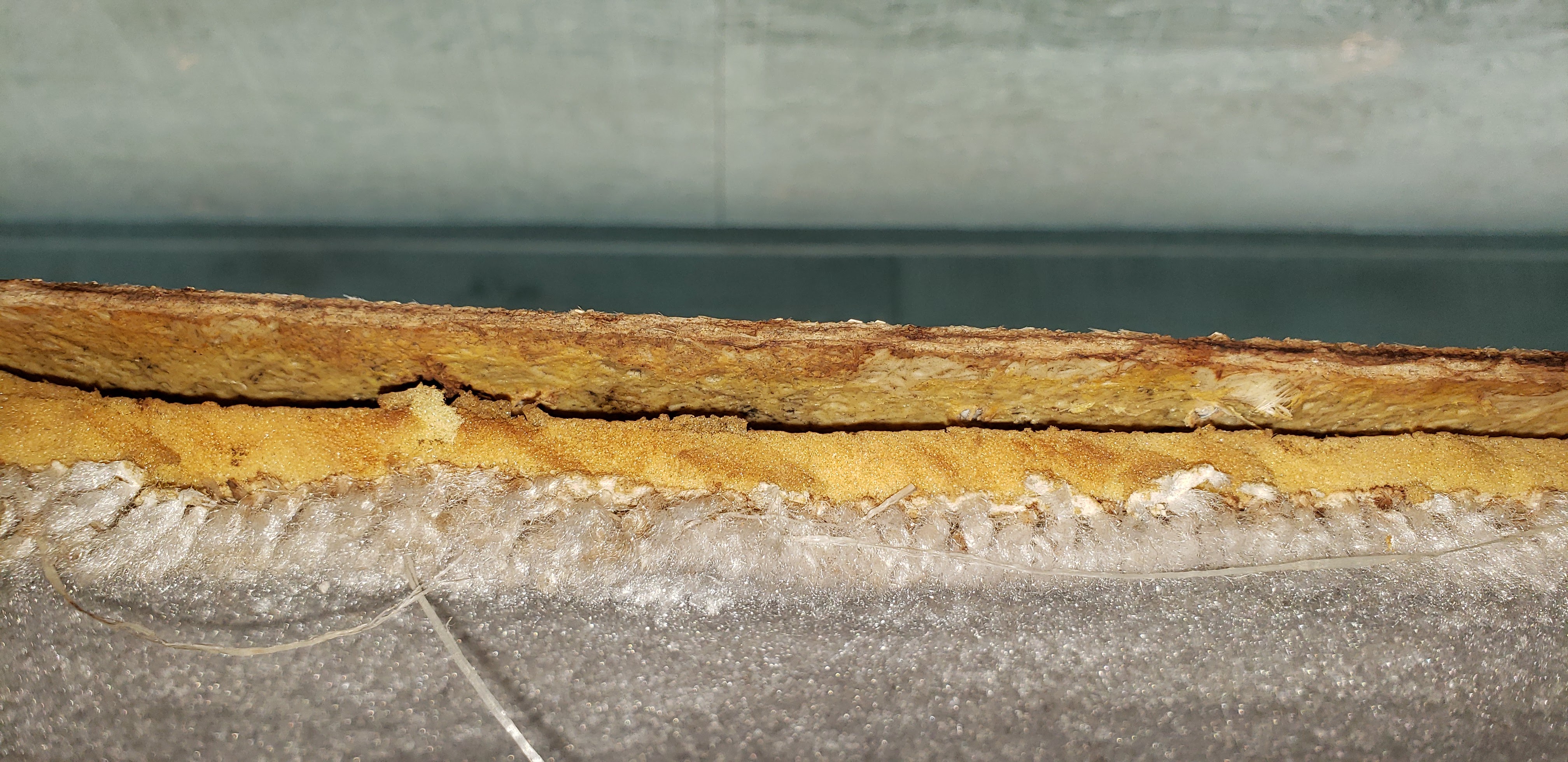
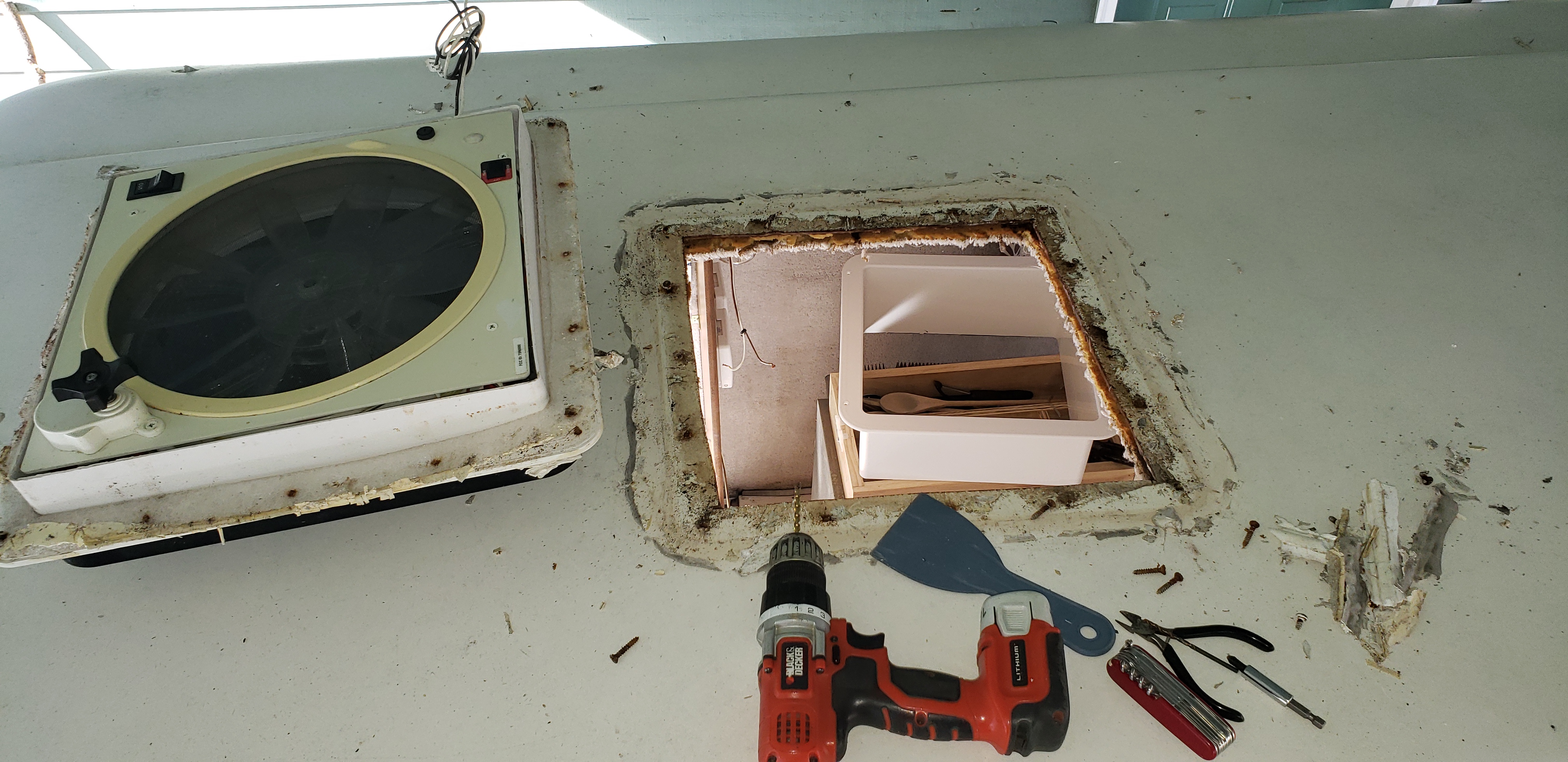
Soon, when the weather returns to something like spring (it is now 20F and windy with a dusting of snow on the ground!) I will work to install a trim piece around the interior of the skylight port…which at the moment appears as in the next photo (taken before I installed the skylight). The top layer is the fiberglass shell of the RV. Below that is a gap of about 1/2 inch, then the foam backing of the carpet, and finally the carpet itself. I plan to install an edge-hiding trim piece around the carpet and then glue the carpet up to the ceiling with construction glue…but to do that we will need warmer weather.
That is where we are in the build at the moment and we hope to have much warmer weather soon – so hopefully, more modifications will happen much faster.
I leave you with two of my furry family members who were enjoying the sunshine while Jim and I worked on the PoD. That is Cosmo the cat in the foreground rolling in the warm moss, and Tangie the “Carolina Mountain Red Dog” (rescued mixed-breed terrier thing) in the background. They both love the warmth of the early spring sunshine 🙂
We hope to have the ENP NaSA PoD in service on or before Earth Day 2022!
Stay tuned – there is much more to come.
Please subscribe and follow this blog for more updates.
This is an amazing project that will serve to educate and inspire all the curiosity seekers it meets. But to do this thing right – we do still need your support. If you choose to assist us in making this project a reality, this unique mobile classroom will greatly benefit the nature and wildlife conservation, science, and renewable energy awareness education of all of our outreach program participants in the WNC region as well as our wonderful students at Trails Carolina and Trails Momentum who will all greatly benefit from the wonders it will contain while they are in the field on expedition.
The construction and use of this unique mobile classroom will be documented on this blog, our end-of-year newsletter, and soon on our YouTube channel.
The ENP NaSA PoD and the Mighty Bolt EV (our primary outreach vehicle) are owned by ENP and used primarily as the ENP company outreach vehicle and mobile outreach classroom. They will be charged and fueled primarily with cleanly generated electricity provided by the ENP/Trails student-built classroom solar array and NaSA PoD’s rooftop solar array. They will serve as outstanding teaching tools for our Trails students, ENP outreach program participants, and everyone we meet via our outreach programs.
Please note: any/all ads that appear below this post are not provided or endorsed by ENP nor are we supported in any way by these ads – they are an automated feature of WordPress.com.
Over the past few days, much progress has been made.
The new door latch has been installed and works fabulously!
Over the last week or so I have also been working to get the PoD’s water system installed. This will be needed to supply the PoD’s human and animal inhabitants with life-giving water during outreach events -especially multi-day events – and allow the humans to grab a shower after the end of a long day of bringing nature and science knowledge to the masses 🙂 The mass of the 25 gallons (200 lbs) of water in the two tanks (the 3rd is the water heater) will also serve as a ballast system to help counter-balance the added mass in the solar-electronics cabinet.
Step one: Find a place to install the new water tank – this looks like a good location.
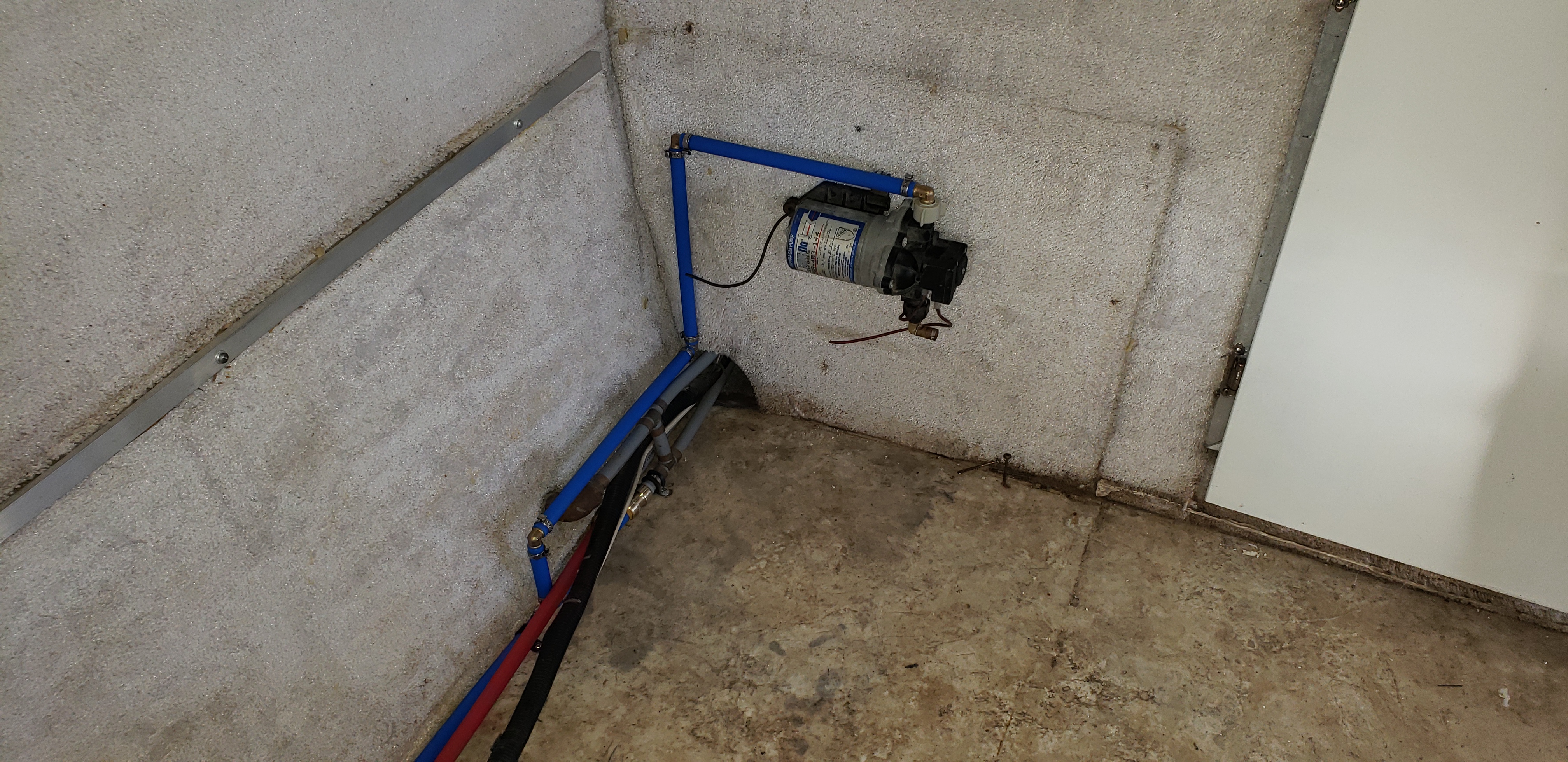
Step two: move the water pump to a new location.
Step Three: replace old water pipes with new PEX water pipes.
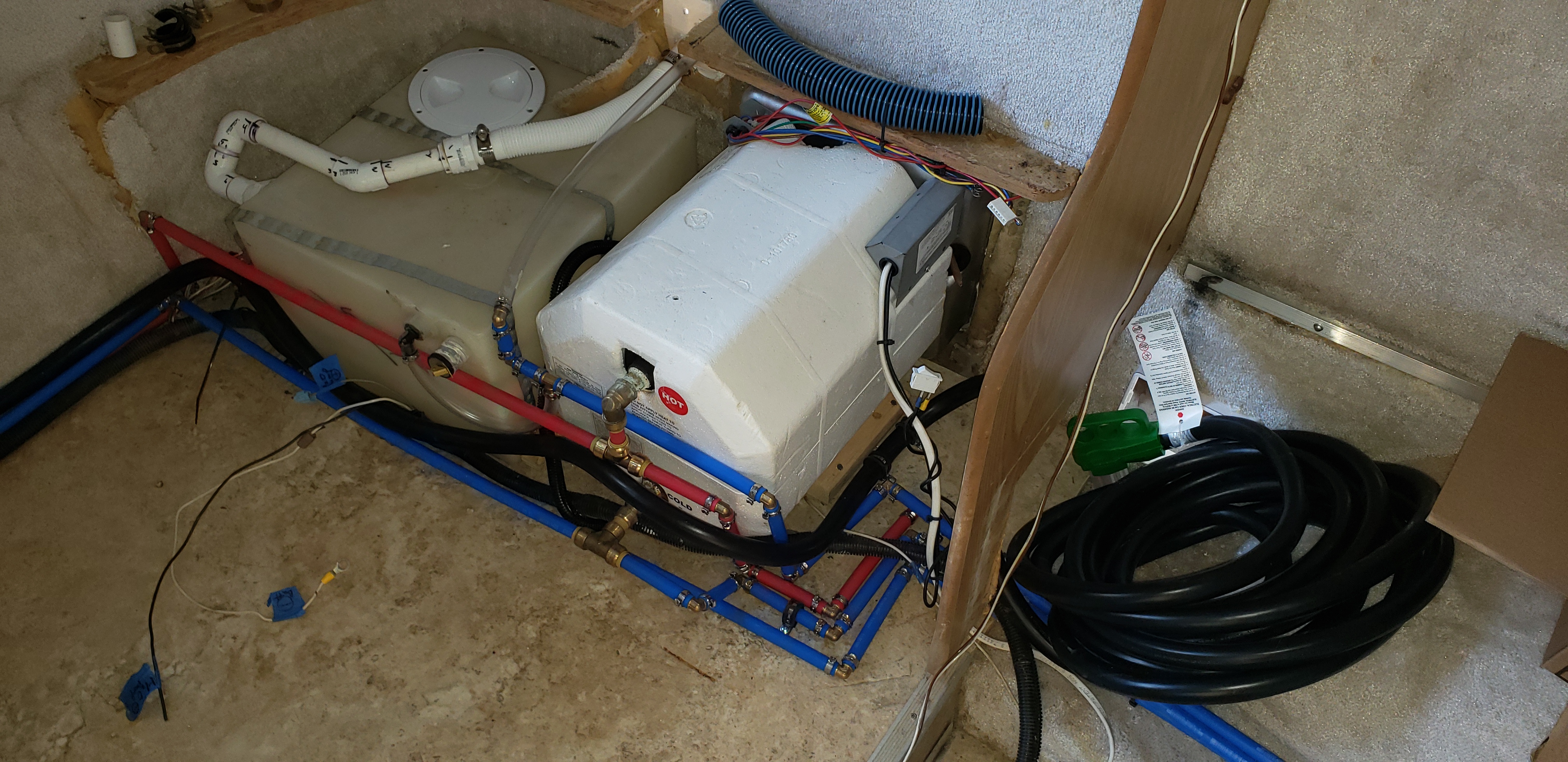
…and even more new pipes. In the next photo, you can see how all the various water pipes connect the two tanks allowing them to balance the water supply between the two tanks. The off-white upper tank pictured in this image is also where the water filler is located – its fill hatch is on the outside of the vehicle at the end of the white PVC tube on top of the tank. Also in this photo, you can see the new 50 Amp shore power connection cable coiled on the bottom right of the image.
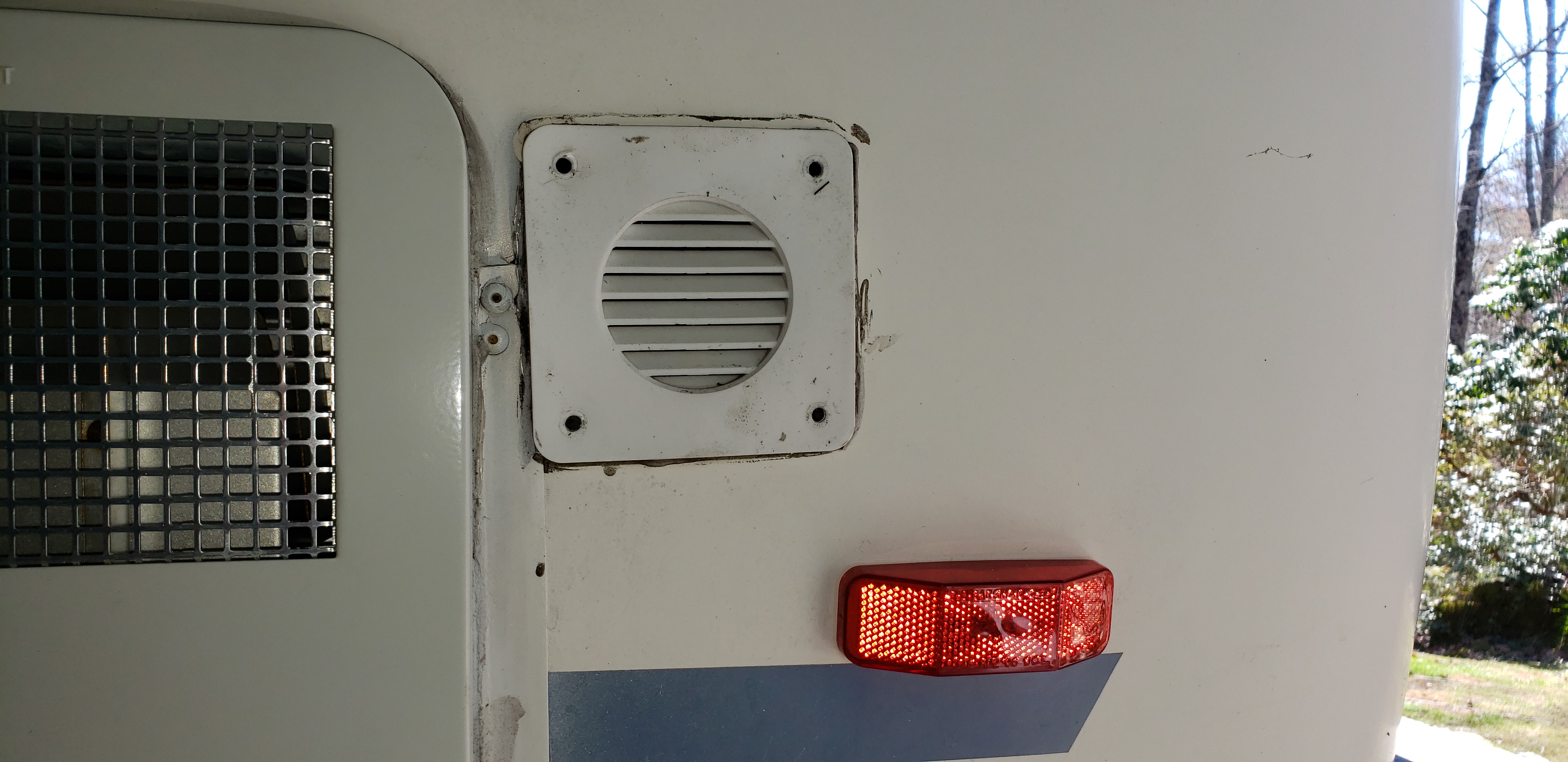
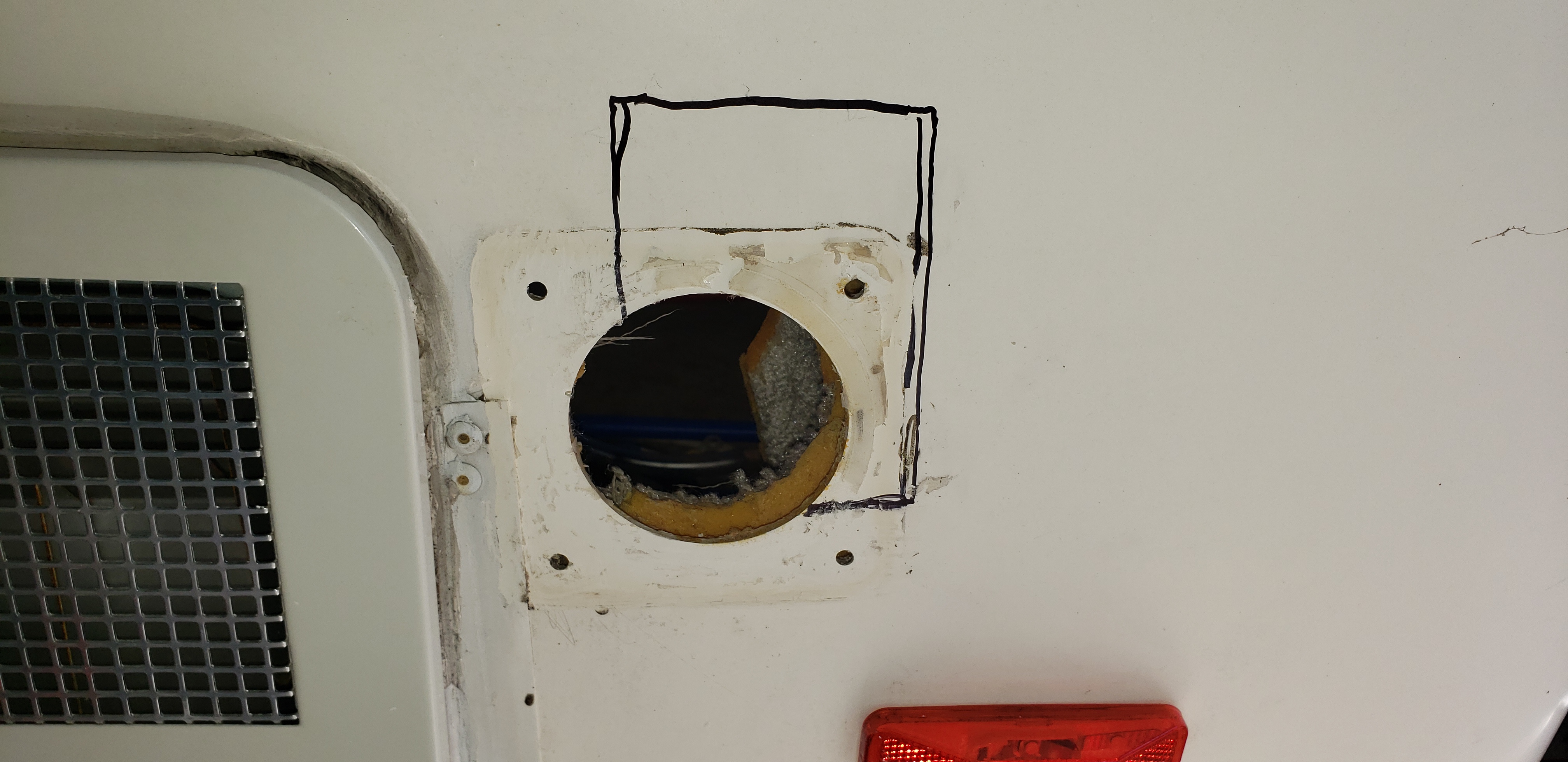
We also installed the new water filler hatch – but we first had to make a larger hole. We made the new hatch hole using an existing hole – the old 12-volt battery off-gassing hole – a bit larger to accommodate the new fill point.
This is what the old battery vent port looked like before we modified it.
Marking the new hole…
Cutting the new hole…
The new water filler port installed.
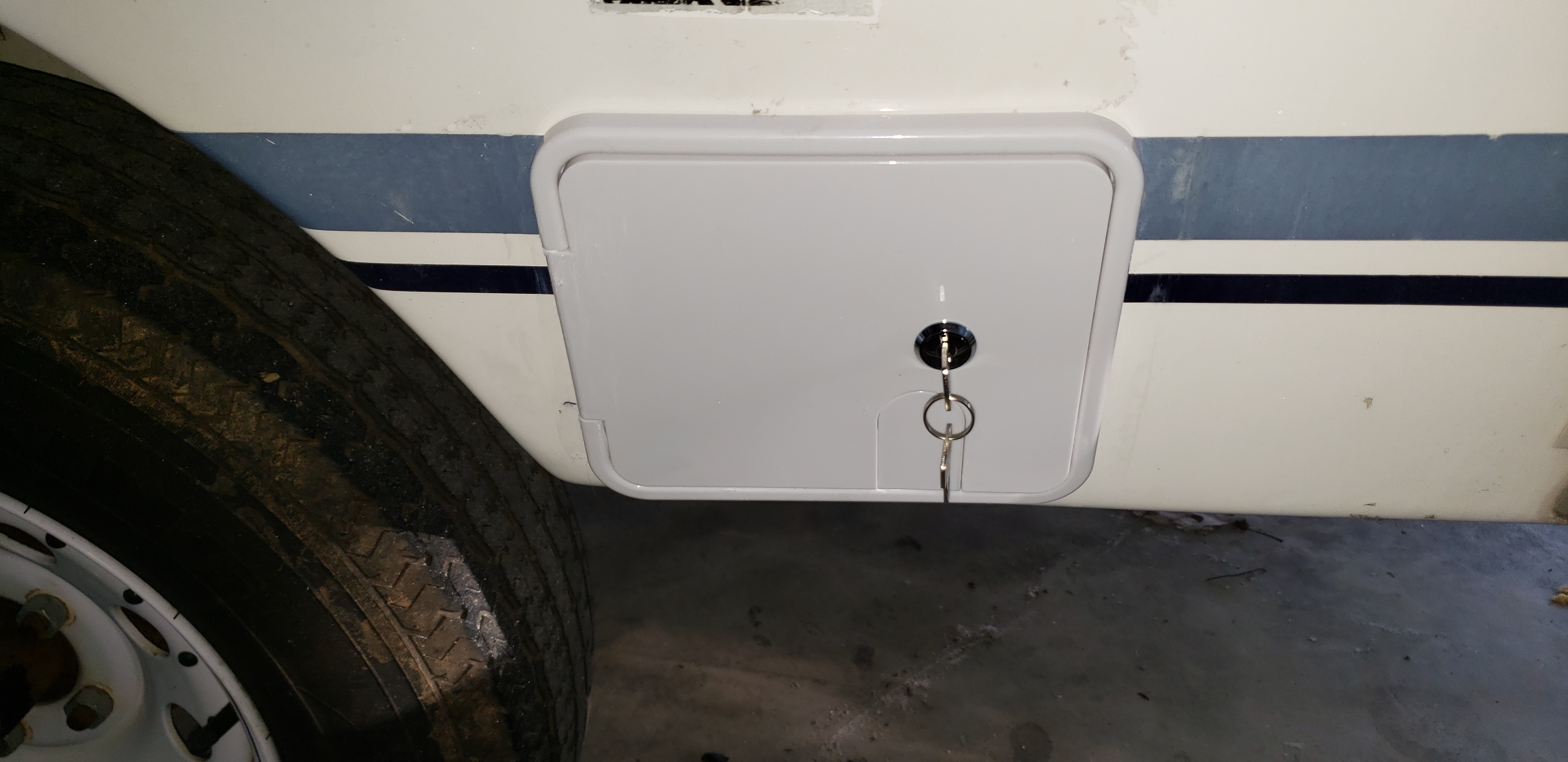
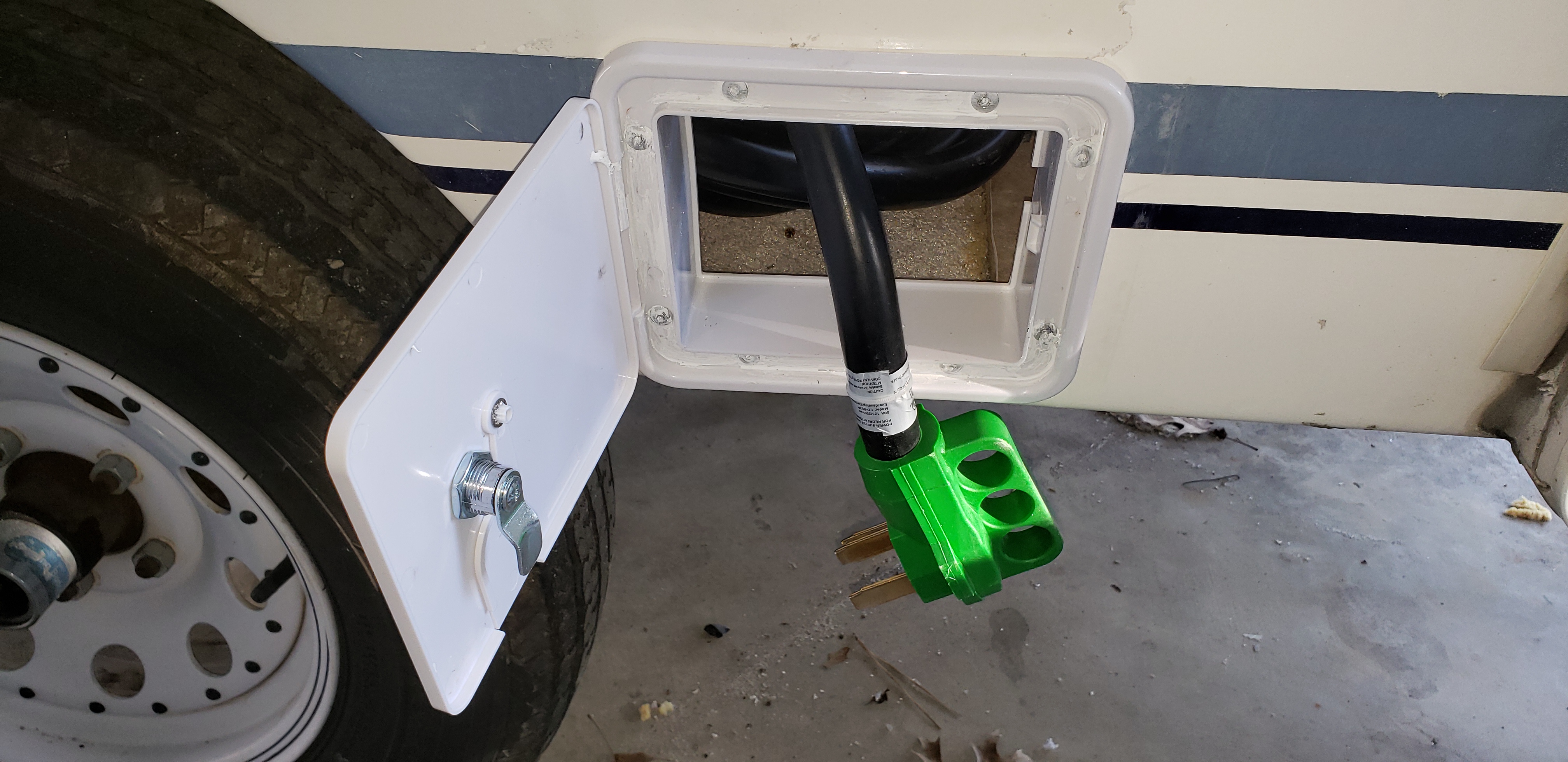
We also installed a new shore power cord port after the original unit suffered a RUD (Rapid Unscheduled Disassembly) while I was attempting to open it one cold day in February – the plastic was old and brittle and just fell apart in my hands. Hopefully, this new one will serve us for many years.
Back to the water system.
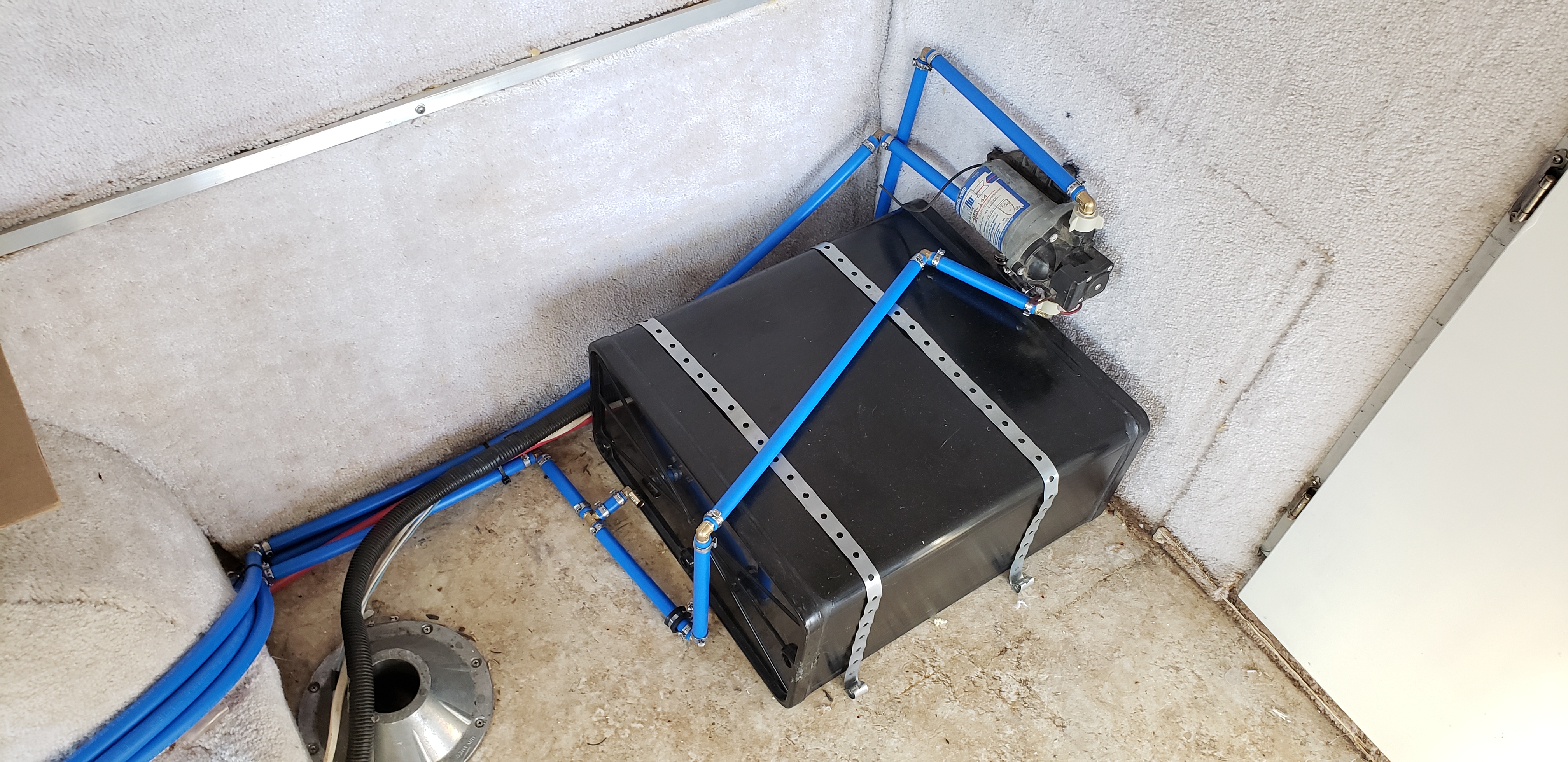
After the pump and all the pipes were in place, we then installed the new 9-gallon water tank.
The system is not yet connected and tested since we are missing a few small water line adapters that we could not source locally. They should arrive later this week and will complete the final connections that will make the new water system complete. If you look closely in this image and to the left of the center you will see where the adapters are needed – where the blue water line ends in a brass 90-degree elbow fitting – it is at this location where we need to have a unique small adapter to connect the water line to the tank. We also need to install a system drain valve – it will go in the space above the brass elbow I just mentioned and will have an outlet tube that passes through the RV’s floor allowing the system to be fully drained in the event of cold weather.
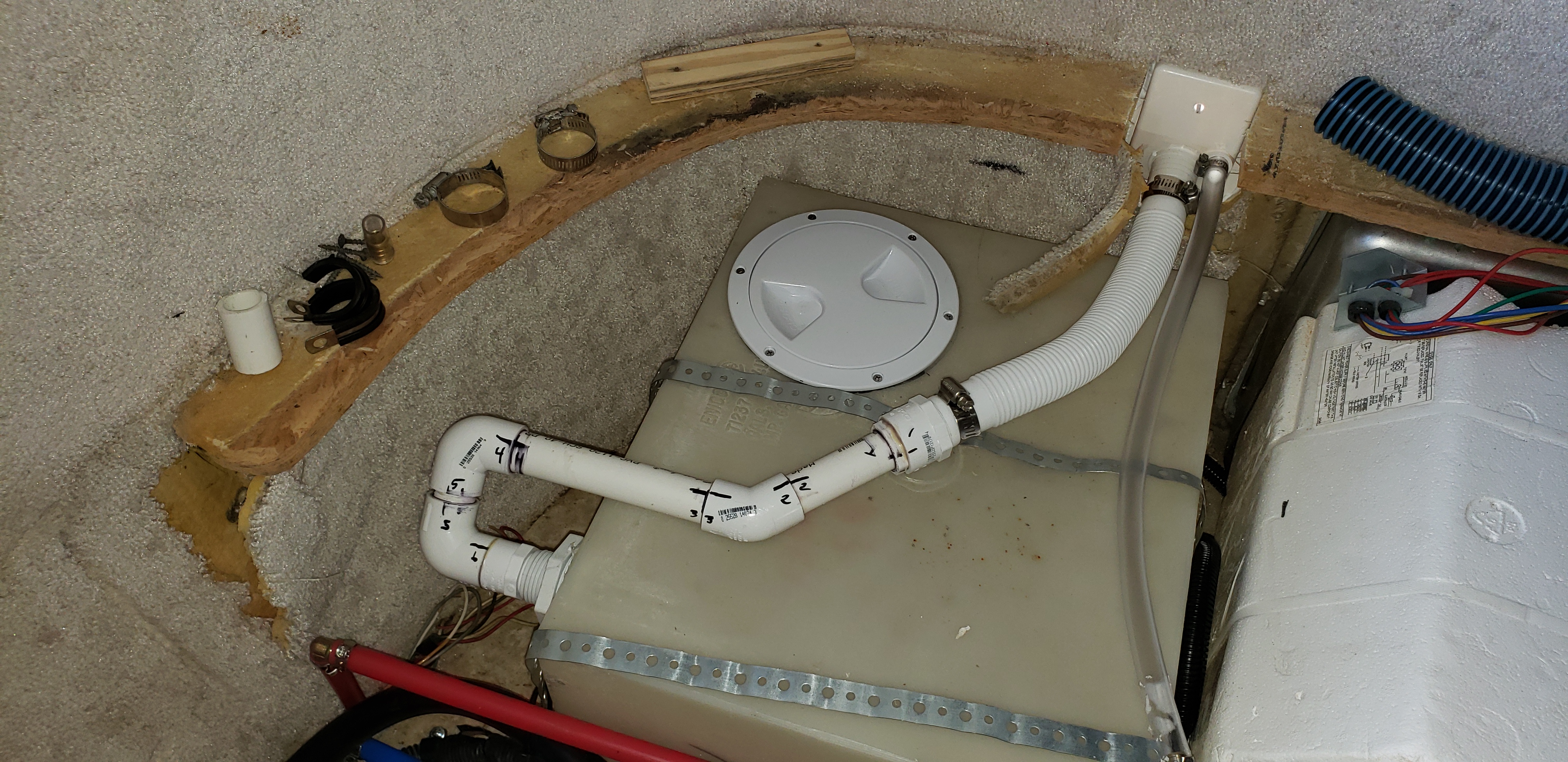
We also installed a clean-out port (the circular white port in the top of the original water tank in the below photo) as well as the new filler line between the tank and the externally mounted gravity fill port we mentioned earlier. The clear hose on the right is part of the water system’s air venting system.
We filled some old gas line and drain holes with body putty then drilled some huge holes through the floor of the RV and into the frame and then preliminarily installed the raised and strengthened sub-floor in the soon-to-be solar-electronics cabinet. It is not bolted in place just yet – we still need to sand and paint the fiberglass walls, let them dry, then we will be able to bolt it all together – but to do that, we need warmer weather…
We installed an external weather-proof heavy-duty outlet. This will be used to power the presentation monitor as well as the microscope station and Level 1 EVSE (electric car charger).
Lastly, we preliminarily mounted the final two Victron solar storage batteries on their support structure and then compared them to the cardboard analogue we constructed several weeks ago. The cardboard unit is smaller because it was constructed without a frame – but not to worry – the support frame’s measurements were accounted for so all should fit nicely in the new solar-electronics cabinet.
The carport staging area is looking crowded. Hopefully, we will soon be able to start putting all these parts back into the PoD.
A great photo from many years ago. During this week in 2017, I took this photo of the first toad of spring. Note: the First Phase of our classroom solar array is in the process of being constructed in the background 🙂
That is where we are in the build at the moment and we hope to have much warmer weather soon – so hopefully, more modifications will happen much faster.
Currently, we are still waiting for word from the welder and trying to find a sheet metal fabricator. Once they work their magic we will be able to install the solar modules and continue with the installation of further components. Warmer weather in the early spring will be most helpful and much will happen fast so please subscribe and follow this blog for more updates on this unique project!
We hope to have the ENP NaSA PoD in service on or before Earth Day 2022!
Stay tuned – there is much more to come.
Please subscribe and follow this blog for more updates.
This is an amazing project that will serve to educate and inspire all the curiosity seekers it meets. But to do this thing right – we do still need your support. If you choose to assist us in making this project a reality, this unique mobile classroom will greatly benefit the nature and wildlife conservation, science, and renewable energy awareness education of all of our outreach program participants in the WNC region as well as our wonderful students at Trails Carolina and Trails Momentum who will all greatly benefit from the wonders it will contain while they are in the field on expedition.
The construction and use of this unique mobile classroom will be documented on this blog, our end-of-year newsletter, and soon on our YouTube channel.
The ENP NaSA PoD and the Mighty Bolt EV (our primary outreach vehicle) are owned by ENP and used primarily as the ENP company outreach vehicle and mobile outreach classroom. They will be charged and fueled primarily with cleanly generated electricity provided by the ENP/Trails student-built classroom solar array and NaSA PoD’s rooftop solar array. They will serve as outstanding teaching tools for our Trails students, ENP outreach program participants, and everyone we meet via our outreach programs.
Please note: any/all ads that appear below this post are not provided or endorsed by ENP nor are we supported in any way by these ads – they are an automated feature of WordPress.com.
Since our last update we have made some good progress on the conversion from camper to mobile outreach classroom.
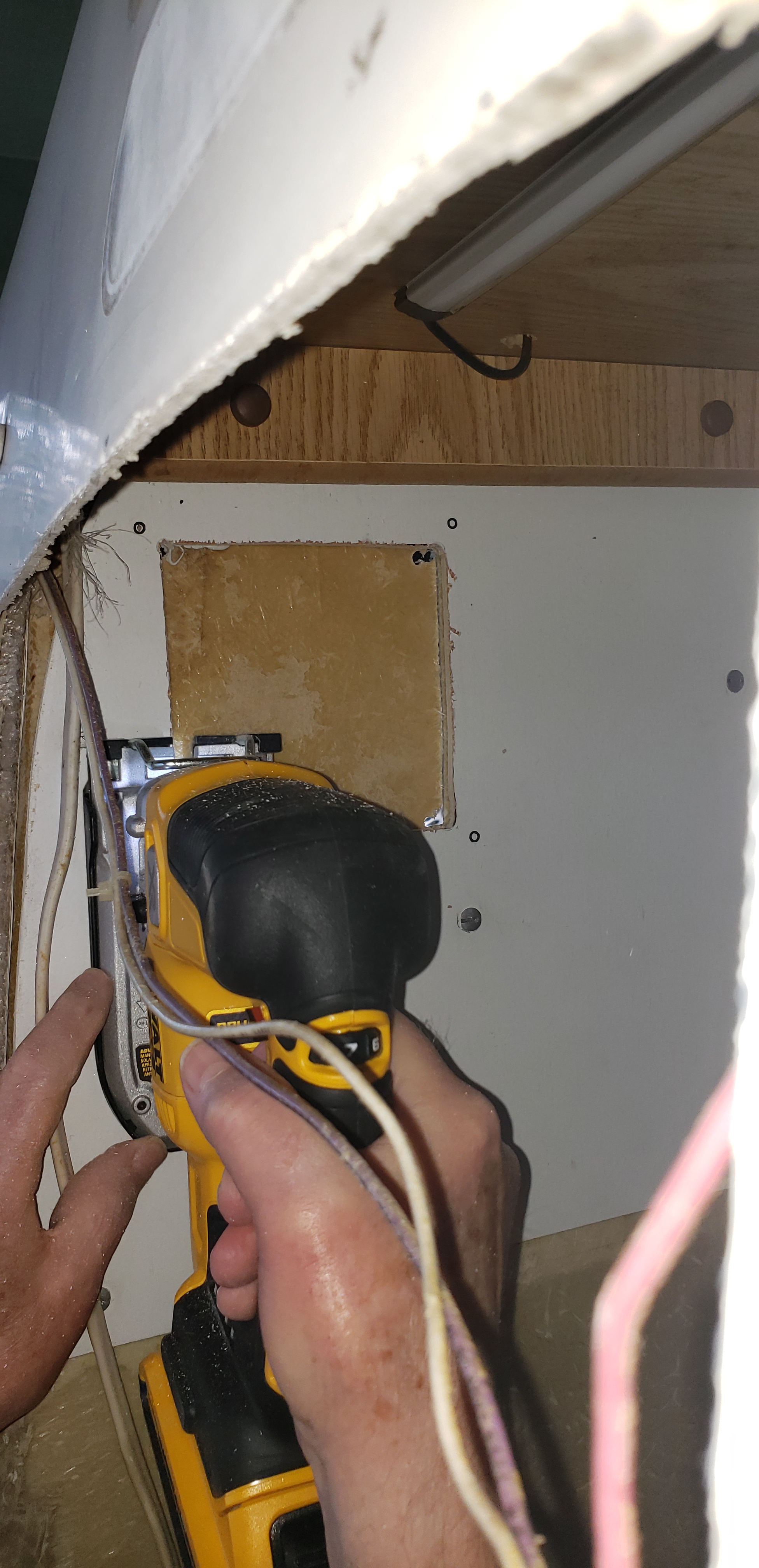
We installed some custom cut and painted paneling – THANK YOU JIM! – inside the future solar-electronics cabinet (the old refrigerator space) and then cut two holes for the ventilation fans that will serve to keep everything cool. Note: all is unfinished so everything will look rough around the edges.
The first cooling fan in place – a perfect fit!
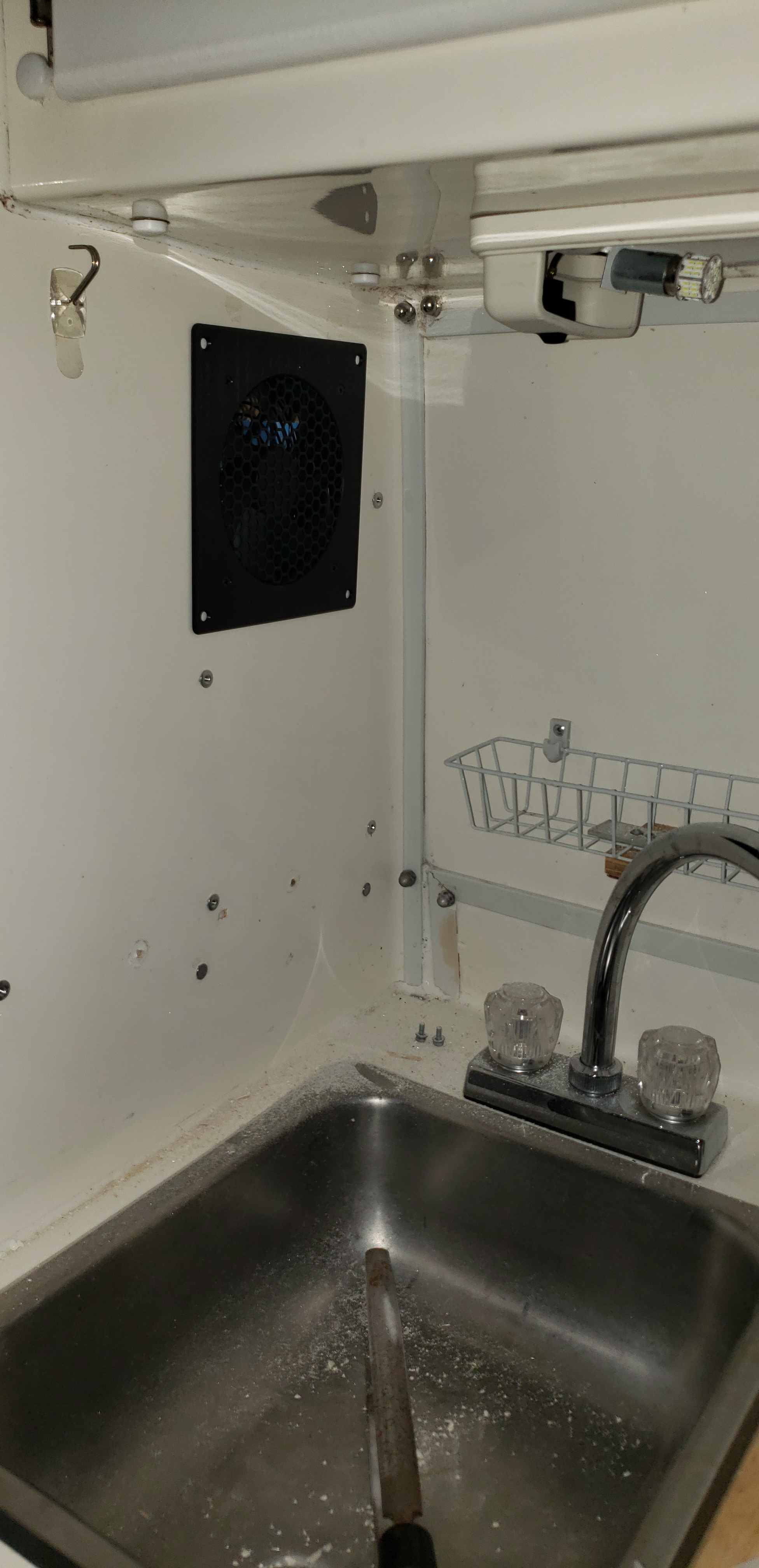
Looking at the exhaust side of the fan from the kitchenette side of the solar-electronics cabinet.
Looking at the inside of the lower fan from inside the SE cabinet.
The next photo is the intake side of the lower cooling fan. It is in the NaSA PoD’s entry way directly across from the air conditioner so on very hot, sunny, days when the A/C is running – this fan will serve to pull cool air in from the A/C unit only 2 feet away, thereby keeping the electronics cool and efficient which will in turn keep all of the PoD’s occupants – animal and human – comfortable and safe.
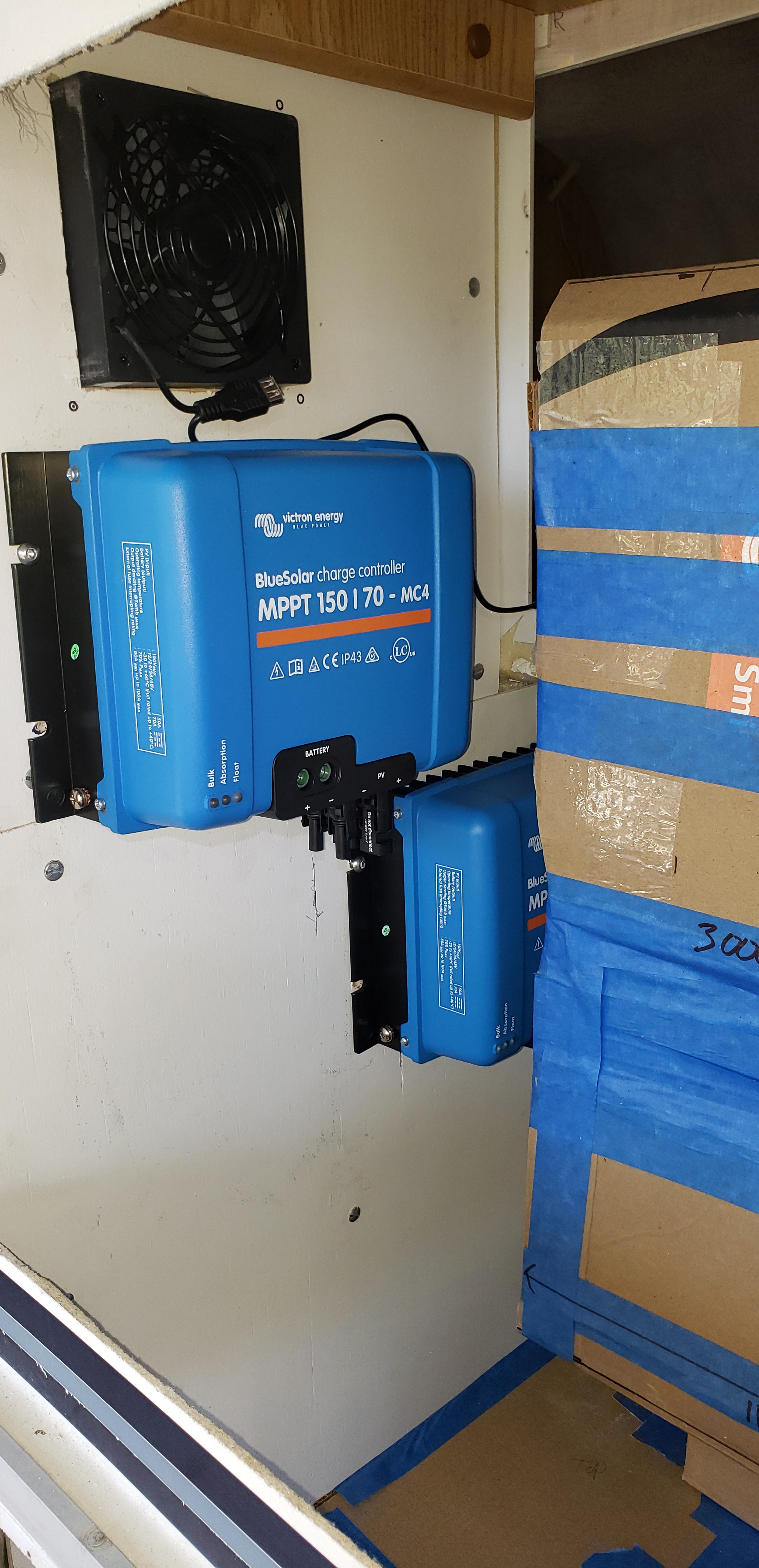
After getting the paneling and fans in place Jim and I temporarily mounted some of the solar-electronic gear. Below are the two Victron solar charge controllers in their future locations below the upper cooling fan. The cardboard structure to their right is the carboard crafted inverter/charger analogue…
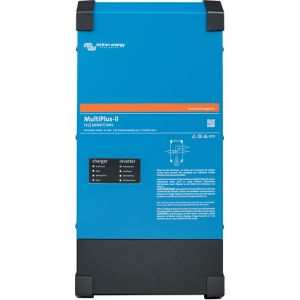
…which will soon be replaced with the recently arrived Victron Inverter/Charger unit such as the one pictured below.
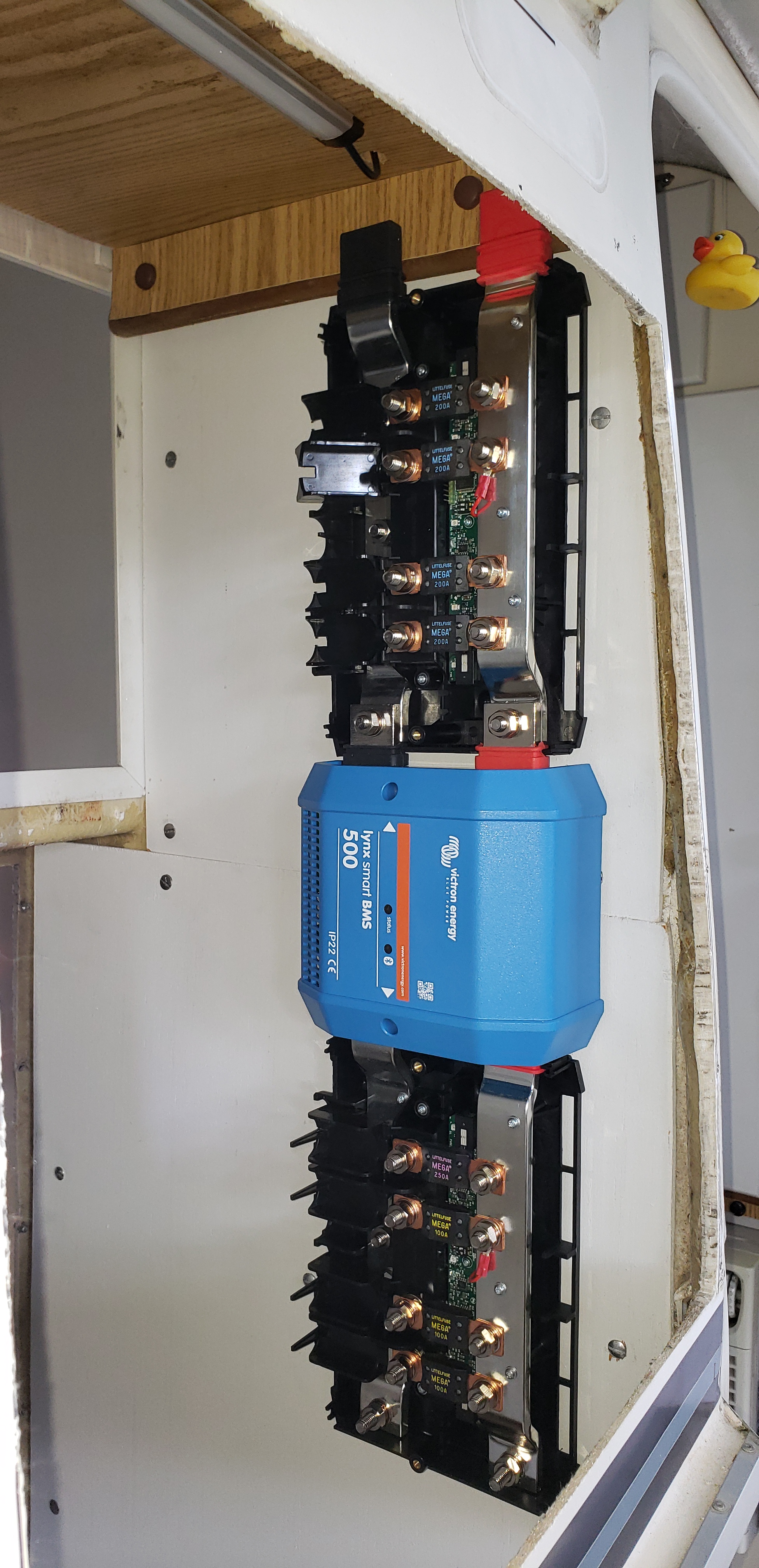
We then temporarily installed the Victron Battery Management System (BMS) and Lynx Distributors as in the photo below. Note: It looks crooked but that is an optical illusion created by the curvature of the RV’s shell. Second Note: this device is “naked” in that its pretty blue coverings have been removed. When complete it will have all its coverings in place.
After drilling all the holes to facilitate the future mounting of the electronics we removed the old, soggy, flooring of the soon to be an electronics cabinet revealing perfectly intact marine-grade fiberglass underneath…well, except for two holes which we will patch with marine-grade sealant.
We then fabricated a new floor covered by a nice piece of aluminum diamond plate. None of this is bolted in place just yet but will be very soon. The ugly yellow-brown fiberglass parts of the walls will also be sanded and painted to make the space far more presentable when we are teaching programs on renewable energy and/or attending festivals and events.
I then removed the fiberglass structures that support the sleeping area…
…exposing the hot water heater (the white device on the right) and the fresh water tank on the left. The stack of red tool boxes will become habitat pods that will house our reptilian education animals while presenting outreach programs. Each habitat pod will provide security and climate control for their sensitive scaly occupants.
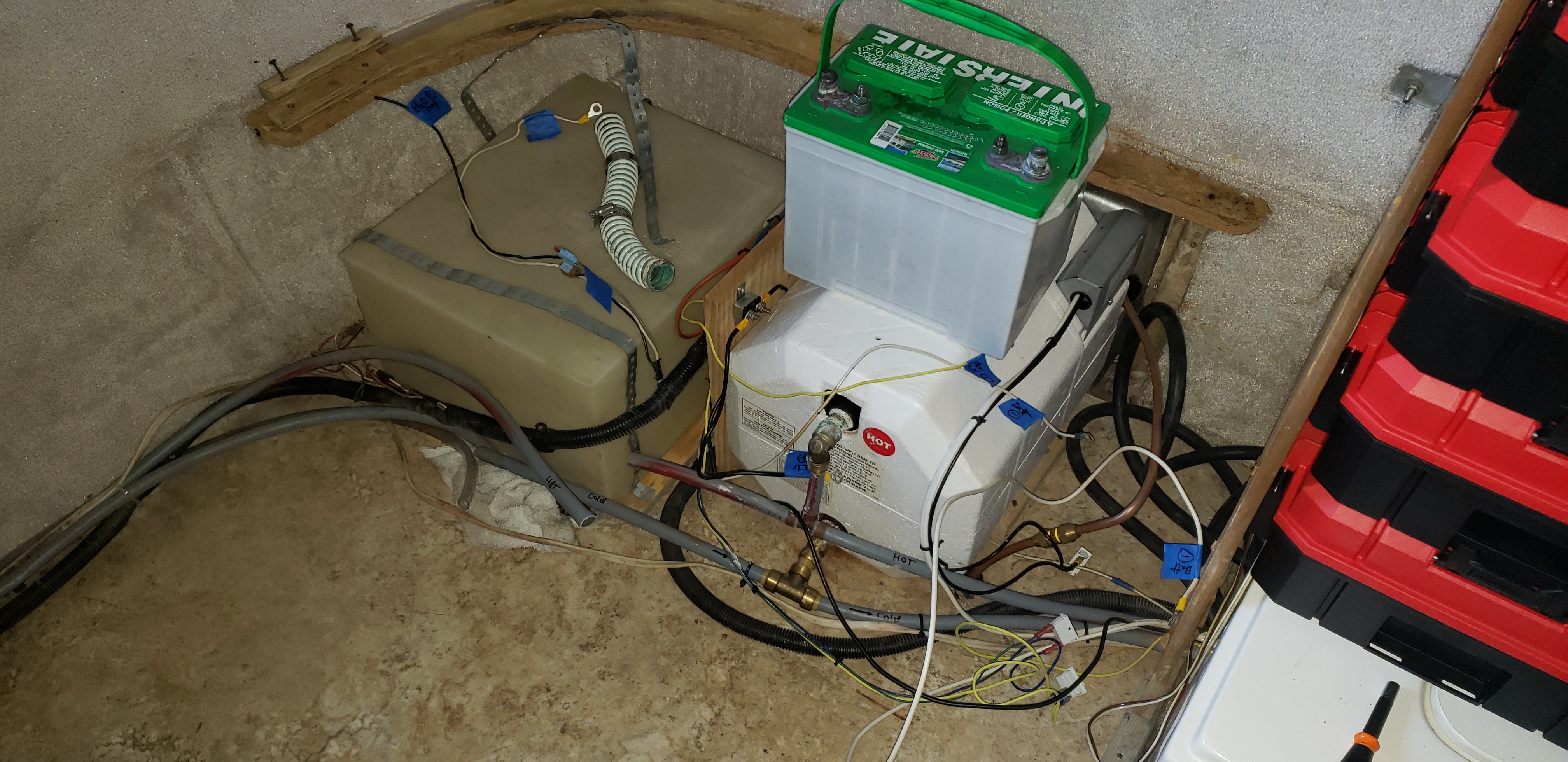
This is the fresh water tank in its original location. I opted to move it to a new location to shift some of the weight from the “passenger side” to the “drivers” side of the RV to offset some of the weight from all the new solar-electronics gear going in place soon. The new location is directly across the room in the spot where the old 12volt battery once resided beside the hot water heater (the white thing under the old 12 volt battery. The water tank is not bolted in place just yet…
…in fact, it has yet again been removed and is just taking up space with all manner of other tools and parts as I work to modify the RV to begin service as an outreach education classroom.
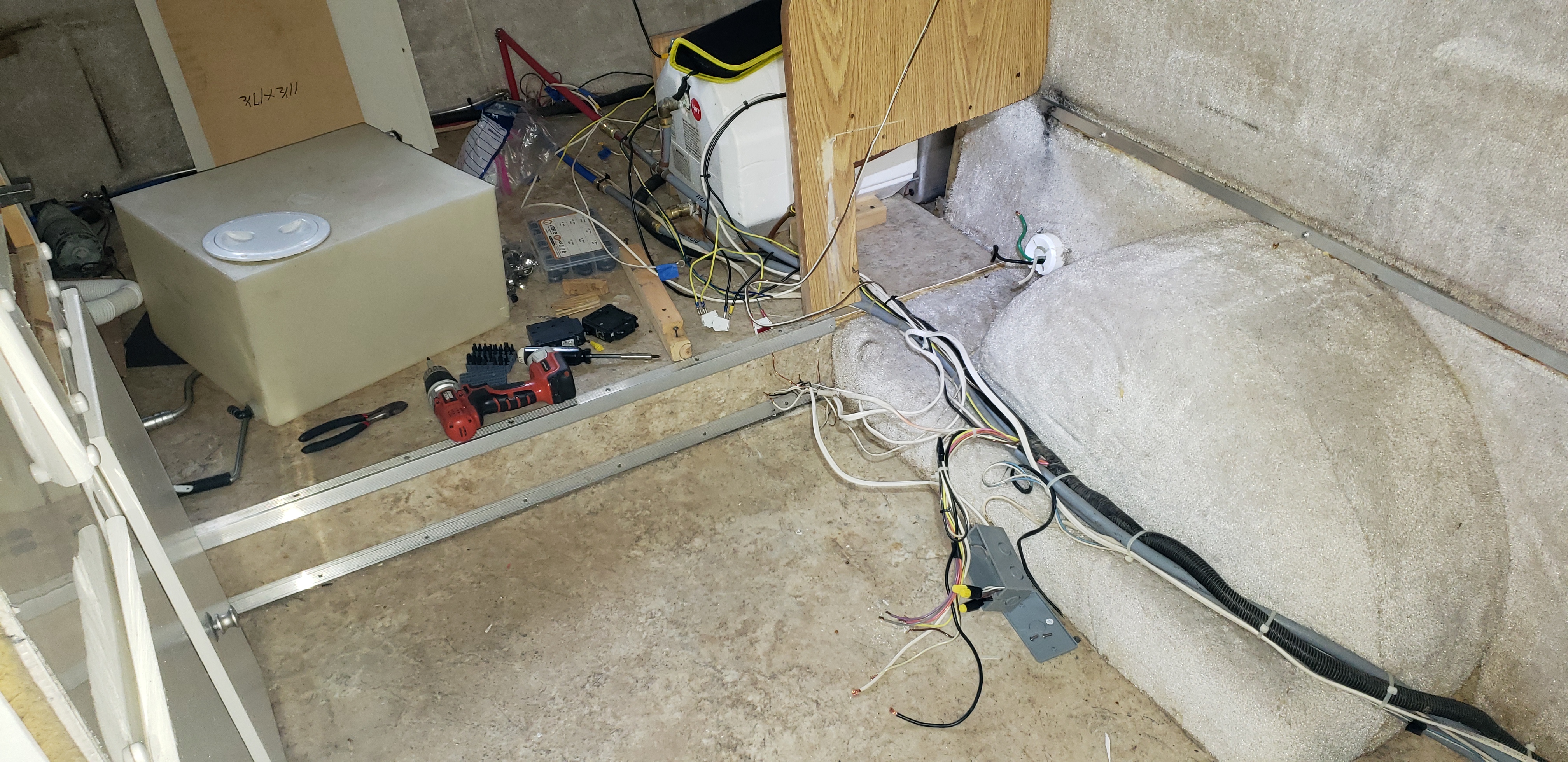
I have also decided to remove all the Casita’s power management systems since they will no longer be needed – the Victron components will do all they could do – but far better and safer. The old electronics were originally located just to the right of center where the spaghetti-like pile of wires are now. Don’t worry, I know where all of them go 🙂
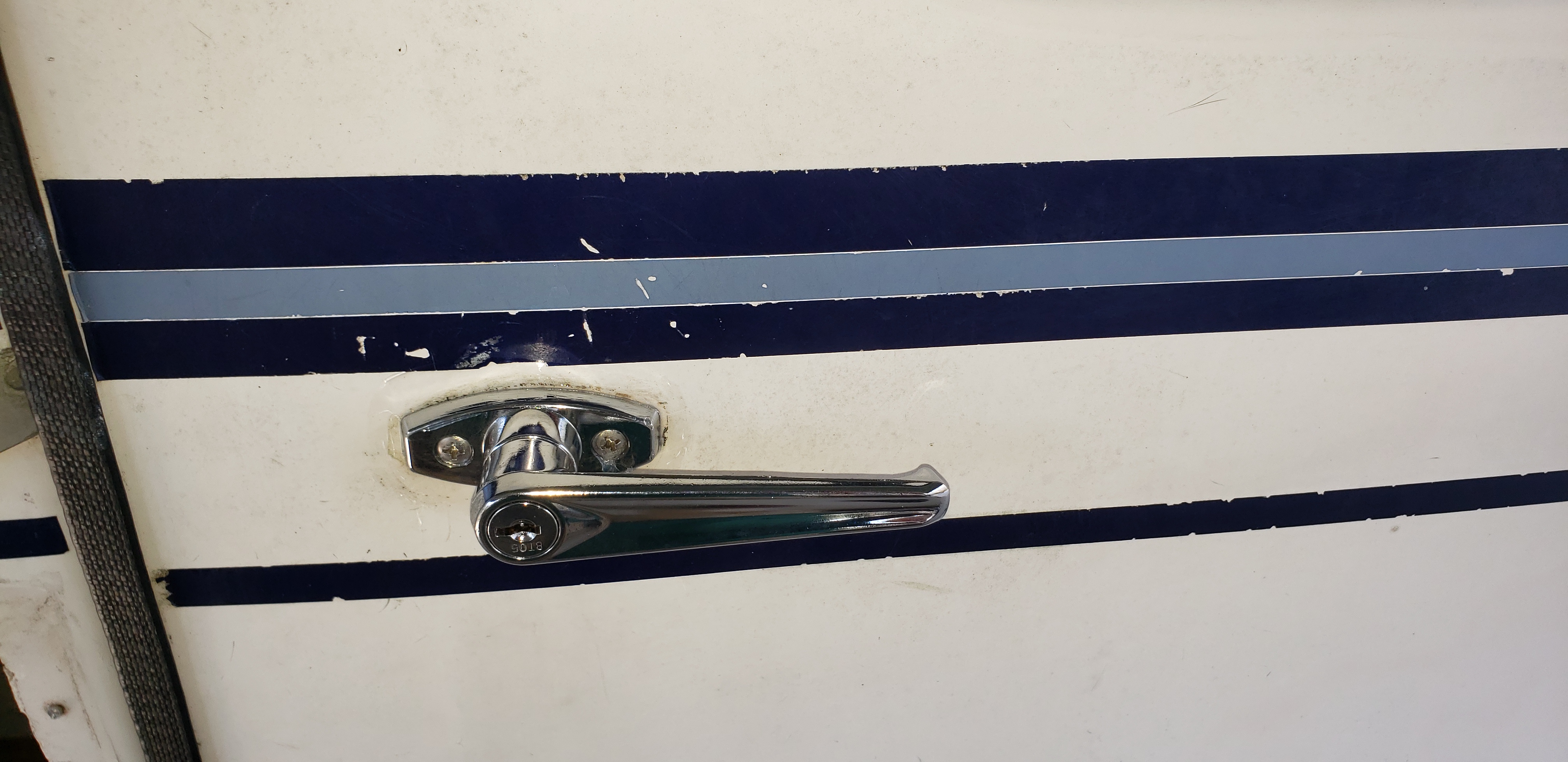
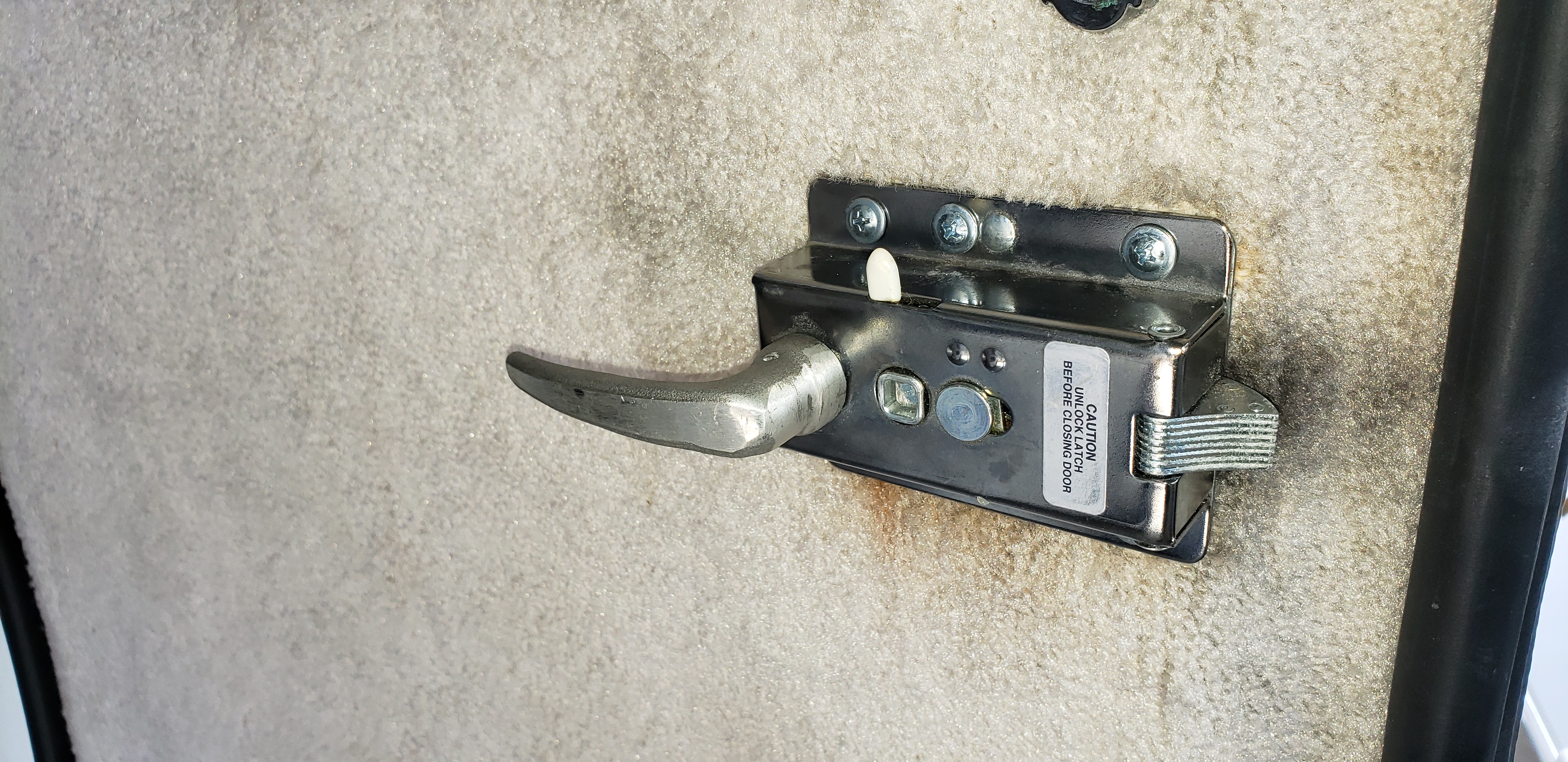
While waiting for some parts to come in the mail I removed the door latch and discovered it was really rusty and had an eroded area on its mechanism – this was why the door could not be locked.
I received the new unit – the one on the right below – and will be installing it very soon.
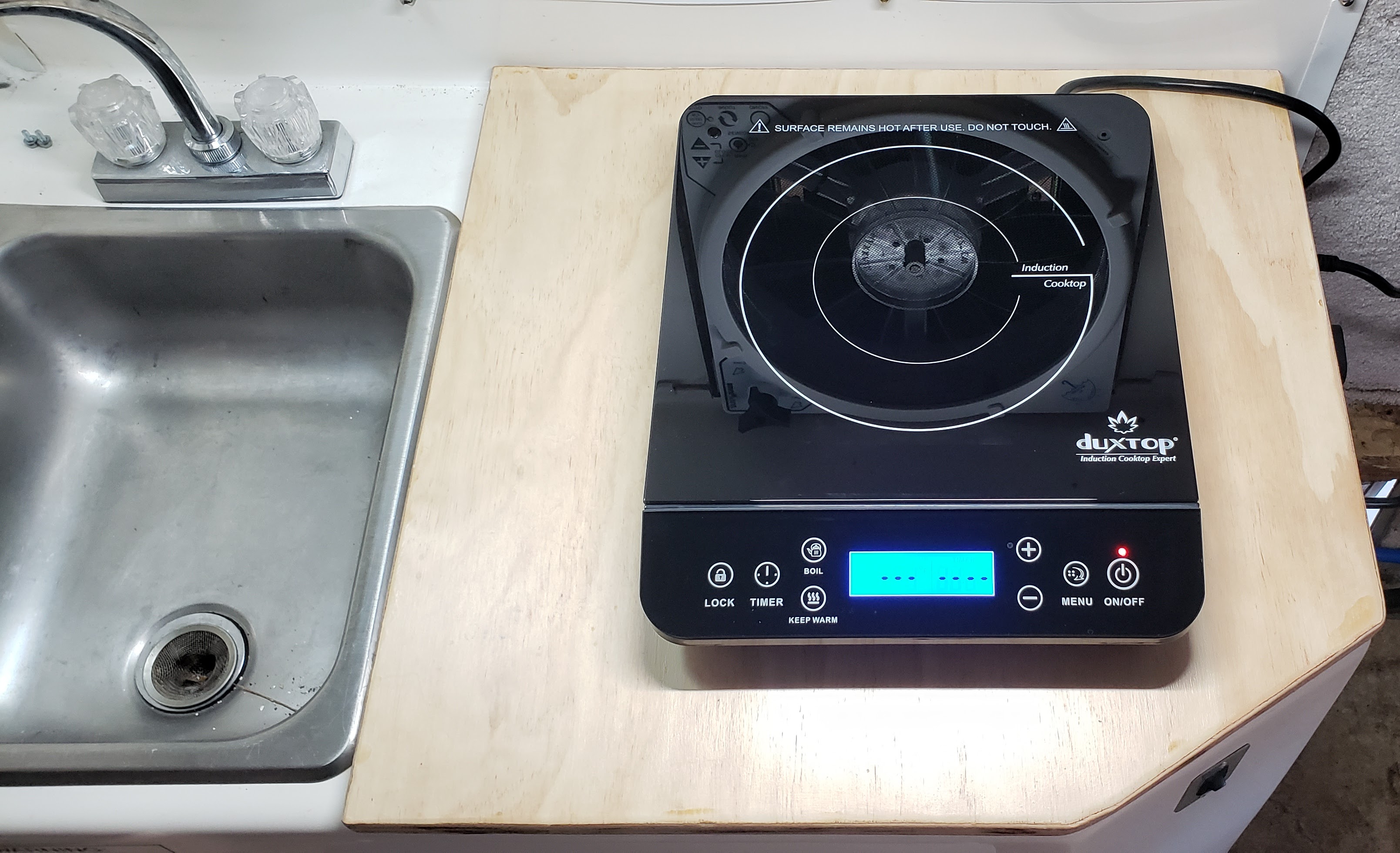
We also installed the new countertop and induction cooktop – THANK YOU JIM for your expertise and creativity in making this nice new countertop and THANK YOU BOB for the suggestion on the cooktop – we have tried it and it works perfectly!
That is where we are in the build at the moment and we hope to have much warmer weather soon – so hopefully, many more modifications will happen much faster.
Currently, we are still waiting for word from the welder and sheet metal fabricator. Once they work their magic we will be able to install the solar modules and continue with the installation of further components. Warmer weather in the early spring will be most helpful and much will happen fast so please subscribe and follow this blog for more updates on this unique project!
We hope to have the ENP NaSA PoD in service on or before Earth Day 2022!
Stay tuned – there is much more to come.
Please subscribe and follow this blog for more updates.
This is an amazing project that will serve to educate and inspire all the curiosity seekers it meets. But to do this thing right – we do still need your support. If you choose to assist us in making this project a reality, this unique mobile classroom will greatly benefit the nature and wildlife conservation, science, and renewable energy awareness education of all of our outreach program participants in the WNC region as well as our wonderful students at Trails Carolina and Trails Momentum who will all greatly benefit from the wonders it will contain while they are in the field on expedition.
The construction and use of this unique mobile classroom will be documented on this blog, our end-of-year newsletter, and soon on our YouTube channel.
The ENP NaSA PoD and the Mighty Bolt EV (our primary outreach vehicle) are owned by ENP and used primarily as the ENP company outreach vehicle and mobile outreach classroom. They will be charged and fueled primarily with cleanly generated electricity provided by the ENP/Trails student-built classroom solar array and NaSA PoD’s rooftop solar array. They will serve as outstanding teaching tools for our Trails students, ENP outreach program participants, and everyone we meet via our outreach programs.
Please note: any/all ads that appear below this post are not provided or endorsed by ENP nor are we supported in any way by these ads – they are an automated feature of WordPress.com.
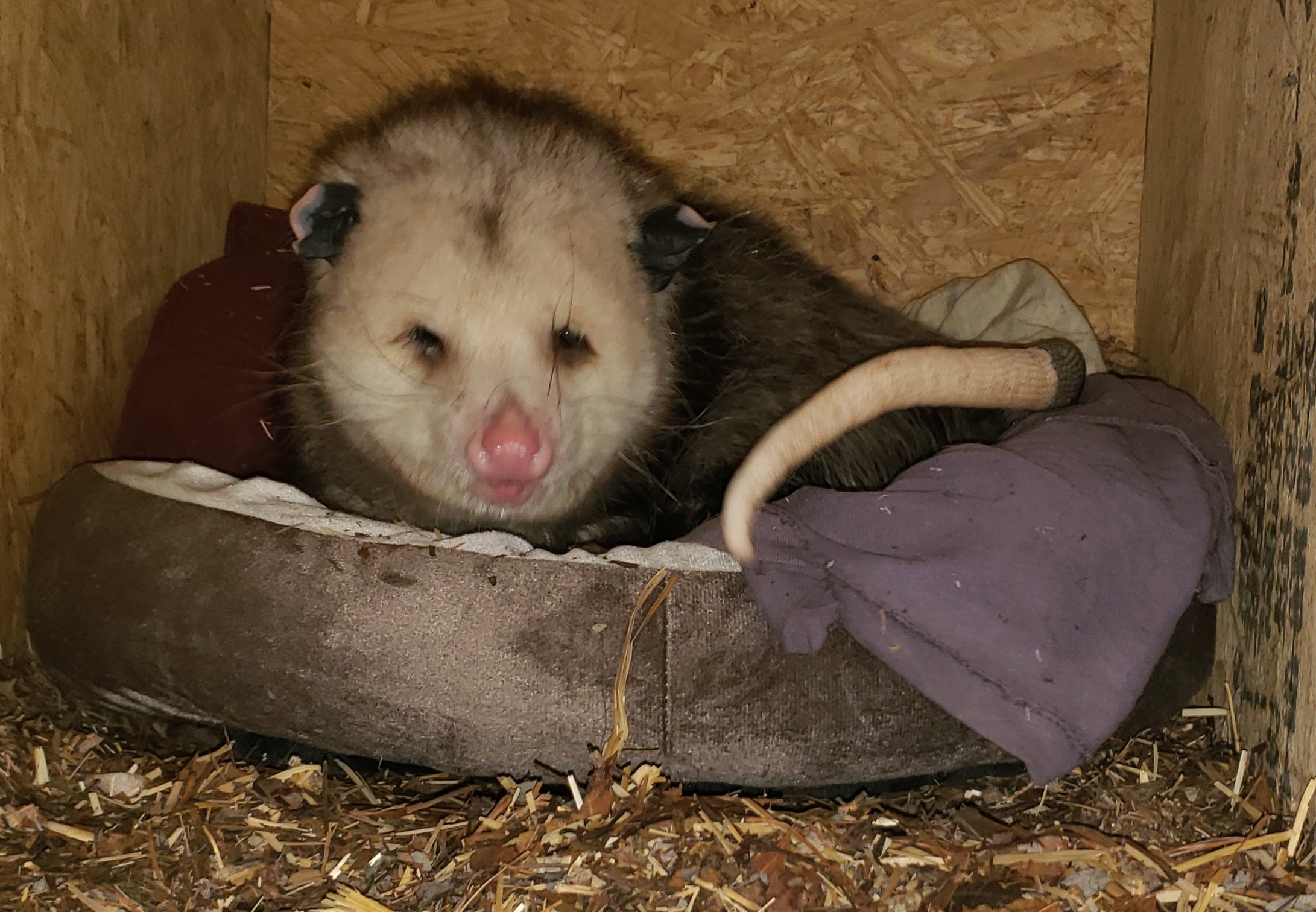
I leave you with a cute photo of Orville our education Opossum snoozing in his new plush bed – he sure does have it made!
Due to the disruption of the pandemic keeping us from presenting our programming indoors as much as during the pre-pandemic era, we are now creating a new way of conducting our outreach programming outside of the classroom: we are building a mobile outreach education classroom!!
In the spring of 2021 we received the first sizable donation toward this project from Lake Toxaway Charities – THANK YOU LTC!!!
We knew we needed more support to make the awesome happen so continued our fundraising over the next few months while searching for a frame on which to build the classroom.
Then, late in 2021 with the help of our friend Mandy, a wonderful past ENP volunteer who is now a park ranger, we located a 16′ Casita travel trailer that we determined would be perfect for converting into our new mobile classroom. We then began a furious fundraising drive to raise the funds we needed to purchase the RV – including a Facebook (Meta) fundraiser and a still-active GoFundMe campaign and yes, we did raise some funds with the help of many of our generous friends and past supporters – but sadly, we were unable to raise the needed funds fast enough to cover the purchase price by the deadline – and then time ran out and we thought we had lost our chance at the RV. Then, a few days after the deadline had passed we received an amazing surprise – an incredible donation from a wonderful new ENP supporter that covered the entire cost of the RV (THANK YOU “A” and family)!! Therefore, due to their amazing generosity, we were able to make this dream a reality and purchase the camper.
Another few days passed and we received several more sizeable donations – this time from a few of our amazing longtime supporters and friends of ENP for many years.
All these, together with all the others gathered in the initial fundraising campaign, were used not only to purchase the RV – but they will allow us to completely retrofit the little Casita camper into the amazing mobile outreach classroom we have dreamed about for so long!
Along with the much-needed donations we also received wonderful and much-needed input from some of our closest friends, loved ones, and supporters of ENP who helped us see the many different angles such a complex project would entail. THANK YOU ALL!!!
We have taken in all their heartfelt input and informed opinions, made many sketches, consulted with many experts (it is always very important to listen to and take the advice of the experts into consideration when making any big decision), and now we are deep in the process of converting this little Casita camper into an amazing mobile outreach education classroom that will serve our Trails Carolina and Trails Momentum Students as well as everyone we meet through our outreach programs in the county and the region!
With the help of one of our most awesome recent graduates from Trails Carolina, (Thank you again A!) we came up with a name for our mobile classroom: The SS ENP NaSA PoD which stands for:
Science Steve’s* Earthshine Nature Programs Nature and Science Adventure Pod of Discovery!
*Science Steve is what my students call me 🙂
We took over ownership of the RV in late December and have been working as much as possible over the last few weeks in the attempt to have it ready for service by Earth Day – Friday, April 22, 2022!
When the PoD is complete it will contain the following educational systems:
Two custom-built Hardy Systems animal habitat pods will be designed and constructed by longtime friend and ENP supporter Jim Hardy. These habitat pods will provide comfortable, heated life support for up to 12 of our reptilian animal ambassadors. They will also be removable for ease of transport to and from the RV.
A microscope station for stream and field exploration.
A field guide library for identifying your finds.
A Little Free Library.
A real-time air quality and weather monitoring station.
A 1780 watt bifacial solar array and Victron Energy power system donated by Bob Harris of Black Bear Solar Institute (Thank you, Bob and BBSI!!!). This system will provide a clean energy supply to all of the PoD’s electronics and systems – including the Hardy Systems habitat pods, and RV systems – this feature will be most important when the PoD is being used for both short term day-use programming and long term multi-day programming at events and festivals where an overnight stay is needed.
A fold-out awning that will allow comfortable programming on those super hot summer days and in light precipitation.
A large flatscreen monitor that will allow the showing of nature and science documentaries in an outdoor setting.
Hand sanitizer stations to keep the germs at bay.
A custom paint job.
And more!
THANK YOU!!!
to everyone who has donated/supported this project so far! You know who you are and you are all truly amazing people! THANK YOU for your generosity and your trust in supporting this project and my little 501c3 – your generosity is above and beyond treasured and your trust is so deeply precious to me and without all of you working together with me to make this project (and all the others) happen – it would have all been impossible.
Now for a photo album of the ENP NaSA PoD project up to this point. I will continue to update this blog with more photos (and soon – videos) as the build continues so if you are not subscribed please do so in order to receive updates.
When we first met.
It is a really nice Casita camper that was renovated by the previous owners to include everything needed for comfortable camping including…
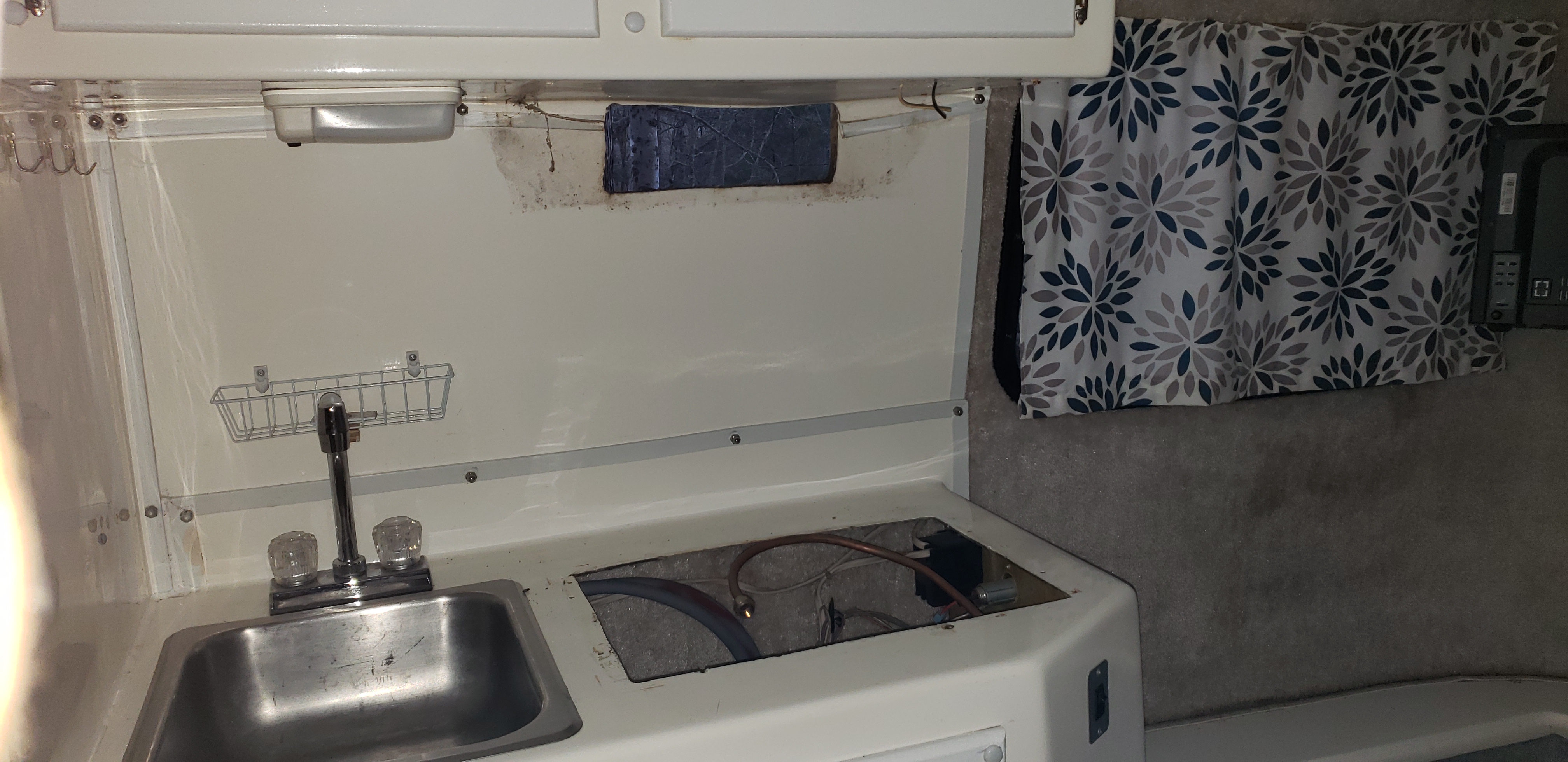
A fully functional kitchenette.
Nice 2 burner gas stove.
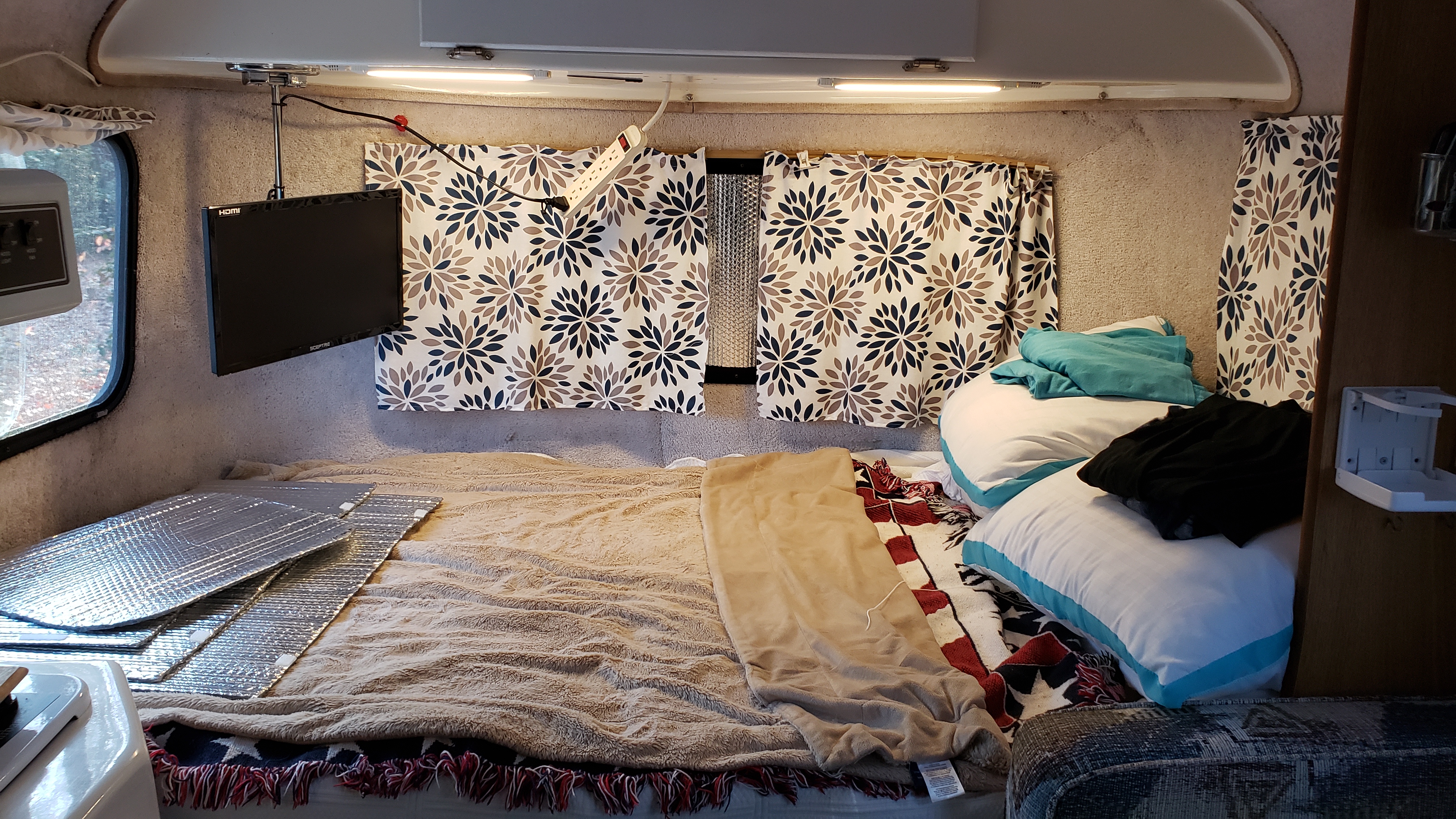
Double bed with extra thick mattress.
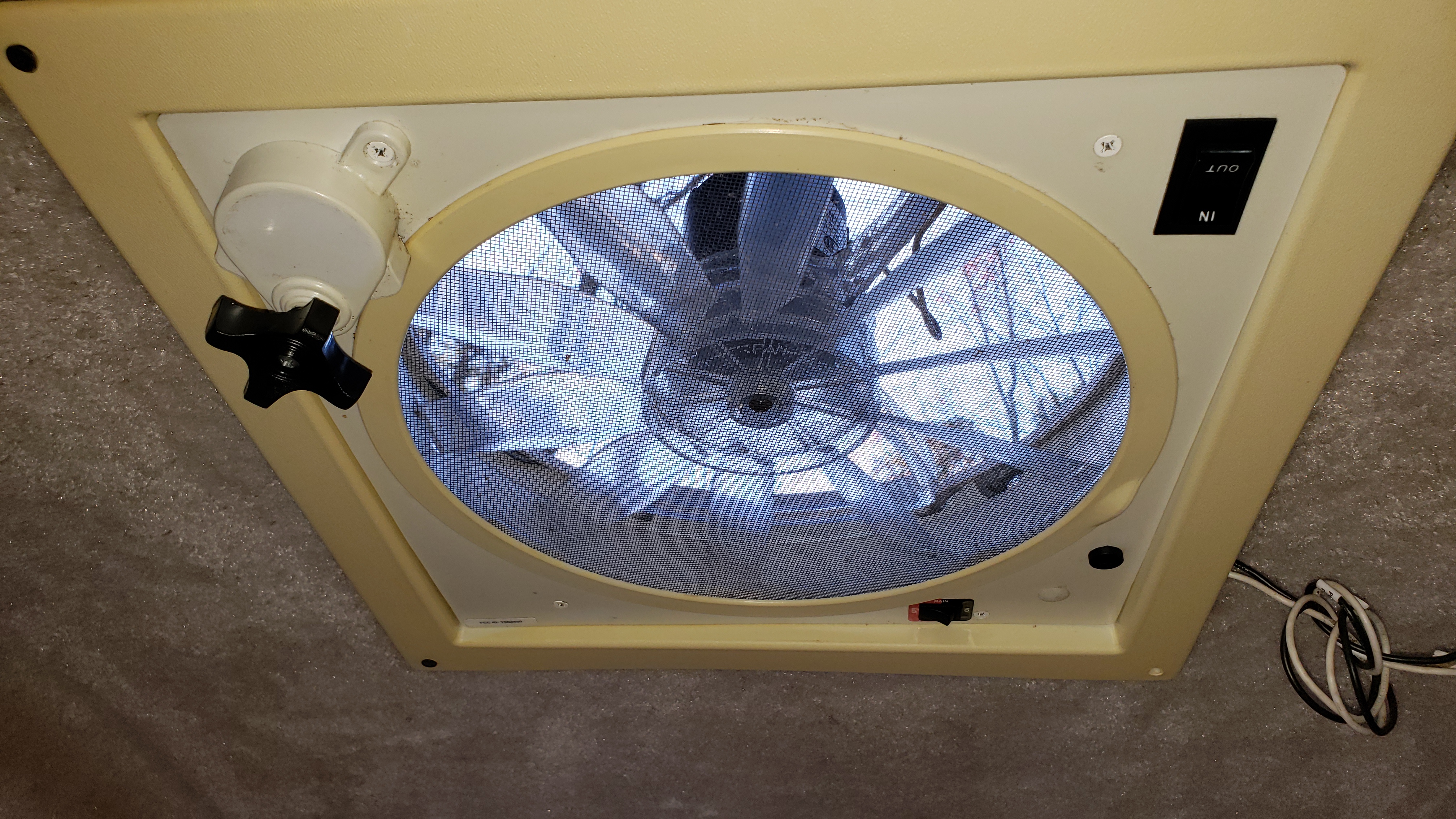
Working roof vent fan.
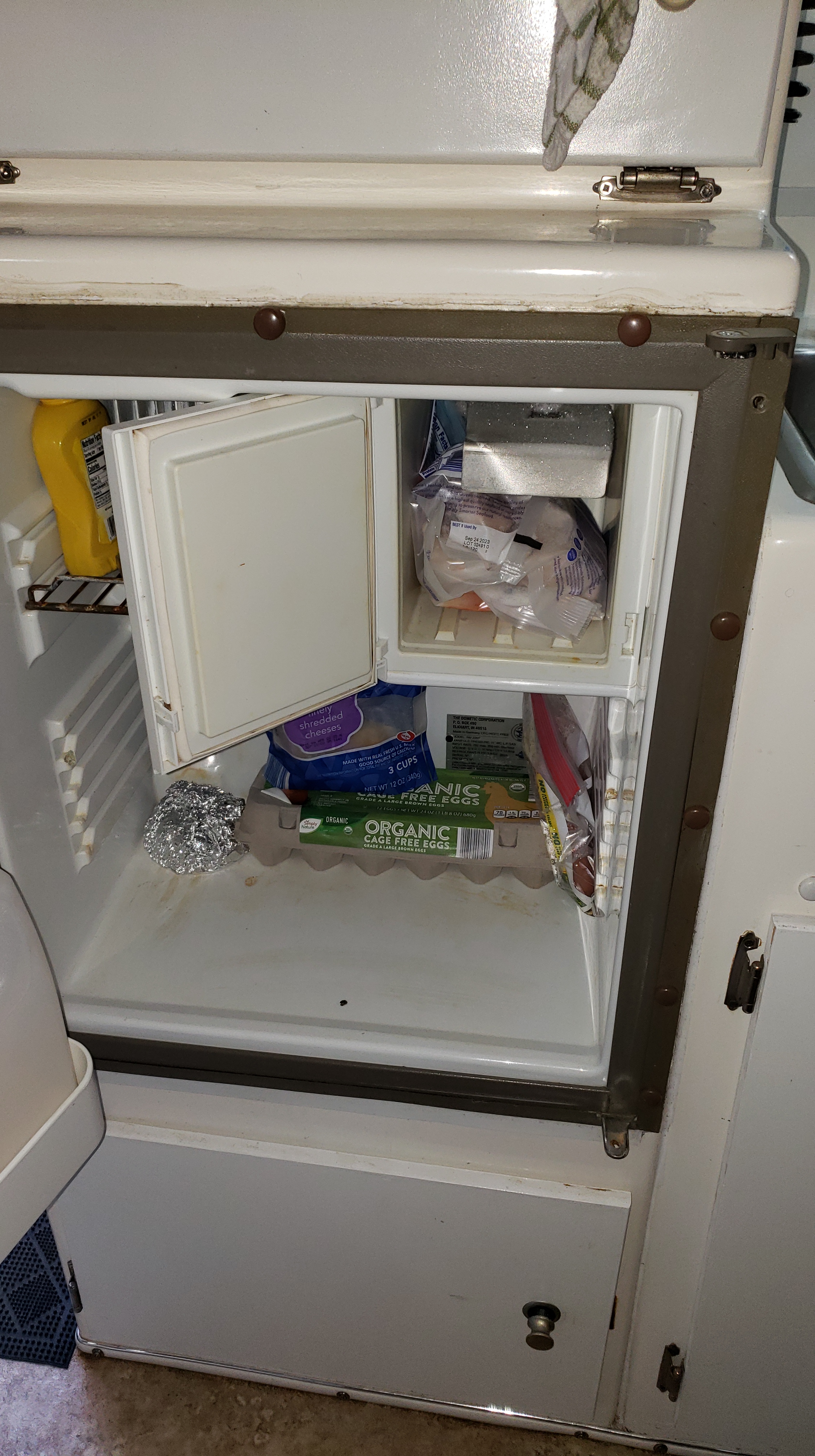
Working Dometic fridge.
Nice dinette.
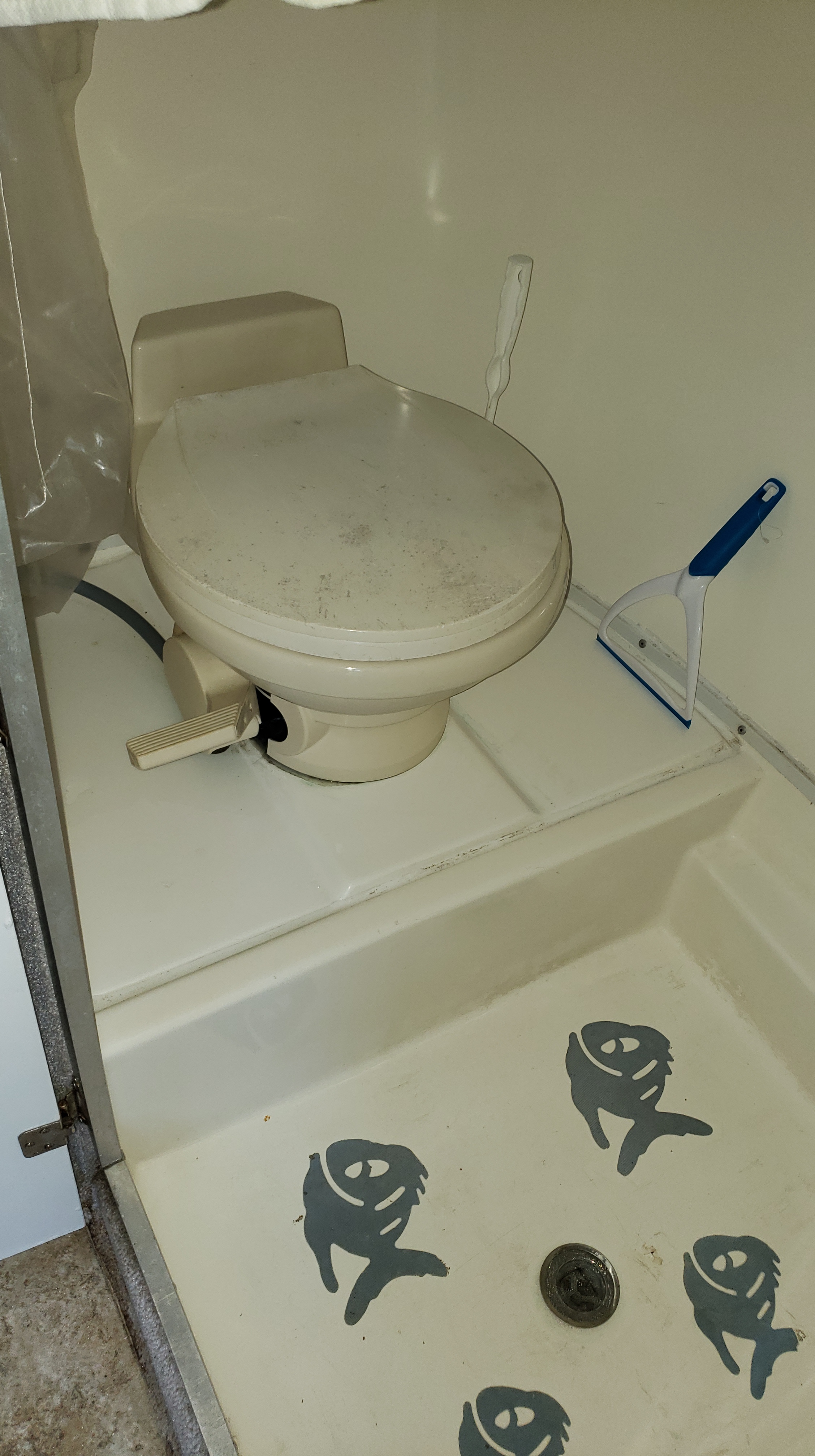
Functioning latrine/shower.
And sink
Custom cabinetry and a working air conditioner!
But much of this would need to change for it to become our new mobile outreach classroom.
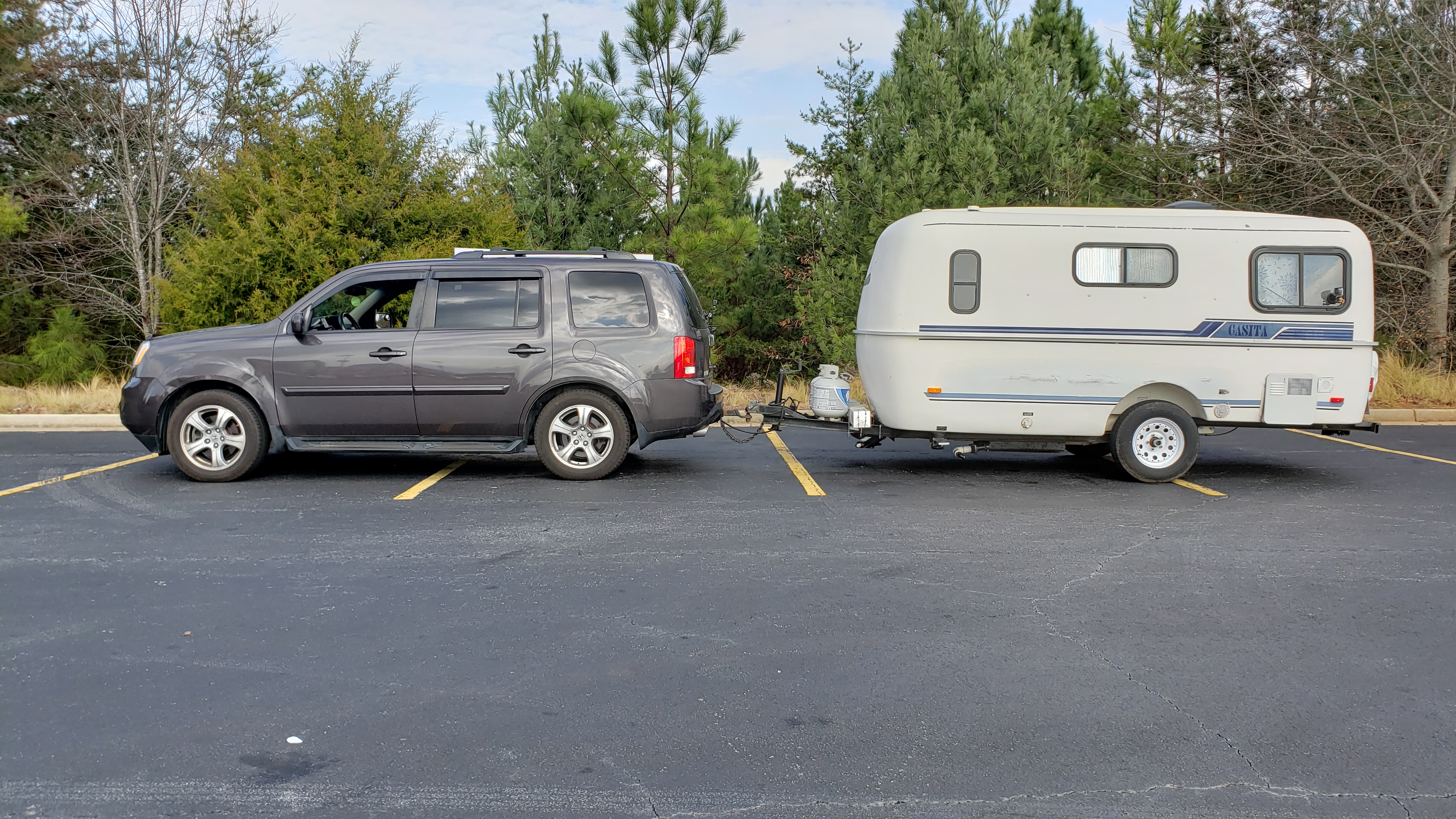
On December 31, 2021, we took over ownership of the Casita and toted it home to ENP HQ.
Sadly it is just too heavy to pull with our EV like we wanted to do – but that will change one day when we trade in our Honda Pilot for an all-electric EV pickup and then the package will be complete.
Once safely back at ENP HQ, we began the process to modify the camper into a portable classroom.
The old roof vent had to go…
…when fully open it would have been in the way of the new solar array.
The new vent fan location was sketched out on the side of the RV. This new fan will also replace the vent hood over the stove.
Jim cutting the hole for the new fan – which will double as a unique “kitchen window.”
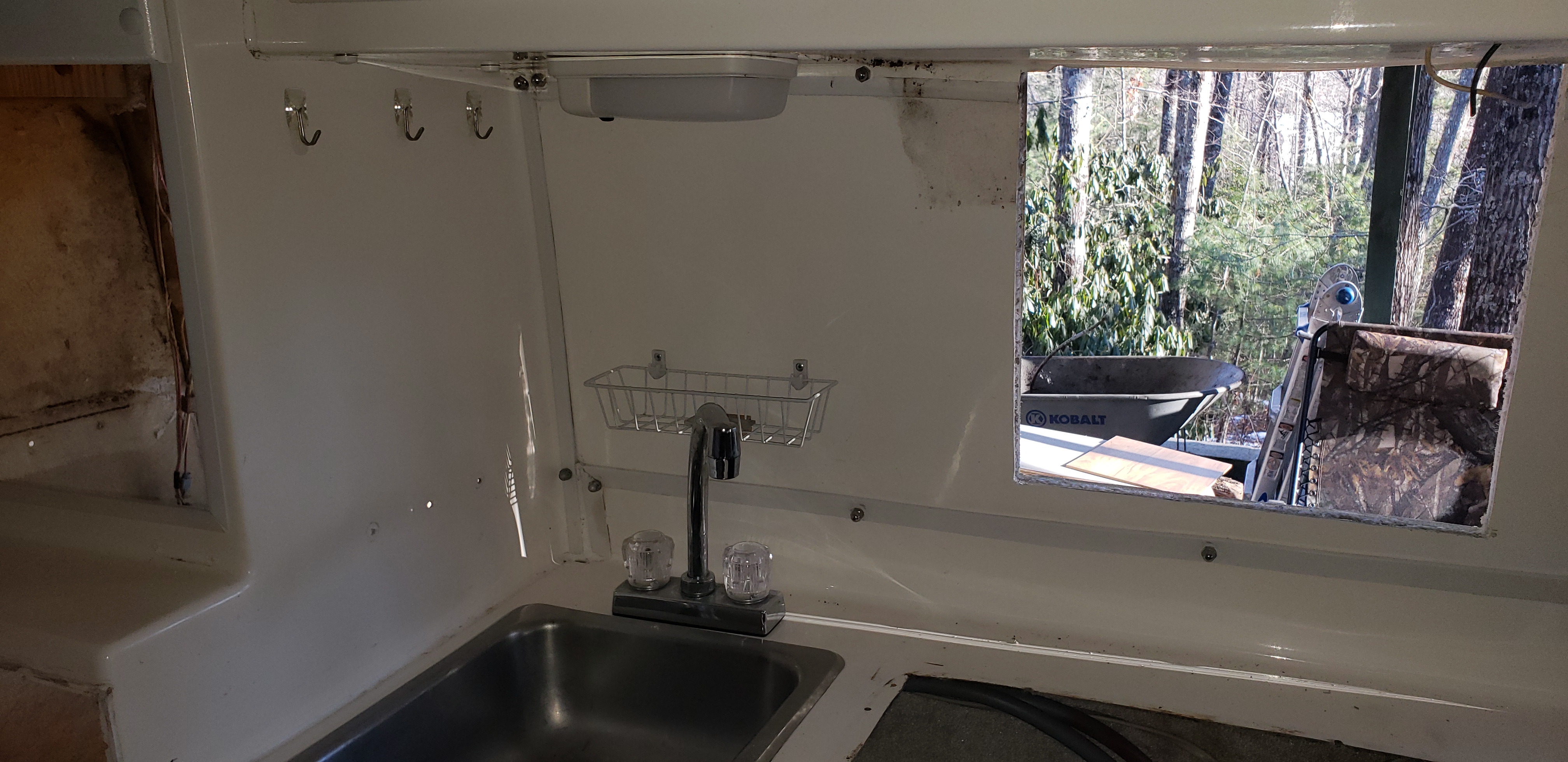
New vent fan/kitchen window hole. We have not installed any of the windows or the fan due to the cold temperatures that would not allow the sealant to cure effectively.
The stove is history as well. We are dropping the gas in favor of an all-electric system including an induction cooktop for use during overnight events and campground programming.
The Dometic fridge was just taking up space…
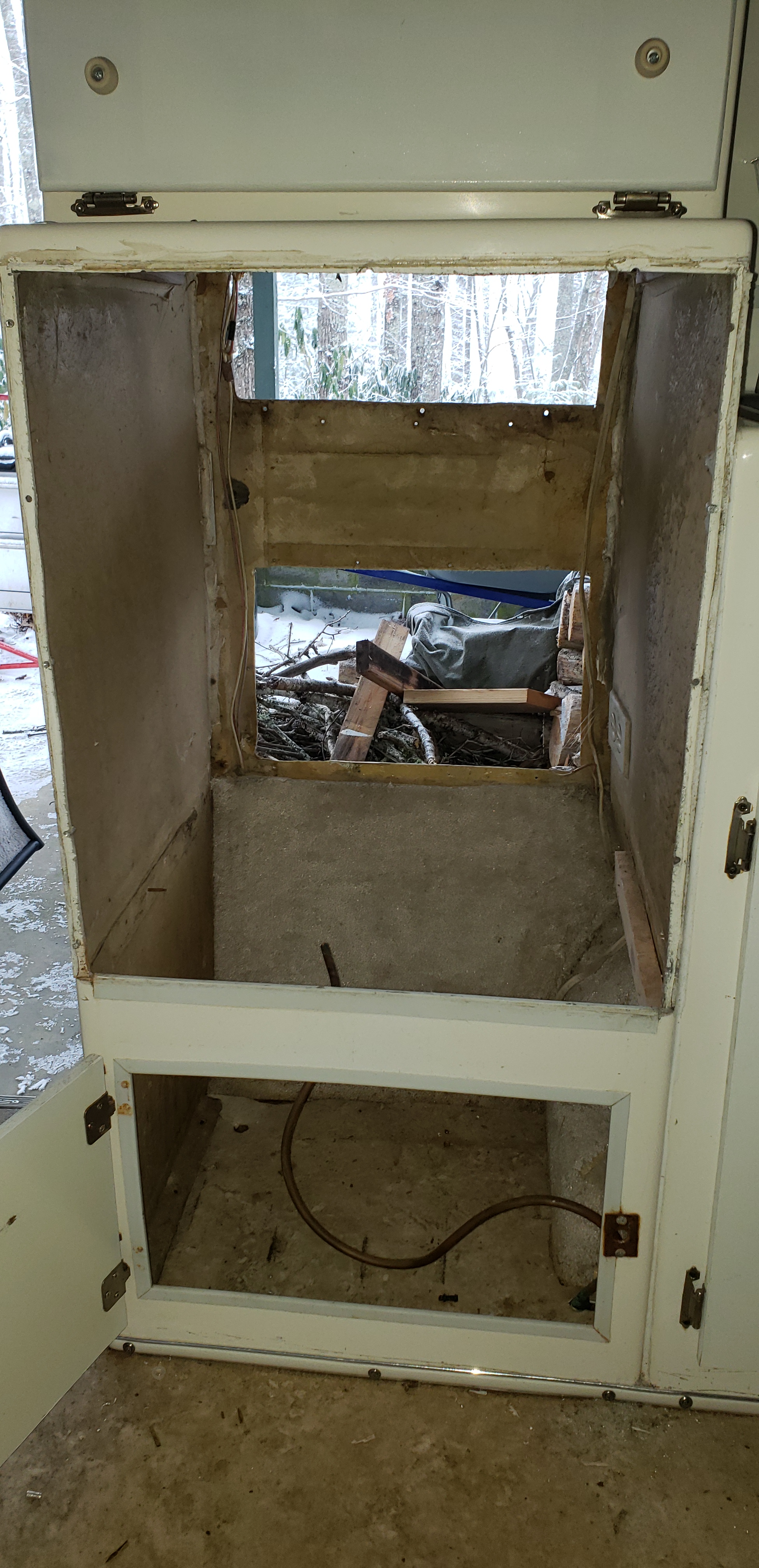
…so we removed it. This space will now be used as a solar-electronics cabinet. Our new fridge will be a highly efficient 12-volt chest fridge/freezer stored under the bed.
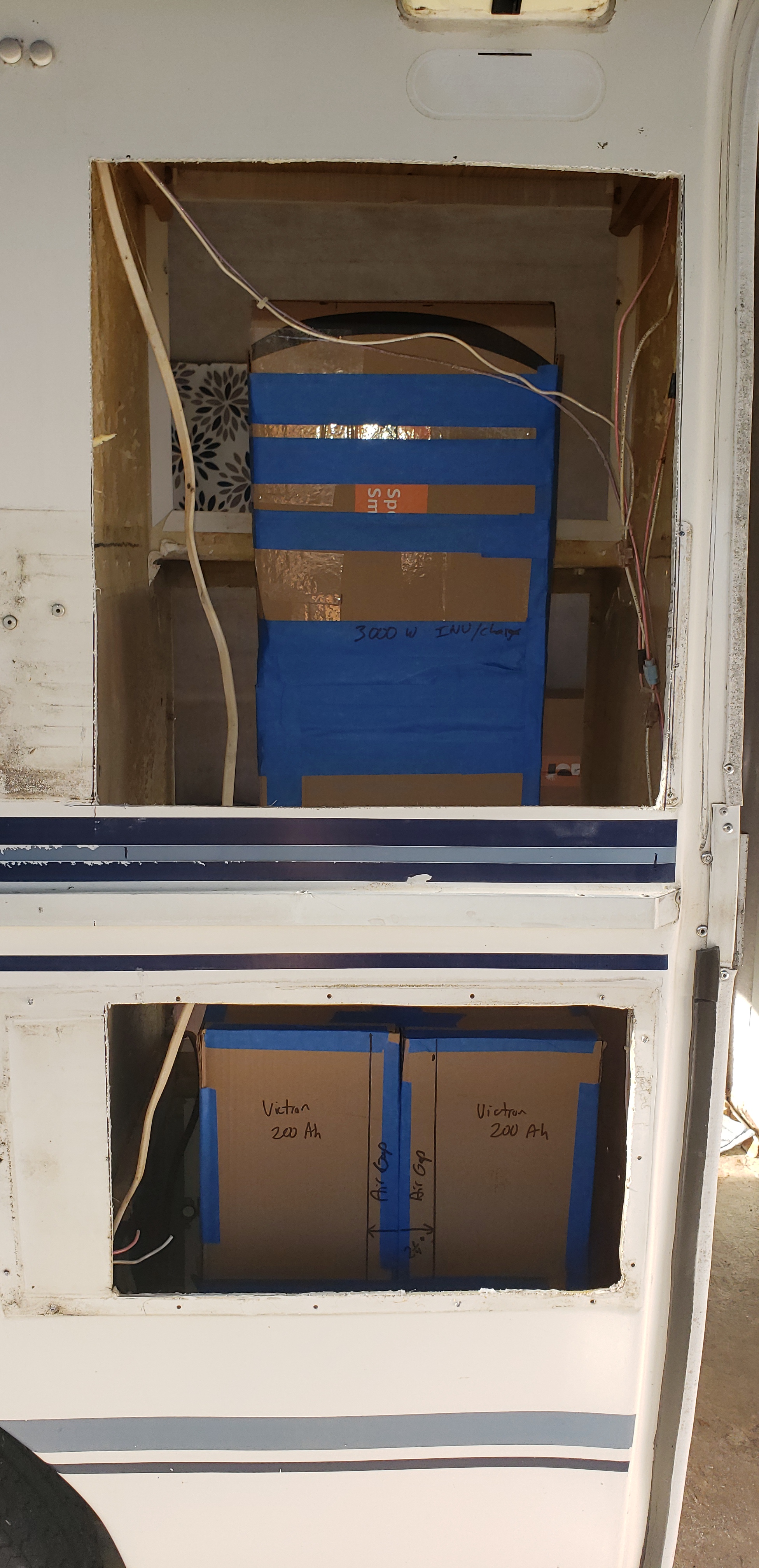
This is a cardboard analogue of the solar-electronics package that will provide renewably generated electricity to power all of the classroom/RV systems. The real one will be much better looking and far more functional.
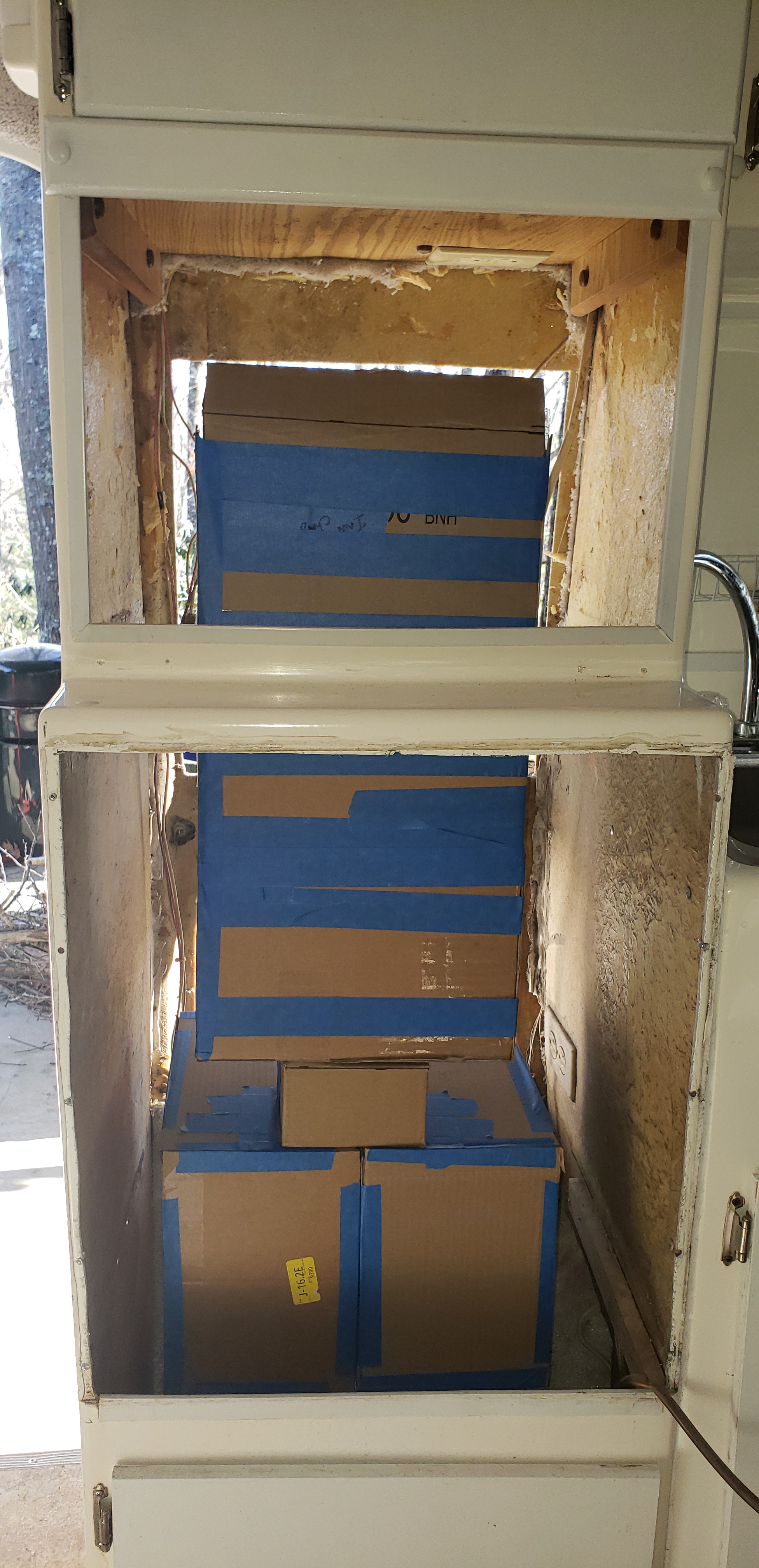
The solar-electronics cabinet with the cardboard analogue in place.
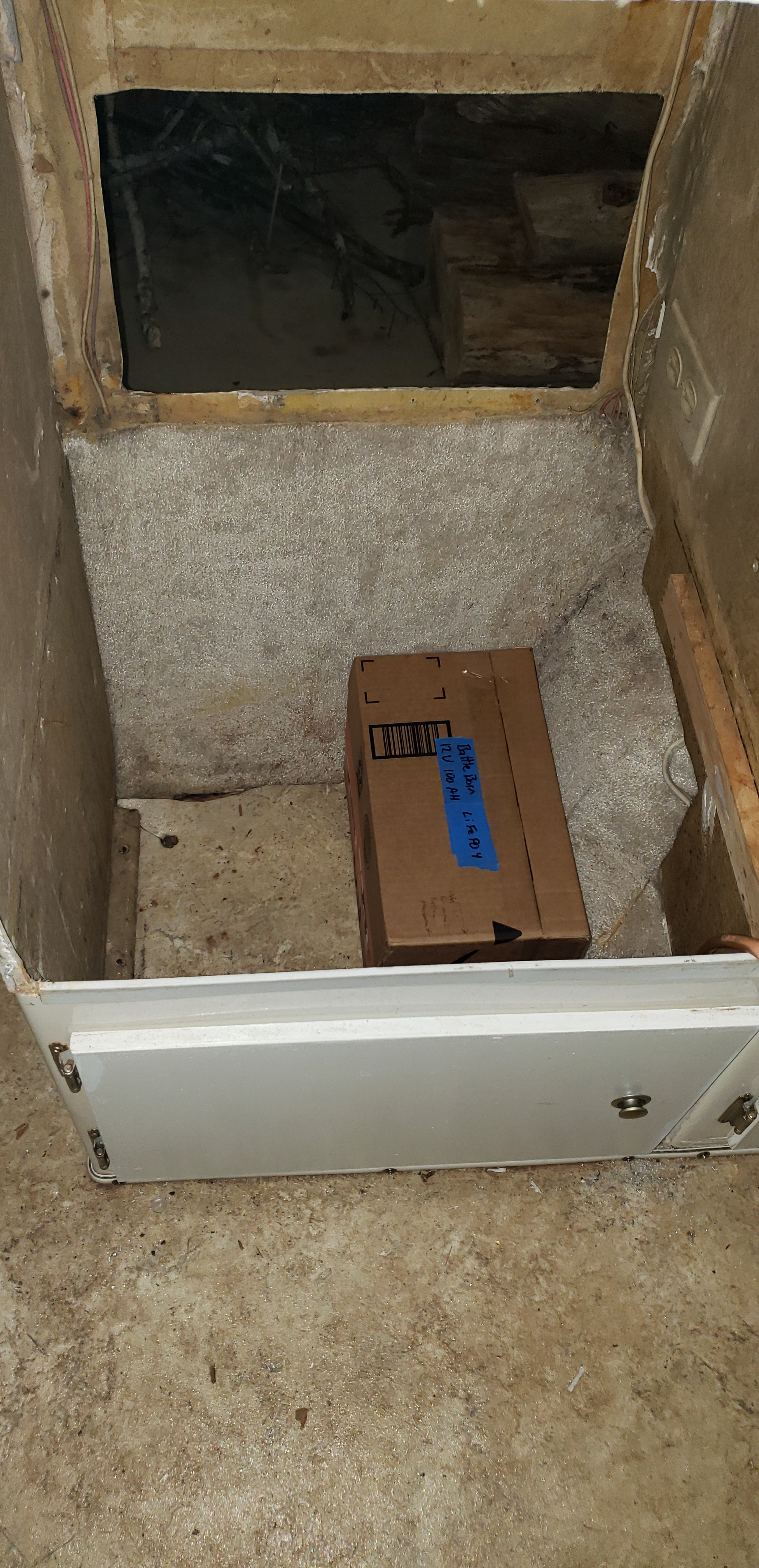
Looking into the bottom of the area where the batteries will reside. The cardboard box is a battery analogue – four batteries of this size will fit in this space after we construct a custom support structure to hold them safely.
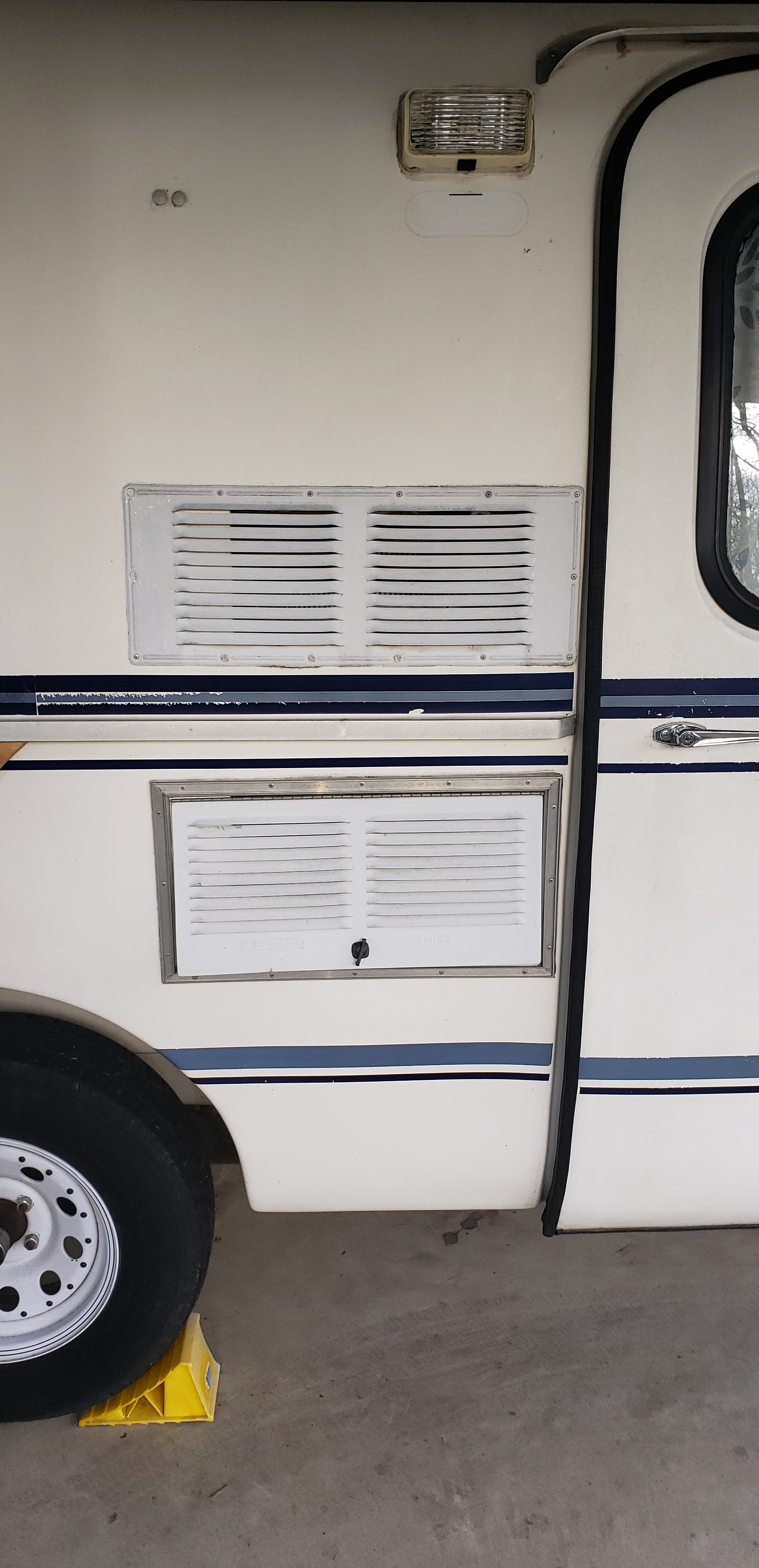
The vent ports on the backside of the old fridge on the outside of the RV are no longer needed so we…
…removed them and made the holes larger in order to install observation windows that will allow students to view the solar-electronics package as well as help to make the PoD more weathertight.
Looking at the solar-electronics package analogue from outside. The new windows will drop in and cover up all the rough edges and all the exposed wiring will be made safe and secure.
Due to the cold winter weather we have been receiving lately we have not gotten very far with the outdoor work on the conversion of the RV into a mobile classroom. However, we have been working on the design process of how the solar array will fit together and function and we have ordered the components needed to secure and protect the solar-electronics gear. We have also consulted with a local welder who should be contacting us any day now with a quote for the custom roof rack that will support the solar array, weather/air quality monitoring station, and a few other components. We are also in communications with a sheet metal shop about creating the window frames to fit the viewports for the solar-electronics cabinet. We have also received the solar modules and most of the solar-electronics package including the components seen below:
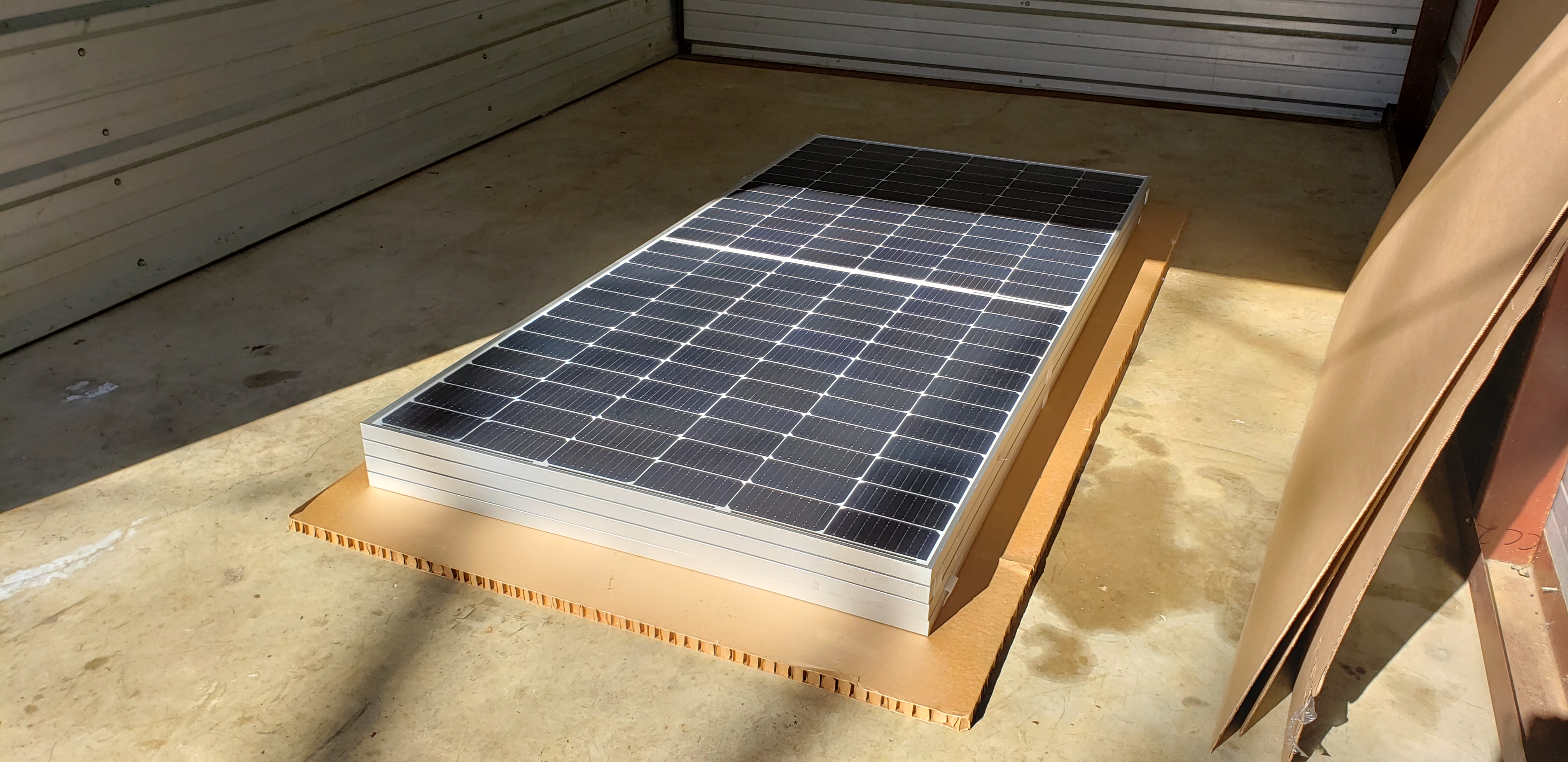
Four Canadian Solar 445 watt bifacial solar modules (panels).
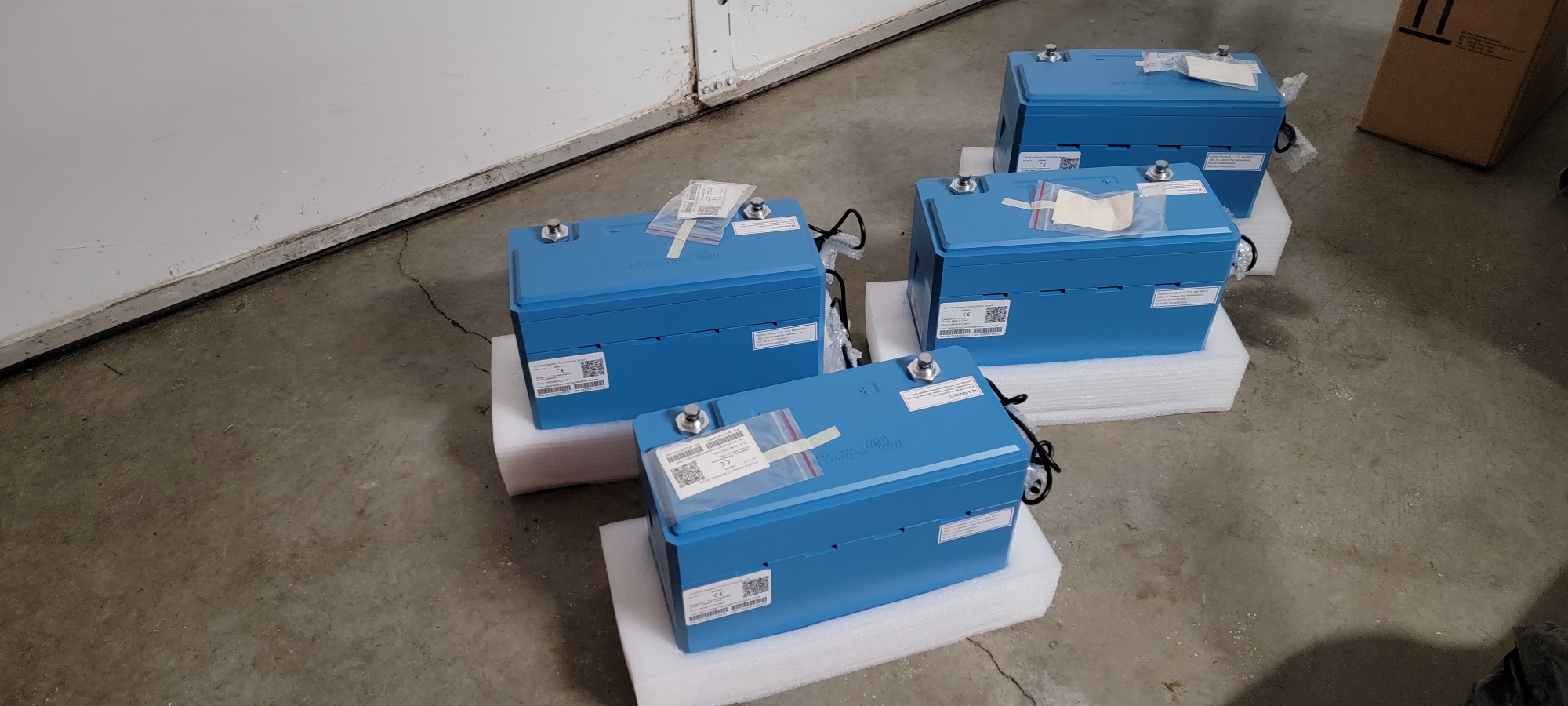
The four new Victron Energy 200Ah LiFePO4 batteries.
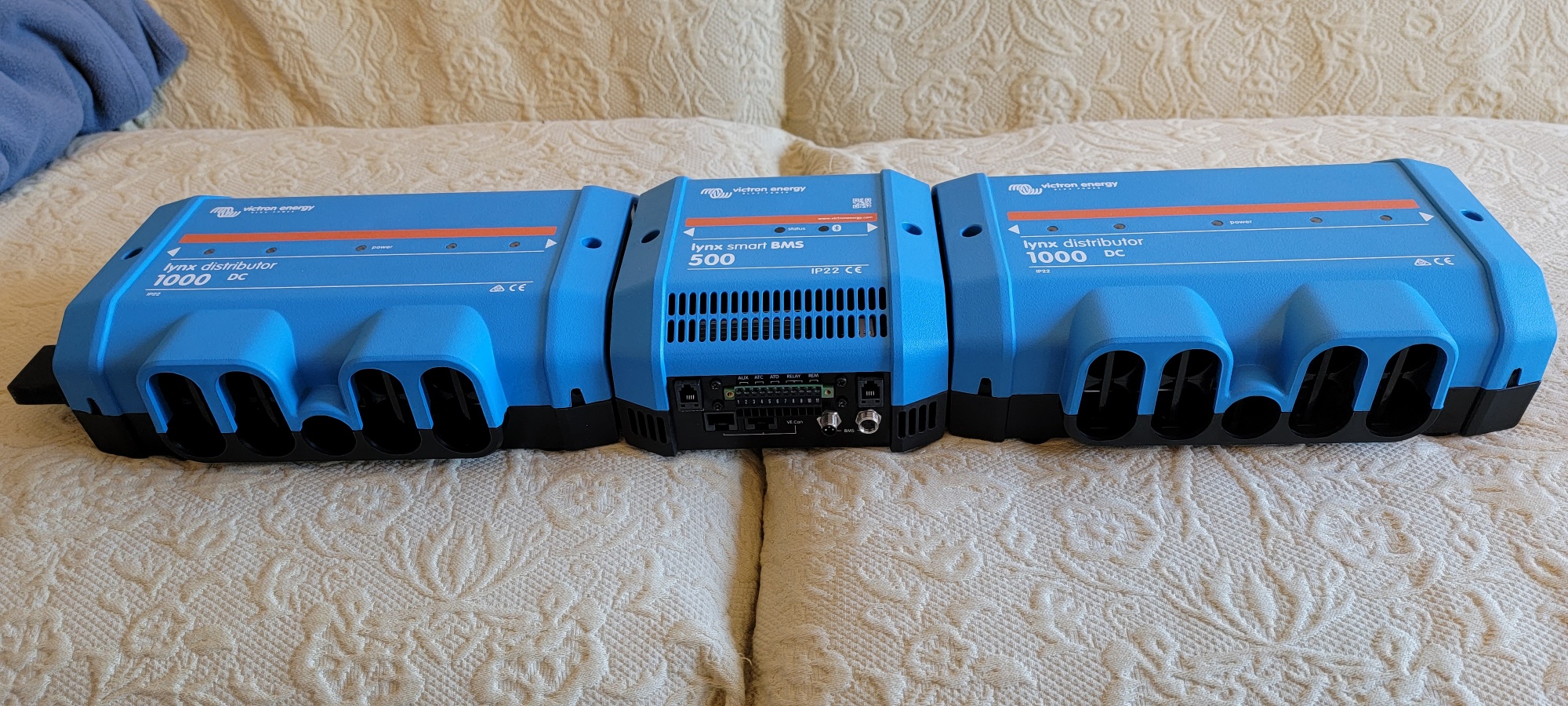
The Victron Energy power distribution bus and Battery Management System.
Lots of other components as well!
And this brings us to today.
Currently, we are waiting for word from the welder and sheet metal fabricator. Once they work their magic we will be able to install the solar modules and continue with the installation of further components.
Warmer weather in the early spring will be most helpful and much will happen fast so please subscribe and follow this blog for more updates on this unique project!
We hope to have the ENP NaSA PoD in service on or before Earth Day 2022!
This is an amazing project that will serve to educate and inspire all the curiosity seekers it meets. But to do this thing right – we do still need your support. If you choose to assist us in making this project a reality, this unique mobile classroom will greatly benefit the nature and wildlife conservation, science, and renewable energy awareness education of all of our outreach program participants in the WNC region as well as our wonderful students at Trails Carolina and Trails Momentum who will all greatly benefit from the wonders it will contain while they are in the field on expedition. Please consider supporting us today.
The ENP NaSA PoD and the Mighty Bolt EV (our primary outreach vehicle) are owned by ENP and used primarily as the ENP company outreach vehicle and mobile outreach classroom. They will be charged and fueled mostly with cleanly generated electricity provided by the ENP/Trails student-built classroom solar array and NaSA PoD’s rooftop solar array. They will serve as outstanding teaching tools for our Trails students, ENP outreach program participants, and everyone we meet via our outreach programs.









































 Earthshine Nature