Rattlesnake Report for 4-18-12

This is the first of an ongoing series of blogs I call the Rattlesnake Report.  In these special blog postings I will update you on the movements and status of the Timber Rattlesnakes Utsanati and Zoe that we are following with radio telemetry.  I have come up with a “potential danger level” scale that represents the potential danger the snakes could pose to the human inhabitants of the community due to their proximity to human habitations and activity areas.  The danger level also applies to the snakes being in danger if they are near a road or yard where they could be accidentally injured or killed by man and his machines.  If you live in the community where the snakes live please pay close attention to their locations and the “potential danger level” and take appropriate care in your activities to protect you and the snakes from any harm.  The scale will be as follows: Danger Level 1= No immediate danger.  The snake is in the rough.  Danger Level 5=High danger level.  The snake is very close to a residence/trail/road–walk, drive or mow carefully.  If you have questions about the snake’s locations please do not hesitate to contact me.

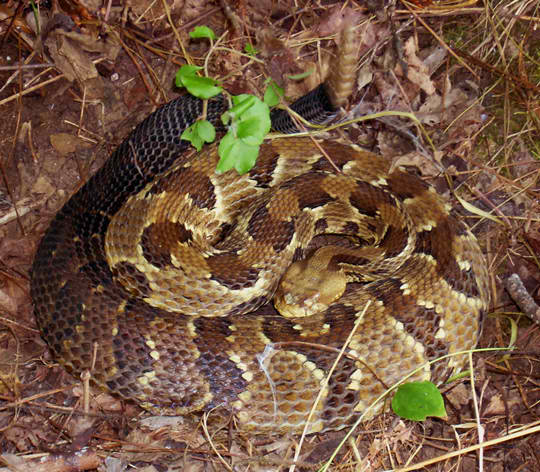
Utsanati has moved about 500 feet due west from his last location near his Hibernaculum.  I found him coiled in a resting coil with his body up against a rotting log.  He still does not appear to have shed.  It seems that he may be heading back toward his capture location.  Danger Level 1. Take a look at the latest photo of Utsanati below.

Zoe has also moved around 500 feet since he last locate day.  She has moved in a southeasterly direction and seems to be following the ridge line.  Danger Level 5!  I found her in a resting/hunting posture in a tangle of brush and cut logs at the edge of a yard behind a house in the human community where she lives.  Take a look at her below.

She was only about 30 feet from the yard as you can see in the second photo.   Interestingly this is the same house where Utsanati sheltered in the woodpile after his surgery last summer.  The woodpile is to the right of the house in the photo.

I believe that Zoe will stay in the woods and not cross the yard during daylight.  However, if you are the residents of this home I would use caution when walking/working in your yard –especially at night–until I locate her again and confirm her new location.  If you spot her please note her location and contact me as soon as possible so I can make note of her status.
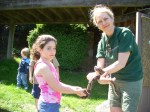
Great new pics from Earthshine Nature!

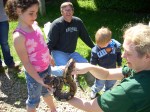
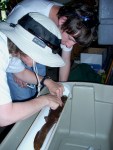
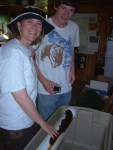
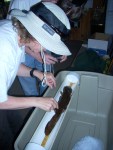
Check out these great photos from Easter Weekend at Earthshine Nature and Earthshine Mountain Lodge!

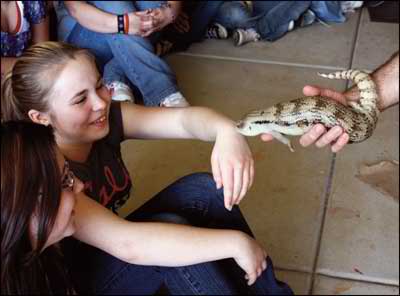
The photos of Gollum the Hellbender were taken when Biologist Lori Williams and an intern came to weigh and measure Gollum for a school project.

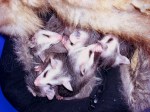
The photo of Steve’s wife Marian holding baby Opossums was taken at Steve’s home where he is raising seven orphaned baby Opossums who’s mother was killed by a broom wielding homeowner who apparently was afraid of Opossums.

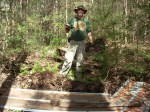
The photo of Steve holding the box turtle near some roofing tin was taken at Camp Illahee in Brevard, NC where Steve is helping them set up a cover board survey for their summer nature program.

Timber rattlesnake on the move!

Zoe, the female Timber rattlesnake that we are radio tracking, is out of hibernation and on the move!  I discovered that she had moved from her over-wintering site when I journeyed into the woods yesterday evening for my weekly data collecting trip to their locations.  I visited Utsanati’s (the male) site first only to find him still underground in his den.  I then made my way upslope through the budding blueberries to where Zoe has been since November of 2011.  As I made my way up the steep mountainside I began to realize that the signal from her transmitter seemed different and I started to wonder is she had moved.  When I arrived at her den site–a dead snag surrounded by its fallen rotting limbs–I confirmed that she had in fact moved and that the signal was strongest to the south so I made my way in her direction.  As I made my way up the mountain the wind picked up and a light rain began to fall so I moved as fast as possible but still with enough care because I was looking for a rattlesnake!  Soon I arrived at the source of her signal–the same rotting stump that she had taken refuge in for several days last fall!  Interestingly, she had backtracked from her winter den site where she has slept for over four months to this refuge that she had used just before going into hibernation.  Why was she here?  Only she knows for sure but I believe that she is making her way up hill from the cooler north side of the mountain where she spent the winter to the warmer southeastern slopes of the mountain where she can more effectively thermoregulate.  I was unable to see Zoe because she was holed up underground but at least I now know that she made it through hibernation.  Hopefully soon I will find her out basking on the surface and I will be able to get some photos and video of her condition.  Until then below is a photo of Zoe from last fall before she went into hibernation.

Only moments after I arrived at her location the rain started to fall much harder and off in the distance I saw a squall line approaching over the nearby mountains so I finished my data collecting and made haste to get out of the woods before the deluge hit.

Soon, I will venture back into the forest in search of the rattlesnakes and turtles and keep you posted on their progress.  Until next time watch your step when you are going off trail because it seems that the snakes are moving early this year due to the warmer temperatures.

ENP presents first wildlife show of 2012!

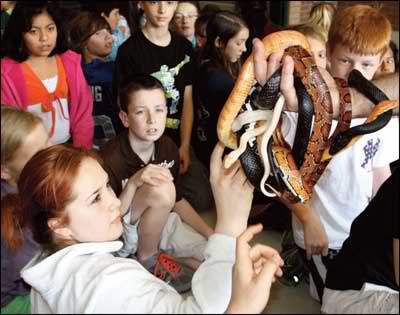
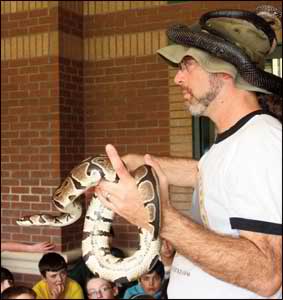
Last week Steve took the animals on the road to visit the sixth graders at Mountain View Intermediate school in Franklin, NC.     The show was part of a wildlife fair for the school made possible through contributions from Wild South–a local conservation organization that works to preserve and natural and cultural heritage through education and conservation.  From the smiles and reactions of the kids I would say that the show was a great success.  Thank you Wild South for making this great field trip possible.

 Take a look at a few of the photos from the event below.

Photo by Linda Mathias

Photo by Vickie Carpenter

Photo by Vickie Carpenter

Photo by Vickie Carpenter

Photo by Vickie Carpenter

Photo by Vickie Carpenter

Read the entire article here.

First turtles out of long winter sleep!

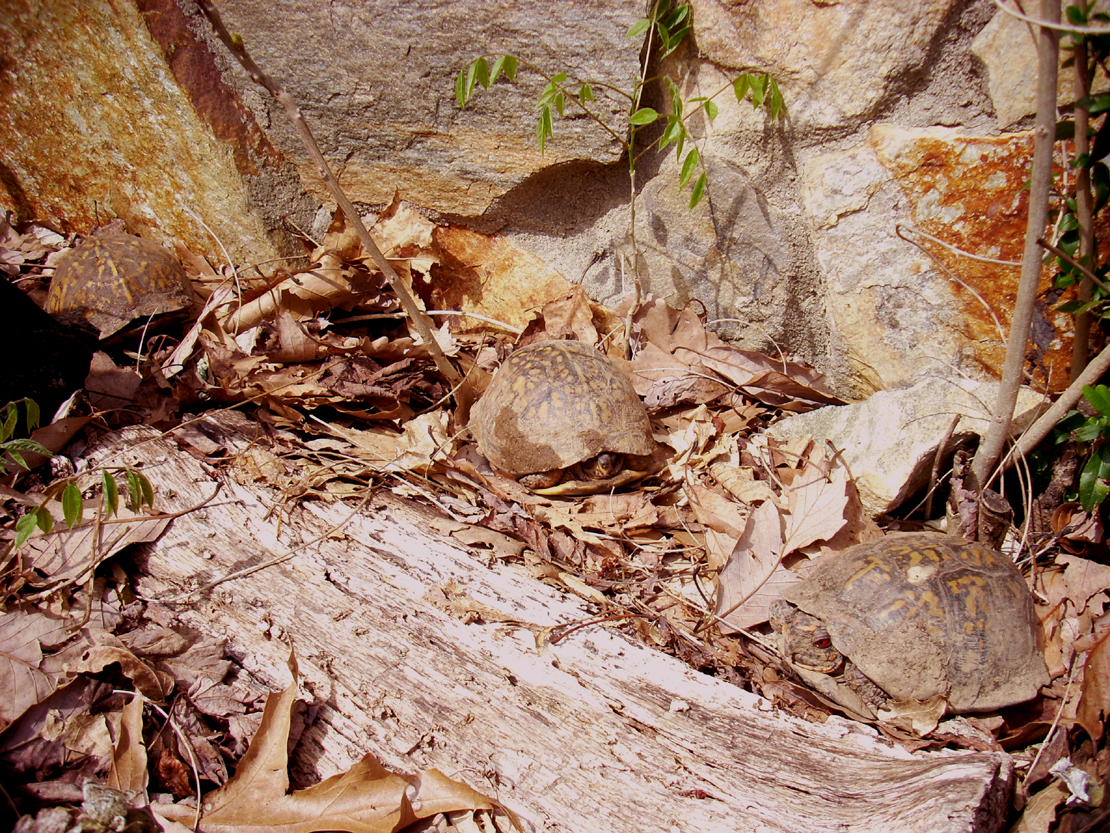
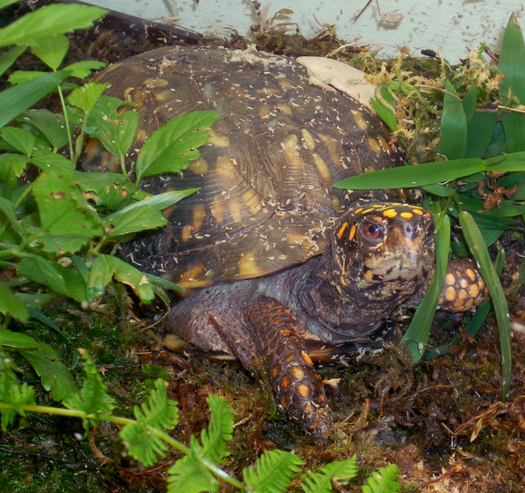
Chewy, Tripod and Lucky are the first box turtles in the Earthshine turtle pen to make an appearance this year.  They ventured out of their cozy winter dens on March 22–a good 2-3 weeks earlier than the last few years.  Their early appearance is most likely due to the unusually warm winter–the first winter that I remember without snow–and very warm spring that we have been having.  The temperatures were in the high 70’s and low 80’s on the afternoon when they three turtles decided that it was time to move.  Take a look at their photos below.

A closeup of Tripod–she is basking in the warm sun and does not look fully awake yet.

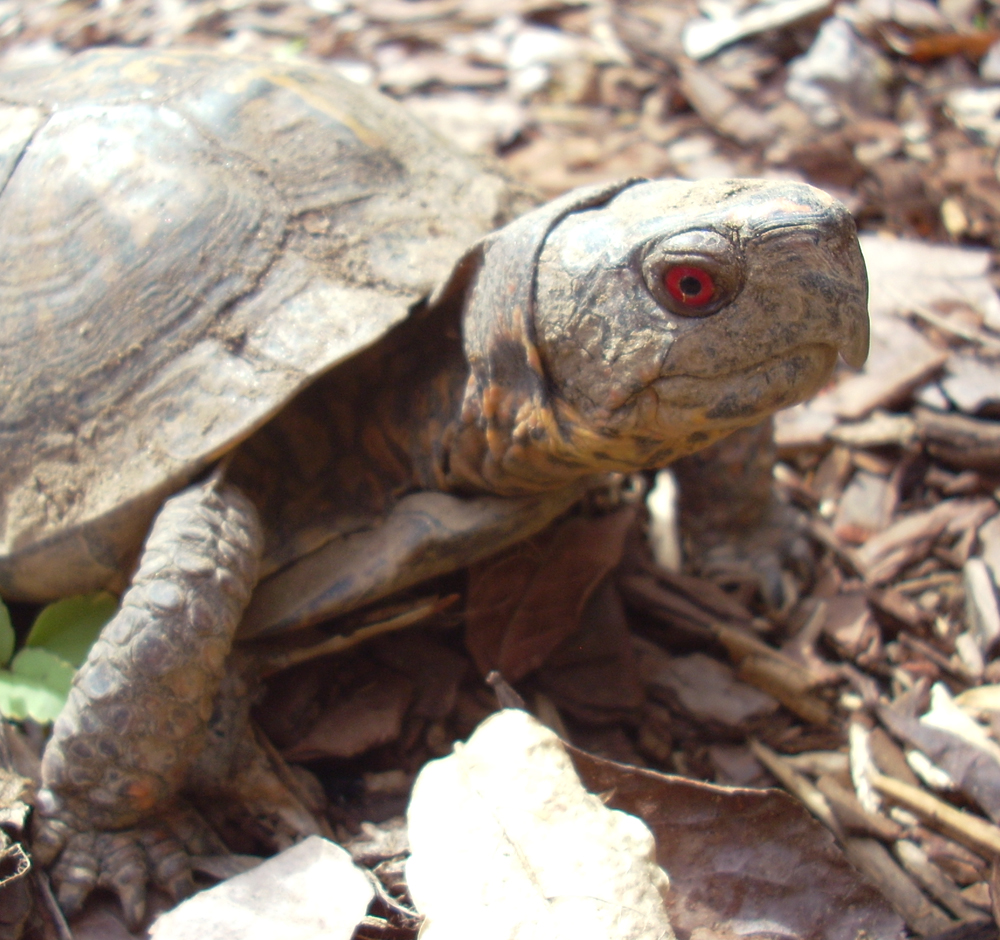
Chewy is on the move!

He is a dirty turtle!

Chewy has beautiful cherry-red eyes.

In other news:  Crash, an adult female Eastern box turtle that was brought to us in June of 2011 with a horribly fractured shell and badly damaged rear leg–is about ready to be released into the outdoor pen at Earthshine.  She will join Chewy, Tripod, Lucky and the other turtles in a few weeks when the danger of a late freeze has past.

While her leg injury has totally healed, you may notice the white patch on her carapace (top shell)–that is an epoxy patch that is helping to hold her shell in place while it heals.  She has another large patch on her plastron (bottom shell) as well.  She will keep these epoxy patches for one more year to facilitate a strong bond between the fractured pieces of her shell.  Then I will remove them and she will be good to go.  Unfortunately she will have to live out the remainder of her life in a controlled outdoor environment because her injuries prevent her from closing her shell entirely to protect her from predators.  However, her future offspring will be released on the mountain at Earthshine when they are old enough to fend for themselves.

Penny the Northern Copperhead poses for some photos below.

Copperheads are beautiful and venomous and they are a very beneficial part of a healthy ecosystem.  They eat countless small rodents such as voles, moles and mice and even some insects such as cicadas.  If you see a copperhead in the wild please do not harm it–marvel at its beauty and leave it alone so that it can do its job.  If you are bitten by a copperhead it will be very painful but for healthy adults it is usually not a life threatening injury.  Calmly and quickly visit the hospital to receive treatment and most people will recover with no ill effects.

    Come visit the turtles, Penny the copperhead and our other animals at Earthshine Nature Center’s Open House and benefit event on May 12th 2012.  For more information on the event please visit this link.

Spotted Salamander Eggs Hatch!

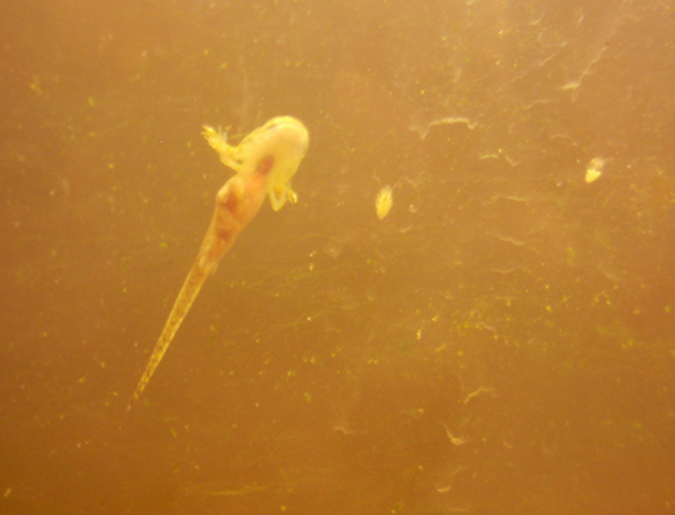
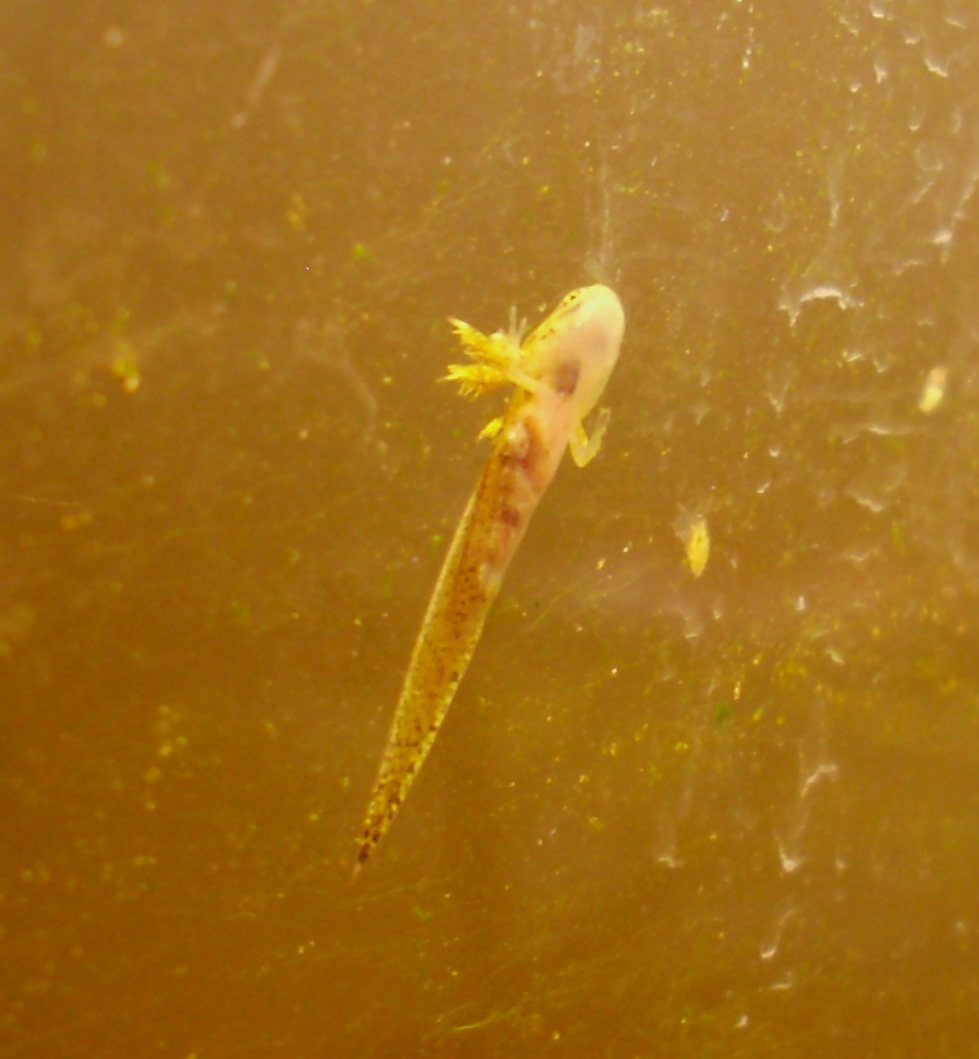
Remember a couple of weeks ago when I posted a story about rescuing a few Spotted salamander egg masses form a shrinking ephemeral pond?  Well, the eggs started hatching a few days ago and there are probably close to 100 larval salamanders now happily swimming, feeding and growing in the tank!

This first pic is a larval salamander resting on its egg mass.  This salamander is only about 1 centimeter long!

The next photo is of a larval salamander resting after feeding on daphnia.  If you look to the right of the salamander you can see two female daphnia full of eggs attached to the algae growing on the glass.

Another photo in which you can see the feather-like gills of the larval salamander.

I will be sure to keep you updated on the growth of the salamanders in the coming weeks.