Over the last two weeks, we have continued making steady progress on the transformation of the PoD.
The welder finished his work and we retrieved the PoD from his shop. The new Bifacial Solar Array Support Structure (BiSASS) is now complete and it seems to be a very solid structure for supporting the PoD’s bifacial solar modules (panels). Take a look at these photos of the BiSASS from the welding shop.

The awning is in the black bag hanging on the right side of the rack – I will try to find a day soon when I will deploy it and get some photos to share with you.
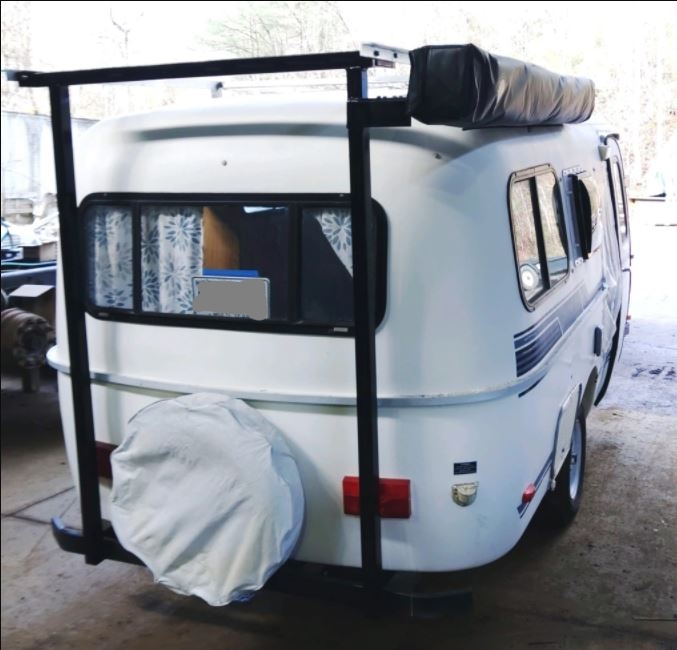
Thank you Red Dog Welding for doing such a great job on this rack.
A word about our choice in solar modules. We are using Canadian Solar BiHiKu Bifacial solar modules. Unlike traditional solar modules which collect solar energy from only one side of their structure, bifacial solar modules have solar energy collecting ability from both sides of the module. This works well in applications where the modules are able to collect reflected light from any light-colored/reflective surface below them – such as the white rooftop of the PoD. This increased light collecting ability will allow these unique solar modules to harvest upwards of 30% more energy than a similarly-sized traditional solar module will harvest – without needing to be 30% larger – and with a vehicle as small as the ENP NaSA PoD – every little bit will help.
Before the modules could be installed we needed to prep the PoD’s roof to receive the solar array so we could install the pass-thru for the solar wiring. This is a photo of the huge hole we had to cut in the PoD’s perfectly good fiberglass roof…

We then installed the 3D printed entry gland over the hole – this device will allow the solar wiring to pass through from the roof to the solar-electronics cabinet directly below.

We also took some time to reseal all the existing rivets/bolts on the roof of the RV. As all these points will soon be under the solar array, we decided to seal everything up very well so we will not need to remove modules to seal up a roof leak. You can see two of these sealed rivet points in the above photo – they are curing under the paper/painter’s tape.
The next step was to cut several small holes that will allow the wiring from the security cameras to pass thru the shell and into the PoD. Since the PoD’s fiberglass body is basically a boat on wheels – we used cable entry ports often used in the boating industry.
For the forward-facing camera, we made use of the existing gray water tank vent pipe as the pathway to run the LAN cable for the camera as shown in this photo.

Why a security system you may be asking? There are several reasons.
1. This mobile classroom will often have several of our animal ambassadors living inside for several hours or even days at a time at multi-day festivals/events.
2. This mobile classroom will often have many unique and valuable teaching tools residing inside.
3. This mobile classroom will always contain many high technology electronics also hidden away inside.
All these unique creatures, tools, and components will need to be protected and safe. Therefore, we have created the the ENP NaSA PoD’s:
Security, Investigating, Environment, and Nature, Watching, Interpreting, Sensing, Evaluating and Recording Network (ScIENce WISERNet)
This system will allow safe and secure monitoring of the immediate area around the PoD. The obvious presence of the cameras will serve to keep would-be thieves and prowlers away from the PoD and its contents and it will allow real-time environmental, video, and audio monitoring and DVR/cloud-based recording via wireless internet connection. This connected network will allow those with administrator access* to see what the PoD’s cameras and environmental sensors are sensing at any given time and/or have recently seen via cloud storage – from any location on planet Earth that has WIFI or a cellular connection. *The only persons able to view the live feed from the PoD’s ScIENce WISERNet system will be the ENP Executive Director Steve aka “Science Steve” and his students when in class.
We have now completed the installation of the ScIENce WISERNet system – below are a few more photos of the placement of the cameras. This is another view of the forward-mounted camera.

This is the port-mounted camera. Behind it note the LAN cable leading back to the marine-grade cable entry port (out of view). Currently, this outdoor-rated cable is affixed to the surface of the PoD with adhesive cable organizers but soon, this exposed wire will be up out of the way and in a more secure location following the solar array frame rail.

This is the starboard-mounted camera. The black wire in front of the camera is one of the solar array power leads. It will soon be connected to the solar entry gland located to the right of the camera.

This is the aft-mounted camera. It is mounted on the aft structural support for the awning system.

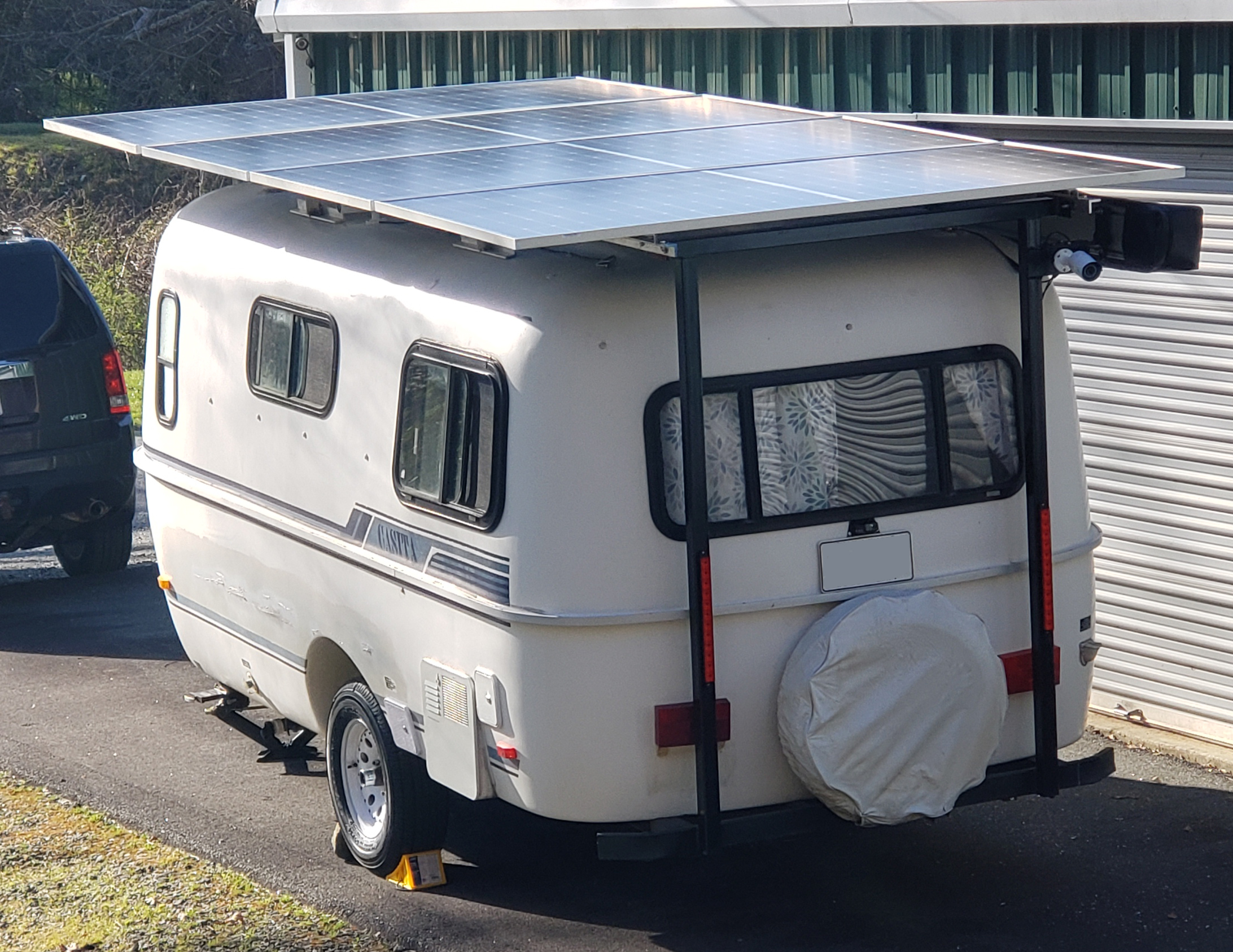
After all the prep work was done it was time to install the 1740 watt Bifacial Photovoltaic Solar Array (BiPSA). Jim and I and two friends from work – Hunter, and Kevin* – worked for many hours to install the BiPSA onto the PoD’s BiSASS. *THANK YOU, Hunter and Kevin, for assisting us on such short notice!!!
We first pulled the solar modules out of storage and attached the mounting brackets.

Then we all worked together to carefully install the four giant solar modules onto the BiSASS. That is Jim and Kevin in the next photo – Hunter is not pictured as she had made a run to the hardware store for more stainless steel bolts and associated hardware. NOTE: The car on the right is Jim’s Nissan LEAF EV – yep, no gas needed. In fact, once the PoD is complete it will be able to charge the battery of Jim’s LEAF or any other electric vehicle using freely collected clean energy from our nearest fusion reactor – the sun!

The completed array – it is a thing of beauty.

The view looking up through the skylight – it will improve once I install the trim around the edges.

We also finished the installation of the PoD’s updated water system…

…but we will be unable to test it for a few days while we wait for the sealant to dry.
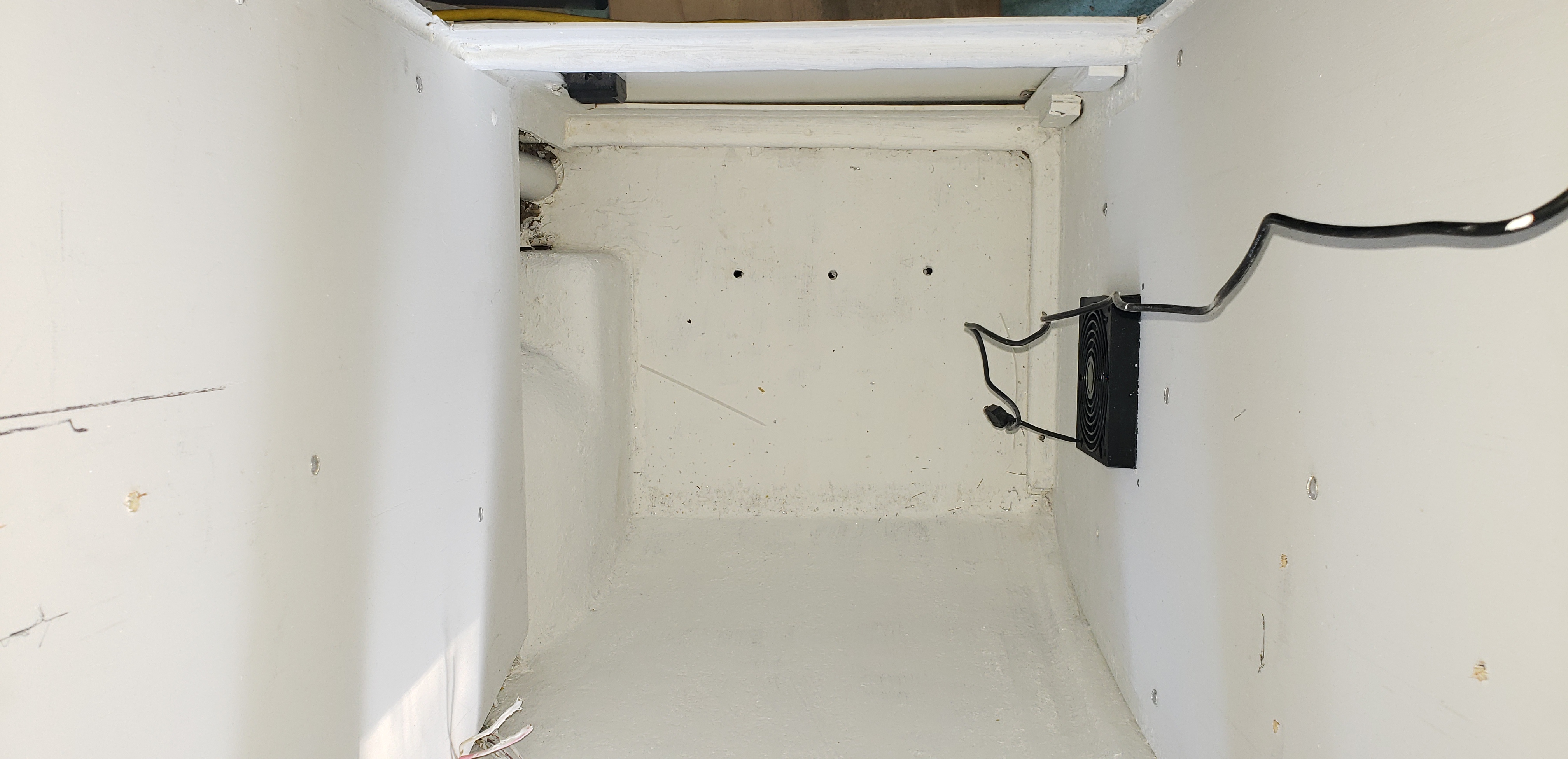
Jim and I sanded and painted the solar-electronics cabinet and will begin installing the components soon.
We also installed new LED taillight bars on the rear vertical supports (that now block the PoD’s original lights) as well as a new license plate bracket/light (the old one – that was originally located below the left rear taillight in this photo – snapped off when I was removing the plate from the previous owners).

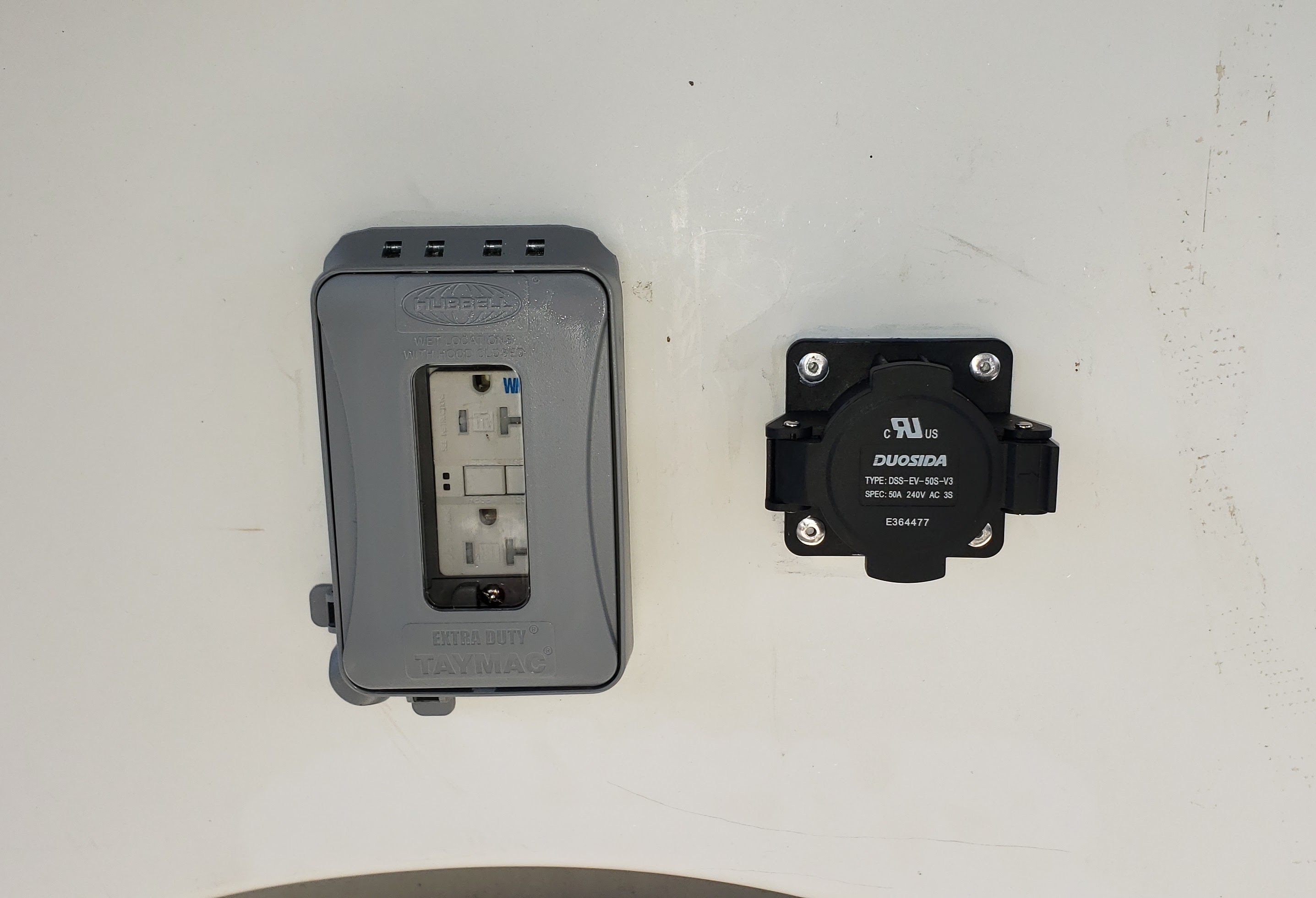
We also installed a J-1772 inlet charge port – it is the black device to the right of the outdoor power outlet in the next set of photos. This device will allow us to charge the PoD’s lithium-ion batteries via any Level 2 Electric Vehicle Supply Equipment (EVSE) aka charger such as the one at my home, the one at the ENP/Trails classroom, or anywhere on the road using other J-1772 units and even Tesla Destination EVSE units (by using an adapter). This will be very useful when we are on the road and/or during long periods of rain when our solar modules are unable to keep our batteries full. The 120-volt power outlet will be used to power the monitor, microscope station, and any electric vehicle that possesses a J-1772 charge port (most of them) and/or that has the correct adapter.

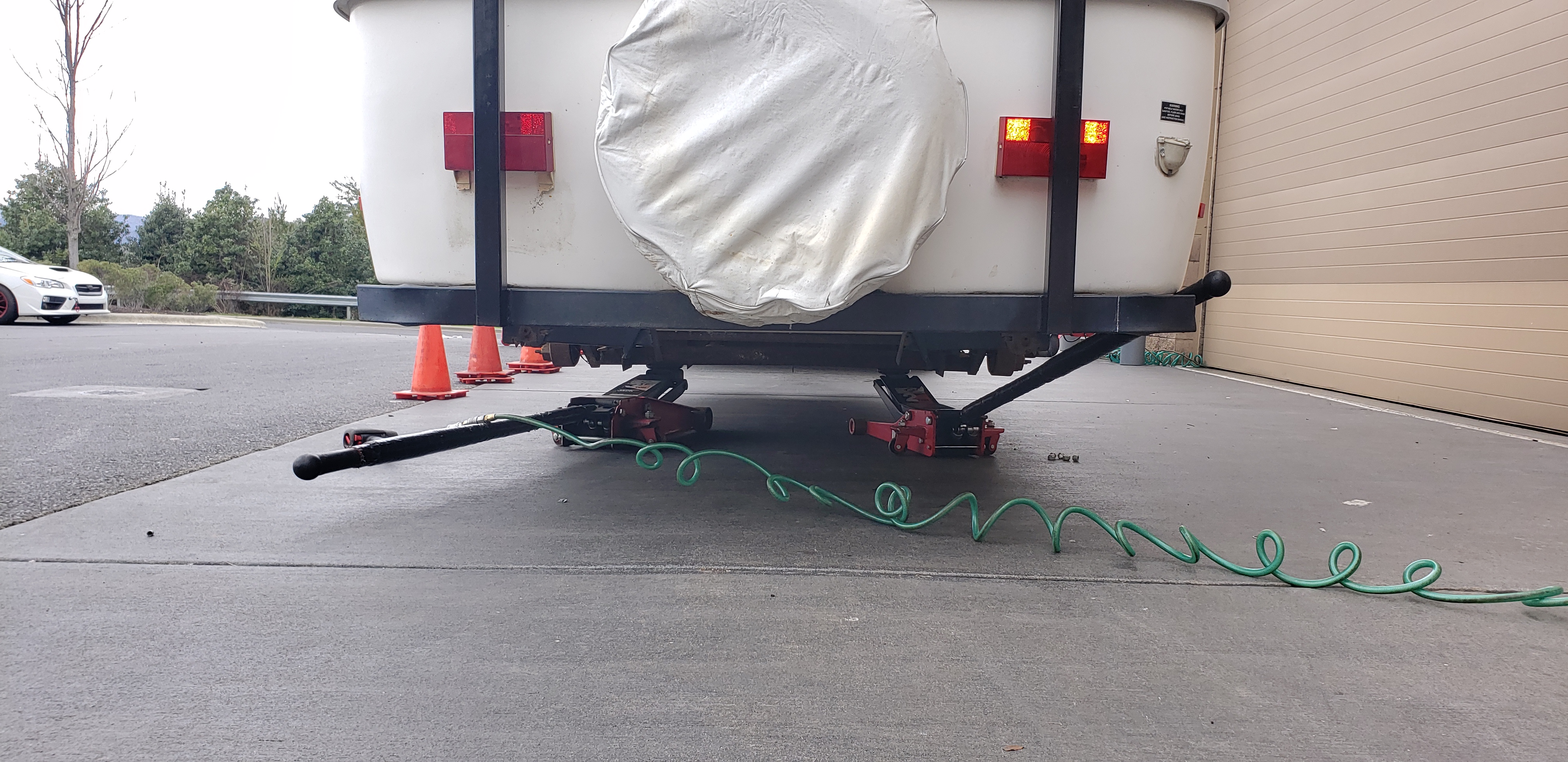
Last, but definitely not least I then took the PoD for new a set of heavy-duty tires.


That is all for this ENP NaSA PoD update.
Stay tuned – there is much more to come.
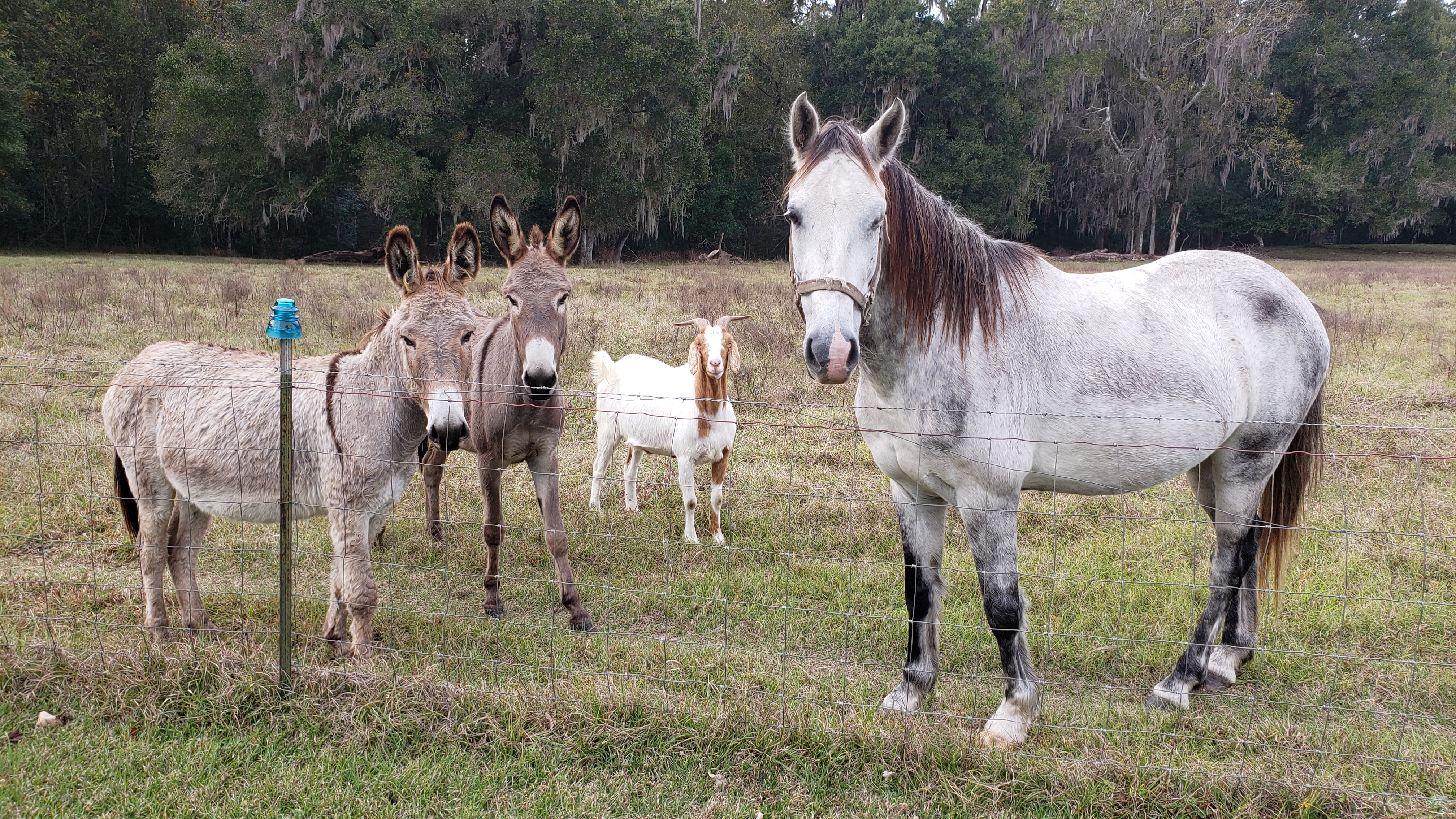
In closing, here are some close family friends at my dad’s place in the country.
Please subscribe and follow this blog for more updates.
We hope to have the ENP NaSA PoD in service on or before Earth Day 2022!
This amazing project will serve to inspire and educate all the curiosity seekers who encounter it. But to do this right – we do still need your support. If you choose to assist us in making this project a reality, this unique mobile classroom will greatly benefit the nature and wildlife conservation, science, reality, common sense, and renewable energy awareness education for all our outreach program participants in the WNC region as well as our wonderful students at Trails Carolina and Trails Momentum who will all greatly benefit from the wonders it will contain while they are in class and in the field on expedition.
Please consider supporting this project via the donate link on our website or our GoFundMe page: www.gofundme.com/lets-build-a-mobile-outreach-classroom
The construction and use of this unique mobile classroom will be documented on this blog, our end-of-year newsletter, and soon on our YouTube channel.
The ENP NaSA PoD and the Mighty Bolt EV (our primary outreach vehicle) are owned by ENP and used primarily as the ENP company outreach vehicle and mobile outreach classroom. They will be charged and fueled primarily with cleanly generated electricity provided by the ENP/Trails student-built classroom solar array and NaSA PoD’s rooftop solar array. They will both serve as outstanding teaching tools for our Trails students, ENP outreach program participants, and everyone we meet via our outreach programs.
THANK YOU to everyone who has supported and is continuing to support this most unique project – you are all the greatest of heroes!!!
Please note: any/all ads that appear below this post are not provided or endorsed by ENP nor are we supported in any way by these ads – they are an automated feature of WordPress.com.
 Earthshine Nature